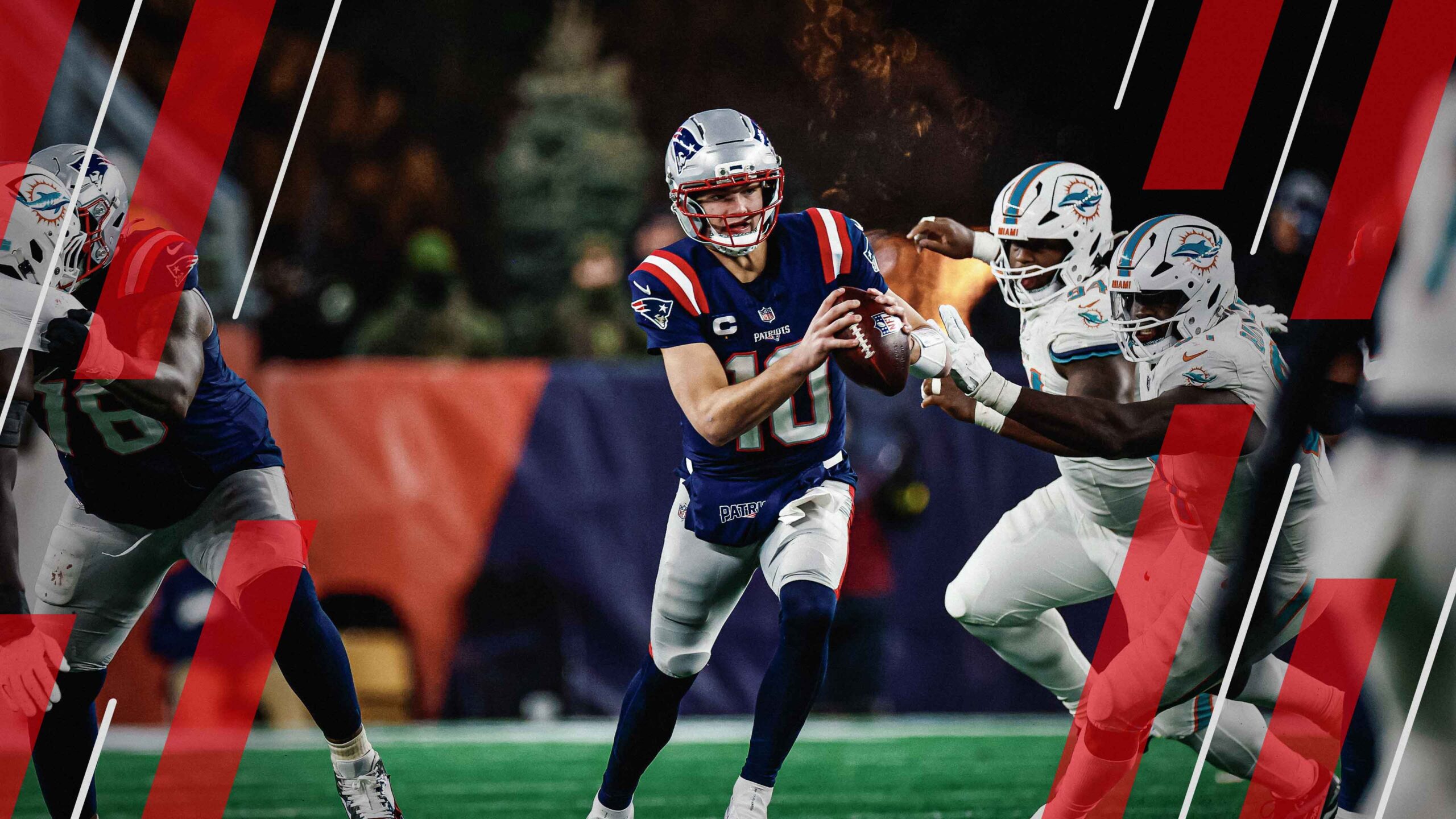
- Drake Maye battles the Chargers' defense through air and ground: Maye has been one of the league's most effective scramblers this season, but Los Angeles has curtailed such rushes by quarterbacks.
- Get PFF+ for 30% off: Use promo code HOLIDAY30 to unlock the PFF Player Prop Tool, Premium Stats, fantasy dashboards, the PFF Mock Draft Simulator, industry-leading fantasy rankings and much more — everything you need to win your season.
Estimated Reading Time:10 minutes
The 2025 NFL playoff field is finalized, with six intriguing matchups dotting the wild-card weekend schedule. If the postseason is anything like the first 18 weeks of the year, then we’re in for a wild ride — full of crazy comebacks and unpredictable outcomes.
NFL teams can (and do) make adjustments come January, but squads have also demonstrated their core principles and identities over the regular season. With those tenets in mind, below is one schematic key to keep an eye on in every wild-card game.
Los Angeles Rams at Carolina Panthers: Bryce Young’s deep and intermediate passing
Rams vs. Panthers is pretty indisputably the most lopsided game from a talent perspective, with Los Angeles placing first in overall PFF grade — and Carolina 24th. However, the Panthers can gain optimism based on their Week 13 upset over the Rams, with Bryce Young’s ability to stretch the field the difference.
In that shocking result, Young was tremendous on throws of 10 or more yards. Across six passes down the field, Young registered a terrific 94.6 PFF passing grade, completing four of them for 102 yards, two touchdowns and two big-time throws.
However, Young’s downfield efforts in that contest were a bit of a rarity. Throughout the entire 2025 season, the Panthers quarterback has struggled on deeper passes. Indeed, his 72.2 passing grade in such situations ranks 39th out of 49 qualifiers, and his 12 turnover-worthy plays are tied for the fifth-most.
It’s also important to consider that the Rams have defended deep passes relatively well this year. On attempts of at least 10 yards, Los Angeles ranks fifth in PFF coverage grade, sixth in EPA per play and tied for 11th in explosive play rate allowed.
If Young can connect on multiple chunk passes well beyond the sticks, then Carolina has a shot at beating the Rams twice in a seven-week span. But if not, then the Panthers face relatively long odds of prevailing in the wild-card round.
Green Bay Packers at Chicago Bears: Caleb Williams vs. the Packers’ blitzes
One of the NFL’s best rivalries occurring for a third time in a season is entertaining enough, let alone these nemeses only squaring off exclusively in the second half of the season. Both the Bears and Packers have endured good albeit imperfect campaigns, and two defining traits — Green Bay’s pass rush vs. Williams’ ability to execute — will go head-to-head.
Since Micah Parsons suffered a torn ACL against the Broncos, the Packers’ defense has been cataclysmically bad. From Weeks 15-18, Green Bay ranked 28th in EPA per play, 30th in success rate and 27th in yards per play allowed. Unsurprisingly, the team’s defensive line has gone from fifth to 31st in PFF pass-rush grade in that span.
In an effort to offset Parsons’ glaring pass-rushing absence, defensive coordinator Jeff Hafley has implemented a much higher pass blitz rate — going from 24.1% to 34.8% over the team’s final four games. However, that tweak hasn’t necessarily worked. In that span, Green Bay ranks second in pressure rate when sending five or more rushers, but the Packers are simultaneously 27th in EPA per play when blitzing.
To what extent Hafley continues to heat up Williams will be telling on Saturday night. The Bears quarterback carved up the blitz in Week 16, going 7-for-13 with 145 yards, two touchdowns and a 90.2 overall PFF grade in Chicago’s miraculous win. Moreover, Williams boasts the sixth-highest overall grade among qualified quarterbacks when blitzed (79.9) this season, including a position-best 92.5 PFF rushing grade.
Will Hafley try to get Williams flustered fast, especially with a unit that’s fallen to 24th in PFF coverage grade since Parsons’ exit? If so, will Williams’ escapability neutralize Green Bay’s high quick pressure rates? That cat-and-mouse game will be significant.
BuffaloBills at JacksonvilleJaguars: Bills’ outside zone run game
Bills-Jaguars is a sleeper of a game in the wild-card round, pitting Josh Allen against Trevor Lawrence in a duel between two potential AFC victors. In particular, Buffalo’s offense versus Jacksonville’s defense will command the spotlight — especially on the ground.
The Bills’ run game has been a wagon in 2025, maintaining a high watermark set in 2024. This season, Buffalo ranks first in PFF rushing grade, fifth in rushing EPA per play, seventh in success rate and third in explosive run rate.
While offensive coordinator Joe Brady has relied on a diverse ground game, one of the staples of the Bills’ attack is outside zone. Indeed, 27% of the team’s rushes have been just that, which trails only the proportion of man concepts (30%). On outside zones, the Bills are ninth in rushing grade and fifth in yards per carry (5.2), with James Cook sporting a 73.4 rushing mark.
Meanwhile, the Jaguars’ run defense sits ninth in EPA per play, and has contained outside zones this season. Anthony Campanile’s unit holds the seventh-best PFF run-defense grade against such looks while permitting just 3.4 yards per carry.
If Buffalo tries to establish its perimeter run game, it could be met with a tall task. However, the Jaguars have fared far worse against man and inside zone rushes, not to mention scrambles. Jacksonville’s ability to stop Allen, Cook and the Bills’ stellar ground game will prove paramount.
San Francisco49ers at Philadelphia Eagles: Brock Purdy throwing outside the numbers
49ers-Eagles sets up a high-level affair between two consistent contenders over the last 10-plus years, including a rematch of the 2022 NFC Championship Game. More specifically, the 49ers’ dynamic offense will battle the Eagles’ strong defense, where both units have found success along the perimeter.
Brock Purdy has been as elite as ever under center for the 49ers in 2025, especially of late — posting a league-best 93.2 PFF passing grade from Week 13 onward. While Purdy is a plus thrower to all areas of the field, he’s been prolific attacking outside the numbers. Indeed, Purdy owns a 90.9 passing grade on wider throws this season, averaging 8.4 yards per attempt while recording only three turnover-worthy plays on 129 attempts.
Philadelphia’s defense is stout up the middle thanks to its interior defensive line and linebacking room, but its ultimate superpower is on the outside — in large part, courtesy of cornerbacks Quinyon Mitchell and Cooper DeJean. On attempts outside the numbers, the Eagles boast the third-best PFF coverage grade, fourth-lowest EPA per play mark and fifth-fewest first downs surrendered. Unsurprisingly, Mitchell and DeJean are both within the top 21 for coverage grade among qualifiers on the perimeter.
Will Purdy find his usual success on more horizontally-oriented throws in Lincoln Financial Field, especially to George Kittle and Christian McCaffrey — who have secured at least a 91.4 PFF receiving grade in that department? Or will Mitchell and DeJean funnel attempts inside? Whether or not the 49ers can sustain a rhythm outside the numbers will be key.
Los Angeles Chargers at New England Patriots: Drake Maye’s scrambling
Although neither the Chargers nor Patriots are a perfect team, per se, what’s especially intriguing about this matchup is watching Justin Herbert and Drake Maye go toe-to-toe. Maye’s MVP-caliber season facing a litmus test of Los Angeles’ defense isn’t something to take for granted, especially regarding his scrambling.
Maye has made his heyday in 2025 due to precision passing, especially downfield, but he’s also been a terrific scrambler. Indeed, Maye’s 61 scrambles are the most in the league; on top of that, the second-year gunslinger slots tied for first in first downs gained on scrambles (26), third in rushing yards (422) and 12th in PFF rushing grade in such situations (78.2).
Meanwhile, Jesse Minter’s defense has prevented opportunities for quarterbacks extending plays with their legs. The Chargers are second in EPA per play on scrambles this season, permitting only 5.1 yards per carry — the third-best figure in the NFL. That performance hasn’t been affected by facing the second-most scrambles of any team.
Both quarterbacks in this game have been lethal with their legs, and each could viably take off and run up to five or more times on Sunday afternoon against two defenses fielding top-seven PFF coverage grades. Keep an eye out for how well the Chargers can mitigate Maye’s athleticism in the open field, particularly due to Los Angeles’ subpar pass rush.
HoustonTexans at PittsburghSteelers: Steelers’ short passes and yards after the catch
The red-hot Texans battle the Steelers to close out wild-card weekend on Monday night. As Houston seeks a third straight trip to the AFC divisional round — while Pittsburgh looks for its first playoff win since the 2016 season — much scrutiny will be on the Texans’ elite defense vs. the Steelers’ unconventional offense, where short passes are a driver.
All season long, Pittsburgh’s passing attack has been predicated on getting the ball out of Aaron Rodgers’ hands as fast as possible — with passes under 10 air yards the best avenue. A staggering 67.9% of Rodgers’ attempts have been either behind the line of scrimmage or short (0-9 yards), and his 81.9 PFF passing grade on those tries is the fourth-best. Moreover, the Steelers are 12th in EPA per play as well as eighth in both average yards per play and first downs gained on short passes.
The biggest reason why those checkdowns can find success is breaking tackles after the catch. Pittsburgh’s 6.7 yards after the catch per reception on passes nine yards or shorter is the second-best mark in the NFL, with running backs Jaylen Warren and Kenneth Gainwell each averaging an extra 7.3 or more yards with the ball in their hands. Altogether, the Steelers’ 6.5 yards after the catch per reception is tops in the league, regardless of depth.
How well Houston’s ferocious defense guards quick attempts should directly correlate with the team’s chances of winning. This season, the Texans are second in EPA per play, first in success rate and first in yards per play on short passes — numbers that dovetail with their otherworldly unit. At the same time, Houston has been slightly worse after the catch on passes of nine or fewer yards — tying for 12th in yards after the catch per reception while missing the ninth-most tackles.
Will Gainwell, Warren and others convert their regular checkdowns into big plays, or will the Texans’ predominantly zone defense rally and tackle in the flat? If the Steelers’ quick passing game is neutralized, it will likely leave few alleys for Pittsburgh’s offense to find much of anything.