Zoom
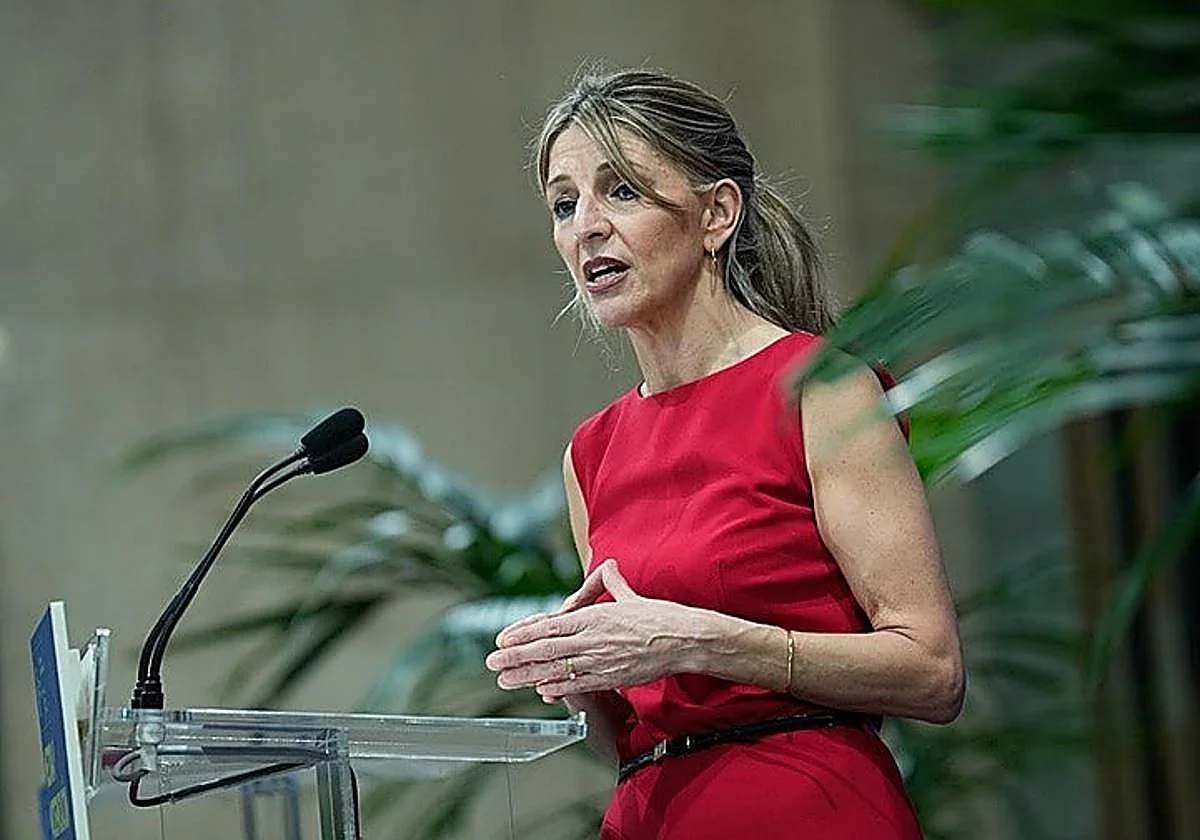
Second Deputy PM of the Spanish government Yolanda Díaz. Borja Sánchez-Trillo Law Spain employment: government and unions strengthen protection against workplace risksNew deal targets mental health and climate change risks, but absence of employers' support signals a tough parliamentary battle ahead
Tuesday, 10 February 2026, 17:13
The Spanish Ministry of Labour has agreed a major reform of the occupational risk prevention law that has been in force for more than 30 years.
The reform introduces stricter regulations on carcinogenic, biological and chemical agents and seeks to protect workers from new and growing risks such as mental health and climate change risks.
The reform now has to pass through the lower house for approval. On Tuesday, the ministry received the support of trade unions but not that of employers' organisations, who withdrew from the negotiations after describing the ministry's attitude as "unacceptable, inconsistent and a hindrance".
This could weaken the chance of the law passing smoothly through Parliament.
The main aim of the reform is to make visible emerging risks that have increased in workplaces in recent years. Among the demands of trade unions is the inclusion of mental health and psychological dangers in the list of occupational risks.
Although these two factors have been in the international labour organisation's list since 2010, in Spain they still fall outside work-related risks and are instead treated as common illnesses.
The reform also considers other risk factors such as climate change, explores new ways of working such as remote work, seeks to protect pregnant and breastfeeding workers and to adapt conditions to the skills and abilities of older workers.
In addition, the Ministry of Labour seeks to reduce work-related accidents and occupational illnesses through greater awareness and more effective management of psychosocial and ergonomic risks.
In parallel, it seeks to bolster prevention structures within companies by increasing the involvement of staff with health and safety duties and introducing a new role for territorial prevention officers, whose responsibility will be to improve workplace health and safety in firms or workplaces without union representation, with a particular focus on small and medium-sized businesses.
Lastly, the reform seeks to improve the operation of accredited prevention services and the administrative registers in which they are listed, as well as to update the training requirements for those carrying out health and safety duties at basic, intermediate and advanced levels.
Nearly 700 deaths
According to the latest available data on work-related accidents, a total of 686 people died up to the beginning of December 2025. Despite a reduction over the years, Díaz considers this number "shameful".
According to the ministry's provisional data, fatal accidents at work fell by 8.2% up to November 2025, with 550 deaths, 49 fewer than in the same period in 2024. Accidents on the way to work accounted for a total of 136 deaths, six fewer than between January and November 2024 (-4.2%).
The services sector recorded the highest number of deaths, with a total of 242, down by 19.1% compared to 2024. The number of fatal accidents also fell in the agricultural sector, where 46 workers died, 16 fewer than up to November 2024, and in industry, with four fewer fatal accidents, down to 106 deaths.
Challenges in Parliament
The regulation is still awaiting the approval of Parliament. "It is the most important regulation we are going to approve in these six years. It is a state policy and we cannot allow anyone to die in their workplace," Díaz said on Tuesday at a meeting organised by the national institute of labour security and hygiene.
She thanked the unions for their work, but denounced the absence of employers' organisations, considering it essential for them to support such reforms.
To avoid parliamentary deadlock, the Ministry of Labour will try to push through some of the points of the reform through specific decrees that will only need approval in cabinet. Despite this, the ministry and the trade unions are confident that they can reach the necessary agreement to move forward with the general regulation.