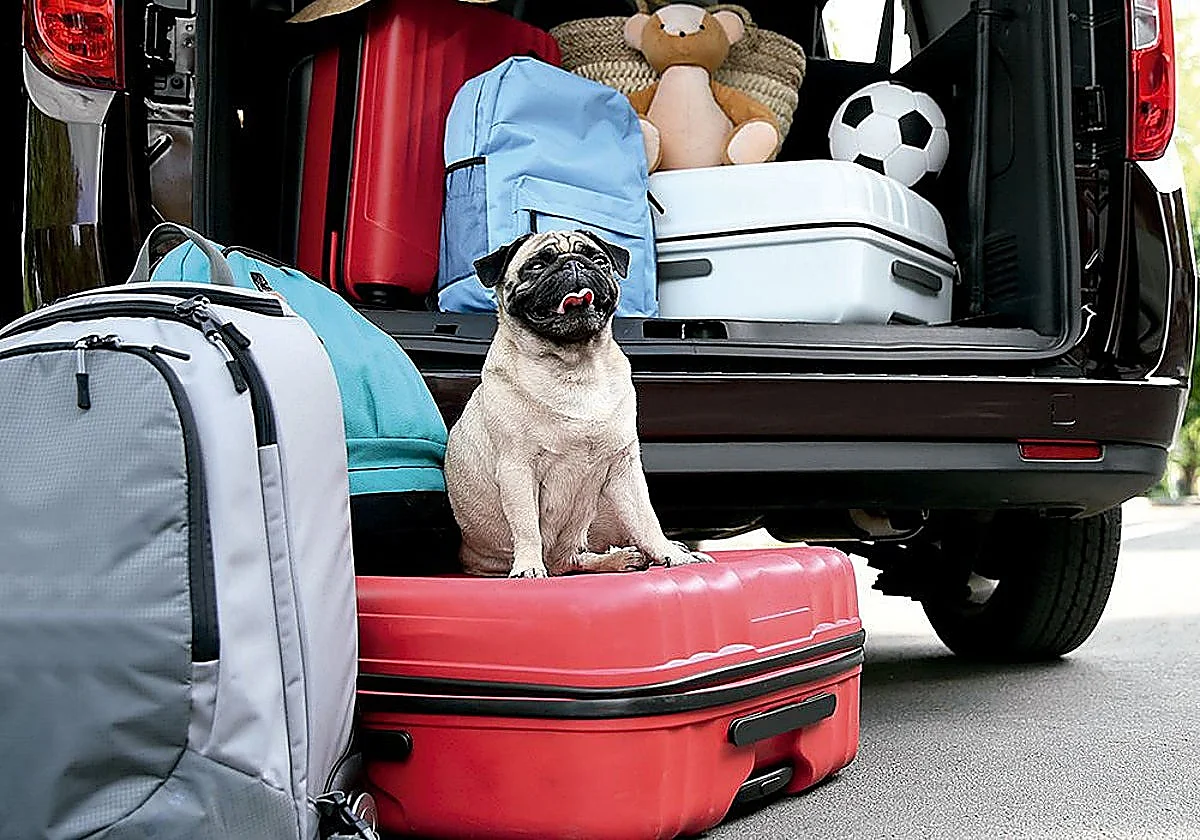
Zoom
Less than one per cent of the 12,700 service areas in Spain are truly pet friendly. F. P. Animal welfare Spain fails in 'pet friendly' roadside service stations ahead of Christmas exodusAccording to an RSCE analysis, less than one per cent of the 12,700 refuelling and rest areas in the country are truly 'pet friendly'
Patxi Fernández
Madrid
Friday, 19 December 2025, 15:18
With the arrival of the Christmas holidays, which are expected to see around 30 million car journeys made in Spain, the Real Sociedad Canina de España (RSCE) has issued a warning about the poor state of Spanish service stations for pets.
According to an RSCE analysis, less than one per cent of the 12,700 service areas in Spain are truly 'pet friendly'. According to data from the national markets and competition commission (CNMC), just over 70 petrol stations offer adapted facilities that allow dogs and their owners to rest safely and comfortably during long journeys.
This situation is of concern to the RSCE, which stresses that the comfort and safety of companion animals during travel are essential components of animal welfare.
The organisation highlights that a simple oversight, such as an incorrectly fitted leash or an improperly closed door in a rest area, can make it easier for the animal to escape onto the road. Studies carried out by Royal Canin, the RACE and the Directorate General of Traffic (DGT) indicate that 70 per cent of dog accidents occur precisely on secondary roads or interurban roads, where these rest areas are most common.
ZoomTen tips from the DGT for travelling with pets
1- Never travel with a loose animal in the passenger compartment. There are significant risks for the animal itself and the other occupants and it may also represent a danger to rescue teams in the event of an accident. A fine of up to 100 euros may be imposed.
2- Choose a suitable restraint system. Available systems include restraint harnesses (with a short and stable attachment system), carriers or cabin partitions, which must be firm and well anchored to prevent shifting.
3- Do not place objects next to the animal. In the event of an impact, they may be hit.
4- Control the animal at rest stops. When opening the boot or the door of the vehicle, the animal may run out and cause an incident.
5- Never leave the animal inside the vehicle in high temperatures. Not even in a shaded area or with the windows open.
6- Stop every two hours. This will allow the animal to urinate or defecate, walk and hydrate.
7- Control possible travel sickness. If the animal suffers from travel sickness, it is preferable not to give it food or water in the hours before the journey. At stops, take advantage of the opportunity to drink, but only a small amount.
8- Monitor the temperature of the vehicle. Ensure adequate ventilation at all times.
9- Get the animal used to the restraint system. If it usually travels in your vehicle, get it used to travelling restrained, in a carrier or separated by a system that prevents access to the passenger compartment as a puppy.
10- Never restrain the animal with its leash. It is not a restraint system and poses a significant risk of injury to the animal and other occupants.
A run-over not only puts the dog at risk, but can also cause multiple accidents. The RSCE insists on the need to provide safe and adapted spaces, as stipulated in the animal welfare law when there is a risk to their integrity or the possibility of escape.
ZoomHow to safely carry animals in a vehicle
When travelling with animals in the vehicle, a series of indications from the DGT must be taken into account:
Always carry your documentation. The animal must have the official health booklet updated and stamped by a registered veterinarian. If travelling within the European Union, you must also carry your Pet Passport. As always, the microchip will be equally useful in case of loss of the animal.
Traffic regulations dictate that animals must be securely fastened to the vehicle to prevent them from interfering with driving. A partition must be provided to prevent them from causing a nuisance or being a source of distraction.
In the event of an accident, a loose dog multiplies the dangers, as it could be thrown out of its place and injure itself or other passengers, so in addition to the separator it is advisable to use pet restraint systems.
José Miguel Doval, president of the RSCE, has called for action: "Travelling safely with dogs must also be included in the global concept we know as animal welfare. Spain has made progress in raising awareness, but there is still a long way to go to make our roads truly pet friendly."
Doval proposes working together with administrations, companies and owners to provide more adapted rest areas, thus improving the travel experience for thousands of families with dogs.
What a 'pet friendly' service station should look like
The RSCE has detailed the characteristics that service stations must meet to be considered truly 'pet friendly', prioritising the safety, hygiene and welfare of animals travelling on the road.
The recommendations focus on setting up well fenced or gated areas that separate them from traffic areas to prevent being run over, a crucial measure for road safety. In terms of comfort, clean drinking troughs and containers are required to ensure constant access to fresh, clean water, as well as quiet resting areas with durable, easy-to-clean furniture.
To ensure comfort and prevent escapes, the RSCE stresses the need to install secure anchorages that allow owners to restrain their pets while running errands such as refuelling or entering the shop. In addition, it is suggested that, if space permits, specific play or exercise areas including obstacles or tunnels should be provided. To make it easier for owners to stop, the inclusion of vending machines with food and toys specifically for dogs is proposed.
In terms of management and coexistence, strict hygienic waste management is required, including special litter bins and availability of bags. In addition, basic rules of coexistence must be established (such as the mandatory use of leashes and identification), trained staff must be available to care for the animals and ensure optimal maintenance of the space, and visible signage must be ensured in the establishment and on the road a few metres in advance to warn drivers.