Zoom
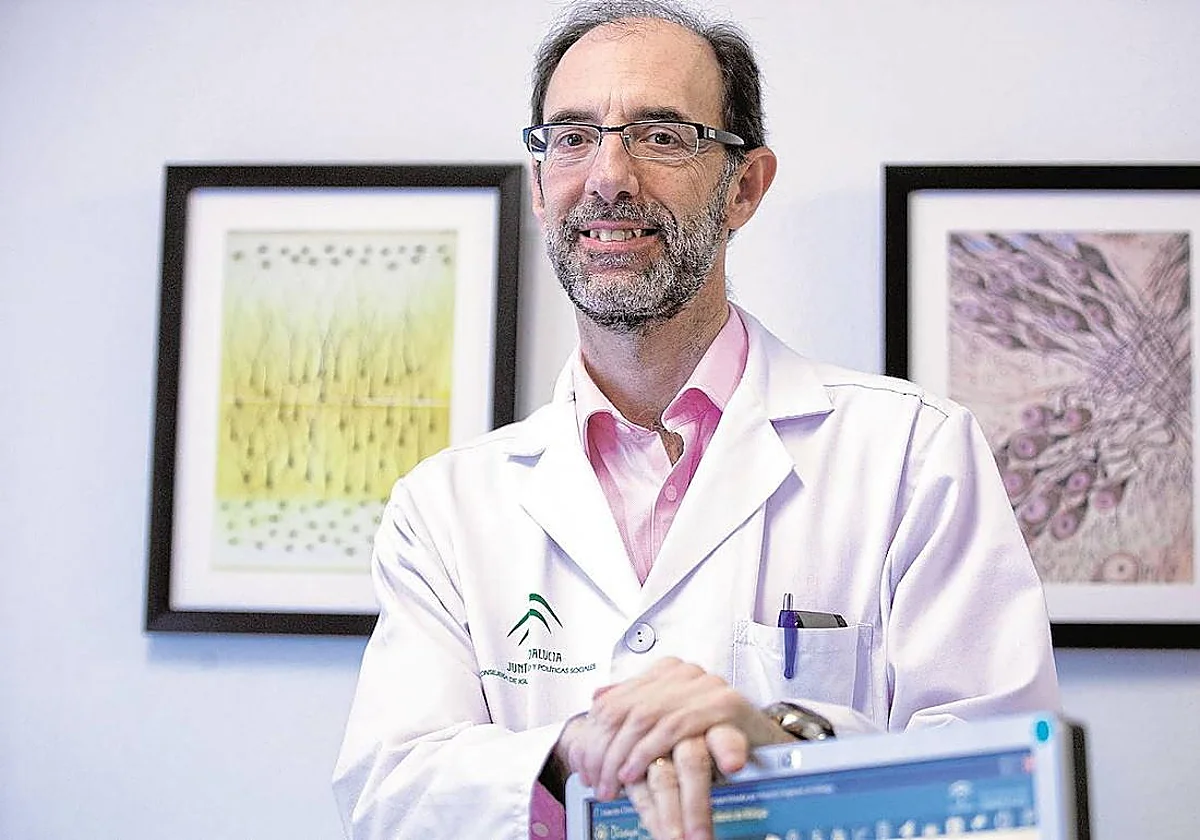
Dr Pedro Serrano, head of the neurology department at Hospital Regional in Malaga. SUR Health Spain medical advances: Malaga hospital curbs epilepsy in new procedureDoctors use this less invasive procedure on patients for whom drugs have failed and who cannot undergo conventional surgery
Tuesday, 10 February 2026, 17:28
Hospital Regional Universitario in Malaga is one of the few Spanish centres that perform deep brain stimulation on the anterior nucleus of the thalamus - an intervention that treats patients with severe refractory epilepsy where drugs have failed and conventional surgery is not possible.
Only a few hospitals in the country have applied the technique, with Malaga and Clínic Barcelona being the most experienced centres, although research and developments have been documented at La Princesa in Madrid.
Epilepsy is a neurological disease in which an area of the brain or the whole organ "begins to make uncontrolled and excessive electrical discharges, that is, it translates as an increase in function". "If it settles in a motor area, it will result in seizures; if it settles in a language area, we can have seizures with language impairment," head of neurology at Hospital Regional Dr Pedro Serran says. As he explains, the clinical expression of the seizures "varies".
Around 24,000 people in Malaga have or have had epilepsy throughout their lives. Of these, between 8,500 and 10,000 have active epilepsy, with recurrent seizures despite treatment.
Medical advances
In recent years, there have been medical advances in the treatment of epilepsy. There are 25 drugs on the market that "reduce the frequncy [of seizures] or eliminate them completely, but they do not cure the disease".
Dr Serrano highlights the development of new drugs that directly attack "the intrinsic mechanisms of the disease", which is called personalised or precision medicine. These medications act on very specific syndromes, particularly those with a genetic basis.
Zoom
Epilepsy affects around 25,000 people in Malaga. SURAs Dr Serrano says, however, not all patients are susceptible to these treatments, so they "need a different, non-pharmacological approach". Some patients are eligible for a surgery, but not everybody.
In these cases, where doctors cannot apply drugs or a surgery, neuromodulation techniques (some non-surgical) or the innovative surgical technique known as deep brain stimulation at the level of the thalamus can be used. A ketogenic diet can also be helpful in patients who do not respond to other treatments.
According to Dr Serrano, Malaga's hospital has so far been successful in applying deep brain stimulation of the anterior nucleus of the thalamus. Three patients have received this treatment since October 2025. Next week, the neurology department will operate on a fourth patient.
The procedure
The procedure is very similar to the one used in Parkinson's disease, but "the nucleus in the thalamus is different". "Here we are looking for what we call the anterior nucleus. [The procedure] consists of the introduction of a probe that reaches this nucleus. From there, with an external battery, neuromodulation begins with electrical impulses directly aimed at the area," Dr Serrano says.
Although the procedure is not simple, it is not an open surgery, which considerably reduces morbidity and the problems associated with an intervention of this calibre. "It is one of our epilepsy unit's most powerful lines of development for the future," the doctor says.
The first surgery in Hospital Regional had an "exceptional result": "the patient was absolutely free after a lifetime of daily crises", which motivated the neurology team to continue developing the procedure.
"The aim is to improve the patient's quality of life and reduce the number of crises."
Dr Serrano
"The aim is to improve quality of life and reduce the number of crises. We may come across some cases in which seizures disappear completely, but this is not the norm," Dr Serrano says.
The expert explains that cases that respond less well to treatment "require multidisciplinary management involving neurologists, neurophysiologists, neuropsychologists, neurosurgeons, radiology doctors, neuroradiologists and nuclear medicine specialists". An epilepsy committee assesses complex cases and decides on the approach.
The objective? One unit per province
Dr Serrano told SUR that he and Dr Jesús Ruiz from the Virgen de las Nieves hospital in Granada have set up a working group to reorganise care for epilepsy patients in Andalucía. They have developed a protocol to ensure that no patient, regardless of where they live, lacks access to the best level of care.
Through this protocol, they will refer patients to centres that perform the procedures they need. Currently, the region only has two advanced epilepsy units, one in Malaga and one in Granada, but the aim is to establish one per province.