Child welfare
Spain paedophile investigation: man caught with thousands of pornographic files is retired doctorThe man was previously under arrest in 2014 as part of a police operation in coordination with the US
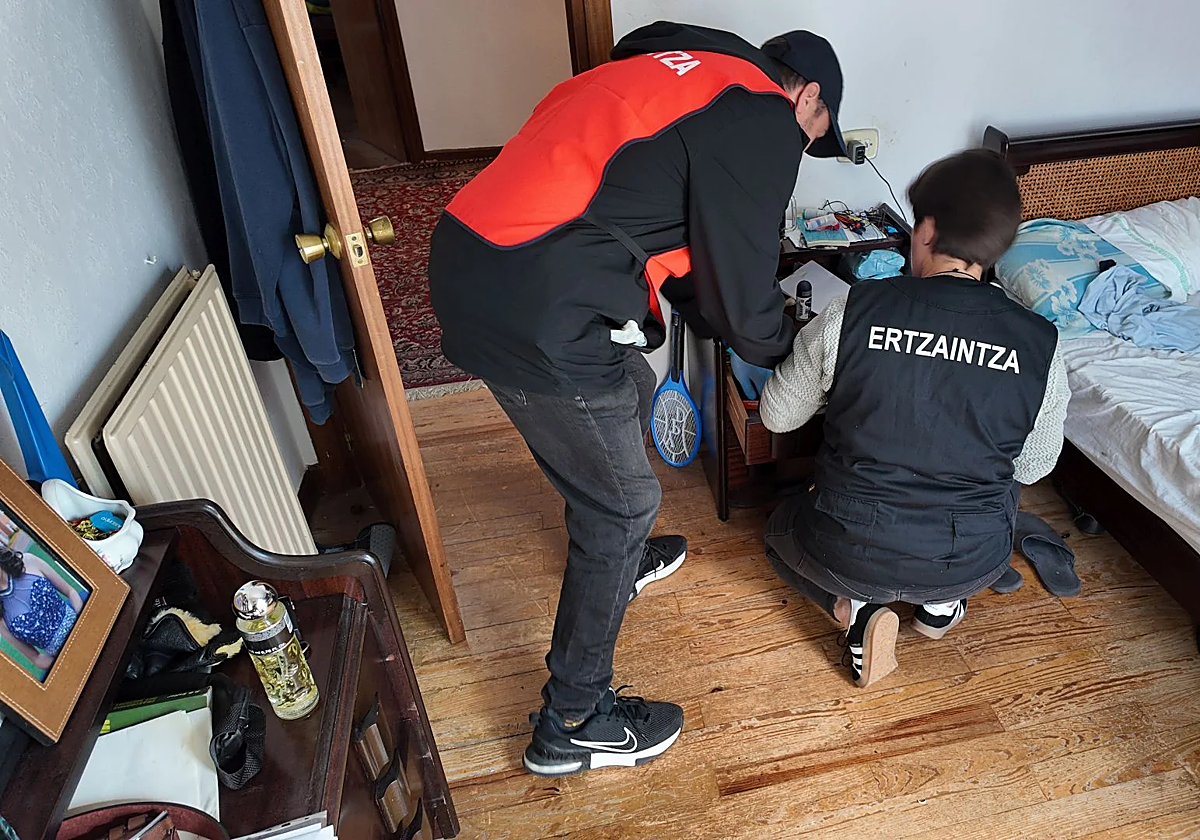
Añádenos en Google The Basque police searching the suspect's home in the town of Azpetitia on Tuesday. (Ertzaintza)Jorge Napal
22/05/2026 a las 12:52h.The investigation into the discovery of 110,000 pornographic files, with photos and videos of children, at the home of a 71-year-old resident of Azpeitia (Gipúzkoa) is advancing. According to sources, the detainee is a retired doctor who used to work for a private health insurance company.
The arrest took place on Tuesday. The suspect has a criminal record for similar offences and subsequent arrests: in 2011 for a grooming offence and in 2014 for another child pornography offence. The operation that led to his arrest in 2014 relied on the collaboration of the US police sources.
"The amount of material we discovered in his possession is outrageous," legal sources stated.
The Ertzaintza (Basque Police) are continuing their investigation to identify the victims and other possible perpetrators involved in the events.
The court released the suspect on bail on Thursday. He has to appear in court "as many times as summoned". The court has withdrawn his passport and also imposed a ban on leaving the country.
A large-scale police operation has been under way in recent days. According to eyewitness reports, at least ten plainclothes officers went to "a location far from the town centre" on Tuesday morning.
The investigation began this month, when the police learnt that the suspect might be in possession of photos and videos of minors.
"We are currently analysing the content of the seized material. Until the investigation is complete, we cannot determine whether there is anything more than possession of these files and images," official sources told SUR.
The potential criminal charges depend on the outcome.
Criminal liability
Possessing such material, however large the amount, carries a penalty of three months to one year in prison or may result in a fine if the defendant proves its "personal use" purpose.
The fact that this material is shared increases the level of criminal responsibility, with a punishment of between one and five years in prison, potentially nine "depending on the content of the material, especially when these images have a particularly degrading character".
The acts that prompted the proceedings could "constitute a crime of possession of child sexual abuse material, without prejudice to further classification", as the Basque Country High Court of Justice (TSJPV) stated in a press release on Thursday.
The police identified the suspect and discovered that he had profiles and access codes in various paedophile networks for exchange of pornographic content.
With authorisation from the court, the police went to his home with a search warrant. There, they found several electronic devices in different rooms of the flat containing a total of 110,000 files with photos and videos of pornographic nature. The total storage space for this material amounts to 280 gigabytes, according to investigators.
"We are facing an increasingly common type of case. We see it every day. Technological advancements have made it possible to share this kind of content with a click. Although we are dedicating significant resources to prosecuting these crimes, it is inevitable that we will ultimately be a little behind," the National Police said.
These perpetrators, however, eventually end up under arrest, as happened in 2014 with the current suspect.
"Analysing so much material will take time," sources close to the case said. From there, the police "will have to see if it is simply possession of material or something more serious".
The public prosecution said that there is no typical profile for this type of crime. "The suspect in this case is a 71-year-old man, but experience tells us it could be anyone," they said, adding that they only rule out women.
"We haven't encountered any cases where women are the ones sharing these types of files and images," the prosecution said.
Criminal record
Given his extensive criminal record, the ongoing investigation does not appear to be an isolated incident in the life of the 71-year-old suspect.
Within the arduous investigative work when prosecuting this type of crime, sometimes US agencies and police forces detect access to paedophilic content from IPs located abroad.
This is exactly what happened in 2014, when the police arrested the Basque Country resident for the second time, with the collaboration of the US National Center for Missing and Exploited Children.
The man was first under investigation by the National Police in the Almeria municipality of El Ejido. The arrest took place in 2011 and the court sentenced him to two years in prison for grooming.
"More and more resources join these types of investigations because technology facilitates more and more cases. They are difficult to verify, but we have very skillful people specialising in this area of crime and the results speak for themselves," the National Police told SUR.
Protecting children in the digital environment is a growing concern for adults. Data suggests there is still a long way to go in terms of awareness. More than half (72 per cent) of the material investigators seize from paedophiles consists of everyday, non-sexualised images of children the perpetrators obtain from social media.