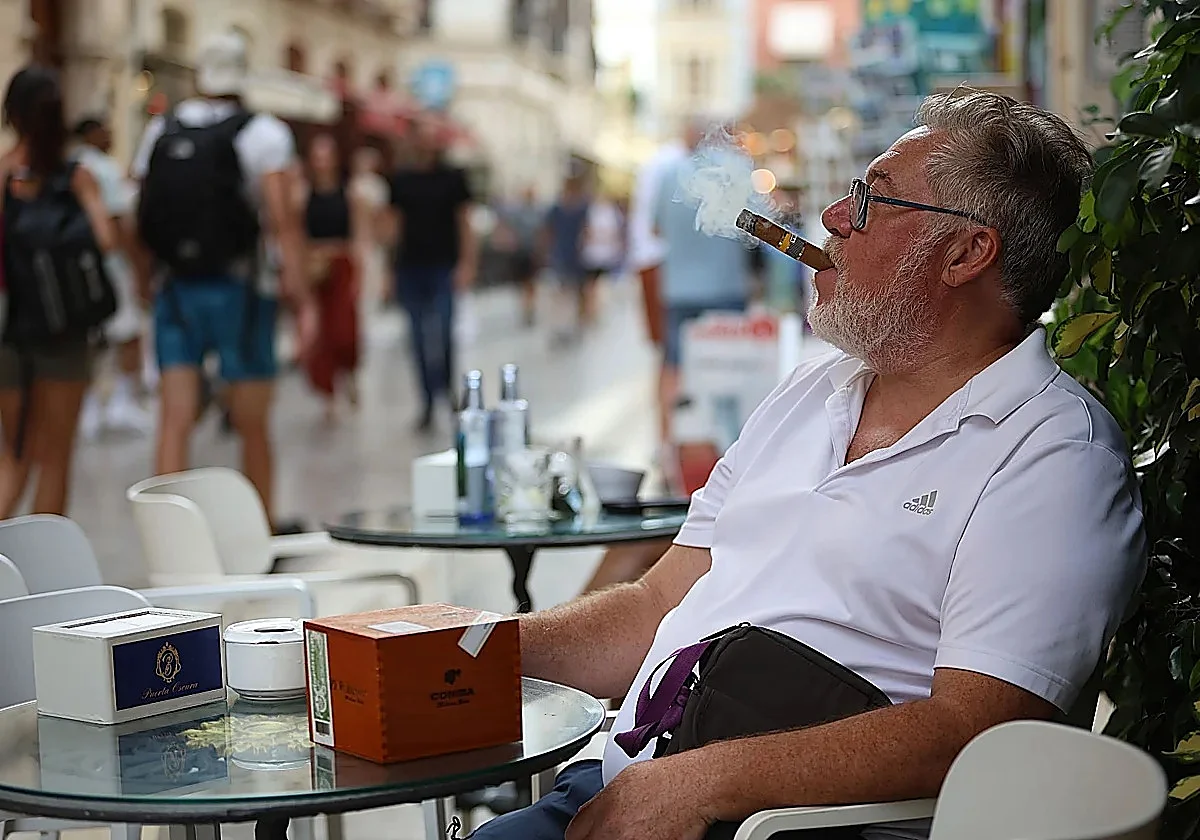
"Smoking is a breakfast ritual. I know it's not good for my health, but I take responsibility for that myself, however I want," he says.
Fermín Arriola is a waiter who works in the historic centre. He warns that, practically speaking, people won't stop smoking because of a ban.
"It only serves to shift more responsibility onto the workers. We're already swamped with having to scold every customer who lights a cigarette. Even if the locals comply, it's going to be a daily battle with the tourists. They'll just go five metres away from the terrace and keep smoking there. It already happened during the pandemic," he says.
There's hardly any room for grey areas in this debate. The act of smoking is an addiction, just like consuming sugar or alcohol. Nicotine is the drug, but the smoke is what's most harmful.
Smoking also has an undeniable social dimension. What image has cinema conveyed for decades? Who doesn't recognise it? A nice cold beer, maybe a bourbon on the rocks. Good friends around the table and interesting topics in the air. A pool table where people are playing. Then, a hand slips into a pocket where a small Pandora's box awaits to be opened. No rush. The small cylinder slides between the fingers. Smooth the paper and then gently tap the cigarette twice against the table to distribute the tobacco evenly.
Health experts, however, have shattered the romantic image of cigarette. Pulmonologist Borja Valencia states: "I am fully in favour of the ban. What's more, it's long overdue. The reality is that we have a million people who die each year from secondhand smoke. Being on a terrace or a beach and inhaling someone else's tobacco smoke is restricting the freedom of the non-smoker, not that of the smoker."
For Valencia, the ban will also have a positive impact in keeping young people away from tobacco.
"Older people are very aware of how harmful tobacco is. The problem lies with young people, with the proliferation of vapes and electronic cigarettes. The tobacco industry has even tried to convey the impression that these products are harmless," Valencia says.
The opinion of the hospitality industry
The Malaga hotel and restaurant association (Mahos) represents one of the sectors the new smoking ban will most impact. If it passes, cigarettes will disappear from the common sight.
"First of all, it should be clarified that this law has not yet come into effect. We believe that our terraces allow for coexistence between smokers and non-smokers, as they are open-air spaces," Mahos states.
The association insists that it does not promote smoking in any way. However, its members do point out that they consider the ban an ineffective measure.
"This doesn't mean we're in favour of tobacco, but we also don't think this measure will help reduce its consumption. Smokers will look for alternatives. They'll leave our terraces to smoke on the pavement or in areas near our establishments. We feel like we're being used as pawns and that our employees are being made responsible for regulating tobacco consumption. Banning instead of seeking dialogue doesn't seem like a real solution to us," Mahos says.
These positions are part of the Cabinet's proposal to pass a new, more restrictive anti-smoking law. This initiative seeks to substantially expand smoke-free spaces and tighten regulations on e-cigarettes.
The Ministry of Health intends to go a step further by implementing drastic measures aimed, above all, at deterring younger generations.
Browse the Sur in English lifestyle and expat living hub