The Euo Zone
Table talkEuropean leaders congregate in Brussels to discuss details of the bloc's next Multiannual Financial Framework (MFF), one of the most contentious in the bloc's history
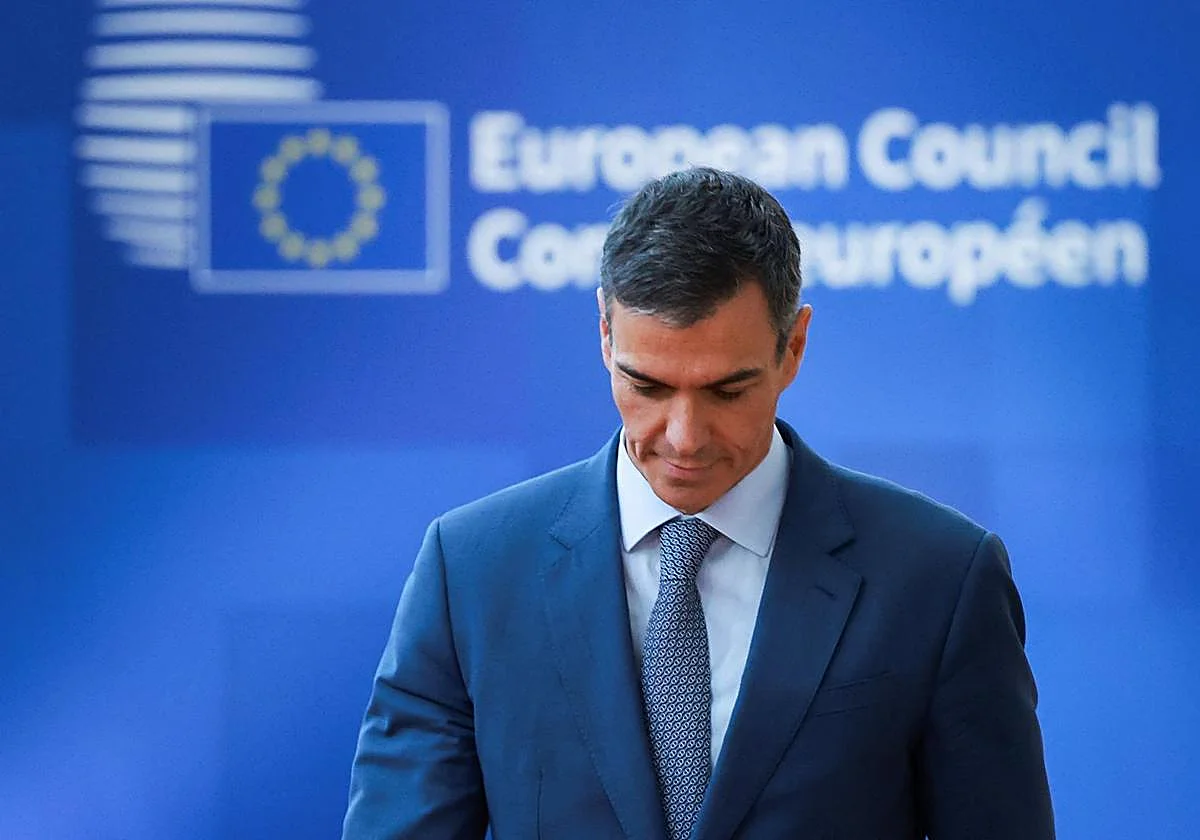
Añádenos en Google Pedro Sánchez in Brussels this week. (Reuters)Mark Nayler
19/06/2026 a las 02:00h.Pedro Sánchez is all too familiar with the difficulties of passing a budget in a divided parliament - a task that has proved impossible for the Spanish premier since 2023. The EU now faces a much more complex version of the same challenge. Today, European leaders congregate in Brussels to discuss details of the bloc's next Multiannual Financial Framework (MFF), which will cover the period 2028-34 and is likely to be one of the most contentious in the bloc's history.
After a preliminary meeting in Luxembourg on Tuesday, Piotr Serafin, the EU Commissioner for Budget, Anti-Fraud and Public Administration said that “no-one around the table [was] happy.” Unanimity is required for the approval of the EU's seven-year spending plans, but so far the overall amount of the next MFF isn't even agreed upon: the EU Commission has proposed 1.76 trillion euros, but the EU parliament is pushing for 1.79 trillion euros.
Along with 17 other countries, Spain has already secured a four-year “national escape clause” from EU budget rules, to give it room for increased defence spending (a rather odd allowance, given Sánchez's pacifism). Spain will also be among the EU countries pushing for tighter fiscal integration and mutual debt arrangements. Madrid wants funding schemes like the NextGenEU - introduced as a one-off to help member states recover from the pandemic - to become a permanent feature of EU financing.
The NextGenEU programme was funded by the issuance of 750 billion euros in debt bonds on international markets. These start maturing in 2028 - but along with France and Greece, Spain seeks a deferral of the repayments, as well as more mutual finance programmes going forward.
Whether to start repaying the NextGen debt now or at some unspecified point in the future will be one of the defining issues of Europe's next MFF. It has already set the Commission, which wants to start in 2028, against the EU Parliament, which seeks an indefinite deferral.
Spain's economy minister Carlos Cuerpo claims that more mutual debt financing would save the bloc 25 billion a year. His fellow travellers include French president Emmanel Macron, according to whom it would be “idiotic” to start NextGen repayments in 2028, and Greek prime minister Kyriakos Mitsotakis, who recently claimed that the EU has “no reason to do so”. Clearly, the maturation of international debt bonds is not a compelling reason for either leader.
This profligate attitude horrifies fiscally conservative countries such as Germany and the Netherlands, who point to recent allegations that Spain has wasted most of its NextGen payouts anyway. There will also be heated disputes over defence spending and the classic issue of whether wealthier nations should receive rebates for their contributions to the MFF. It's likely to be a while before the Brussels negotiating table is a circle of smiles rather than scowls.