Costa del Sol
The fault in Malaga’s sewerage system has not affected the beaches in TorremolinosThe analyses carried out by the University of Málaga confirm that the quality of the water and the beach sand sediments is excellent
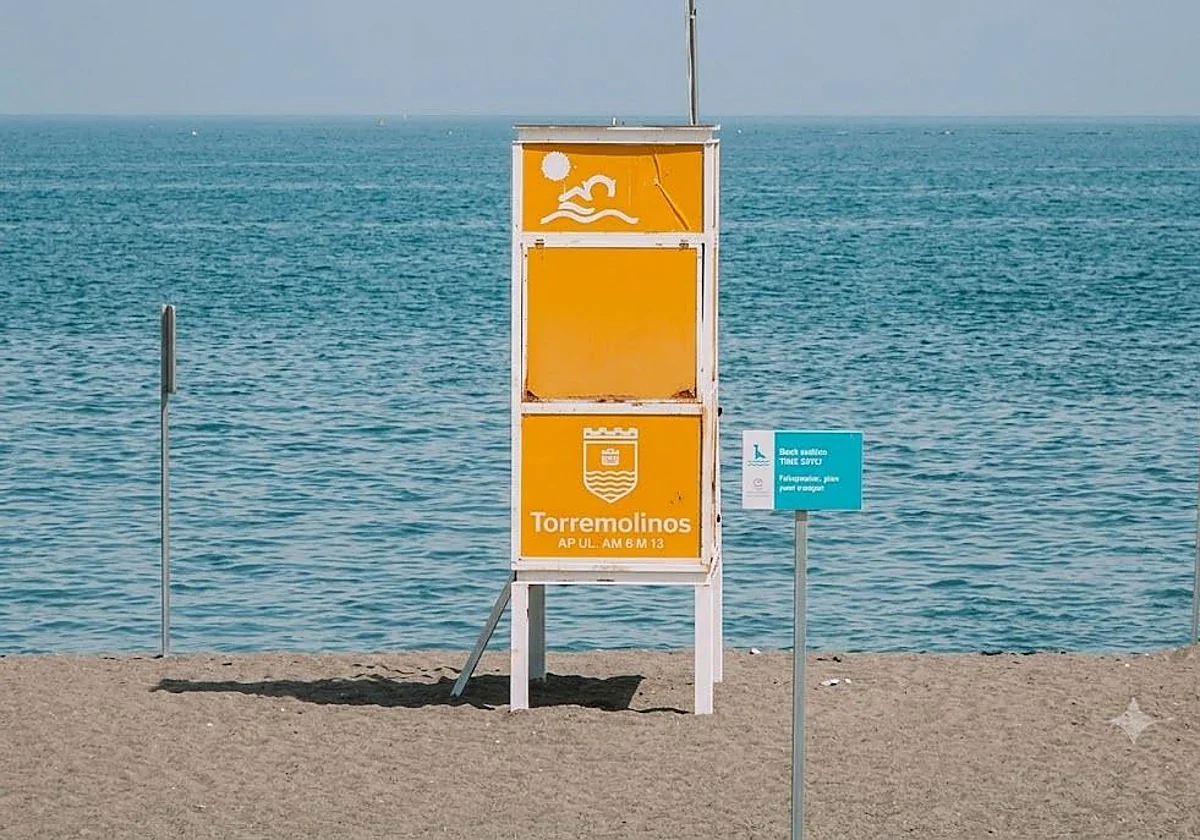
Añádenos en Google A lifeguard tower on Torremolinos beach. (SUR)Torremolinos
19/06/2026 a las 12:59h.The coastal sciences Chair at the University of Málaga (UMA), with which Aguas de Torremolinos collaborates, has once again confirmed that the quality of the ... municipality’s beaches is excellent, both in the bathing area and in the sand sediments.
These findings come after swimming was banned due to the disruption caused by the rupture of two pipes in the sewerage network of Malaga city – caused by the swelling of the river Guadalhorce following the heavy rains on the last weekend of December 2025 – in Los Álamos, on the outskirts of Malaga and at Arraijanal, near the golf course.
Faecal bacteria
The reason for this ban was the presence of faecal bacteria, which could not be prevented, despite the fact that, from the very outset, the city’s municipal water company (Emasa) had been seeking solutions.
Related story
on 22 May , that the bathing water quality parameters were, once again, within acceptable limits.
Excellent quality
The quality of the water and sand at all of Torremolinos’ beaches is "excellent", despite this incident, according to samples taken by the university.
This assertion is based on regular analyses of the beaches in Torremolinos, including Los Álamos, Bajondillo, Playamar and La Carihuela-Montemar. Work carried out there focuses on bioindicators of water quality, in accordance with the royal decree on the management of bathing waters and the relevant European directive.
Escherichia coli
Specifically, the tests focus on the absence of escherichia coli – the same bacterium that led to the red flag being raised for bathers – and intestinal enterococci, which are used as a health benchmark.
According to the results obtained in laboratories at the UMA’s faculty of sciences, all measurements taken at the various beaches fall into the ‘excellent’ quality category within the monitoring programme’s classification system, which also includes the ratings ‘good’, ‘sufficient’ and ‘insufficient’.
From triathlon to duathlon
As a general rule, monitoring takes place every fortnight during the summer season, up to 15 September, with the aim of tracking changes in water quality during the months when there are the highest numbers of bathers.
However, as Professor Franco Duro pointed out, “during the most acute phase of the problem, we analysed the water and found that it was not of excellent quality”, a fact that led to changes being made to the Torremolinos European Triathlon Cup, which was ultimately held as a duathlon, as it became clear that the swimming leg was not advisable.
48
Hours
However, once the problem with the sewerage network had been resolved, the situation improved. The key to understanding this recovery is that harmful microorganisms cannot survive for more than 24 or 48 hours in a saline environment. In other words, once the source of the bacteria has been eliminated, the water returns to its normal quality
However, once the problem with the sewerage network had been resolved, the situation improved. The key to understanding this recovery is that harmful microorganisms cannot survive for more than 24 or 48 hours in a saline environment. In other words, once the source of the bacteria has been eliminated, the water quality returns to normal.
The Chair in coastal sciences at the UMA is a research unit established in collaboration with public authorities and companies involved in the water cycle on the Costa del Sol, with the aim of analysing coastal quality using scientific methodology applied to beach management. The Chair’s director leads a team focused on transforming oceanographic, microbiological and environmental data into useful information for decision-making by public authorities, with a particular focus on safety, water quality and coastal sustainability.
Flags
These positive results come hand in hand with further recognition of Torremolinos as a destination, as, in 2026, its four beaches have once again been awarded the Blue Flag - which recognises them for their sustainability and environmental quality. This is the most important certification awarded at national level and is granted by the environmental and consumer education association.
The award is granted after meeting all the requirements set out in areas such as environmental prevention, a commitment to sustainability, improvements to facilities, safety and maintenance. Furthermore, Torremolinos also holds the ‘Q’ for Quality and the ‘S’ for Sustainability along its coastline.