Zoom
EFEManuel Vilas
Friday, 17 April 2026, 12:31
In the midst of the chaos of history in this year of '26, I suddenly stumble upon the moon. It has reappeared, returning to us like memories that were never entirely our own. The Artemis mission was not just a space voyage: it was a confession. A confession from a humanity that is tired of itself, needing to look at itself from a distance to understand what on earth it is doing here, breathing this air that feels more and more like it's on loan.
I remember when the moon was something intimate. It was in the songs, in the summer nights, in those walks we took without money or a future.
Now, the moon is once again a technological milestone, a destination with a budget, with contracts, and with the names of engineers whom no one will remember. And yet, deep down, it remains the same white stone our grandfathers looked at. That is the strange thing: we move forward only to return to the same place.
Artemis sounds like a goddess, like the hunt, like an ancient forest. But it also sounds like metal, like fuel, like screens filled with numbers.
It is a mixture of myth and algorithm, of poetry and calculation, like everything human. We want to touch the moon again, to step on it with new boots, leaving footprints that are not so different from those of half a century ago.
What are we looking for there? Water? Resources? A future? I believe we are looking for something simpler: we are looking for meaning; we are still searching for God. The Earth, meanwhile, keeps spinning in its exhaustion.
There are wars, there is noise, there is injustice. And in the middle of all that, we launch a rocket. It is almost an act of faith. As if by leaving here, we could forgive ourselves. As if the distance could cleanse us.
The Artemis astronauts are not heroes in the classical sense. They are men and women who accept the void, who climb into a machine and move away from everything they love.
There is something profoundly sad and beautiful about that. Because going to the moon is, in a way, abandoning the Earth. And abandoning the Earth always hurts.
Perhaps many years from now, someone will remember this moment just as we remember the old Apollo missions. Perhaps not.
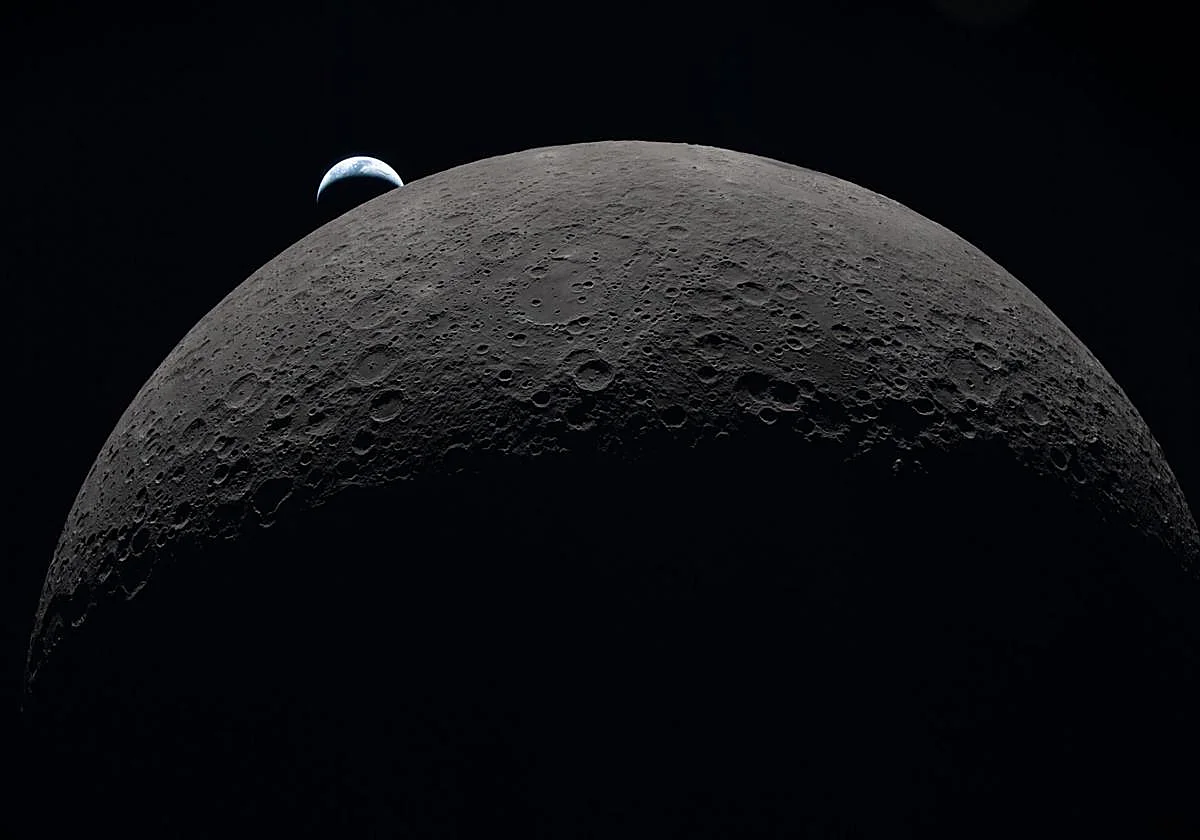
Perhaps everything will be diluted by the speed of information. But one image will remain: a human being walking once again on the lunar surface, looking up at that blue dot that is us. And then, in that instant, everything will stop.
Time, history, the noise. And someone will think: we have come all this way to understand that our place is still there, on that small, fragile planet where life is the greatest success in the universe.