Zoom
Adamuz train crash 2026 The retirement home where family members wait for news after fatal train crash in Spain: 'I'm looking for my daughter and my wife. Her phone is on but she is not answering'The Adamuz retirement home has become a refuge for the relatives who have not yet located their loved ones after the train accident in Cordoba province on 18 January
Juan Cano and María José Díaz Alcalá
Monday, 19 January 2026, 15:20
Nobody was playing dominoes at the Adamuz retirement home on Monday. The village elders did not turn up for their daily coffee and churros prepared by owner of the home Antonio. A couple of Red Cross bags are placed on the Parcheesi table, while the billiard table is covered by a mountain of blankets brought by residents for those who are searching and waiting.
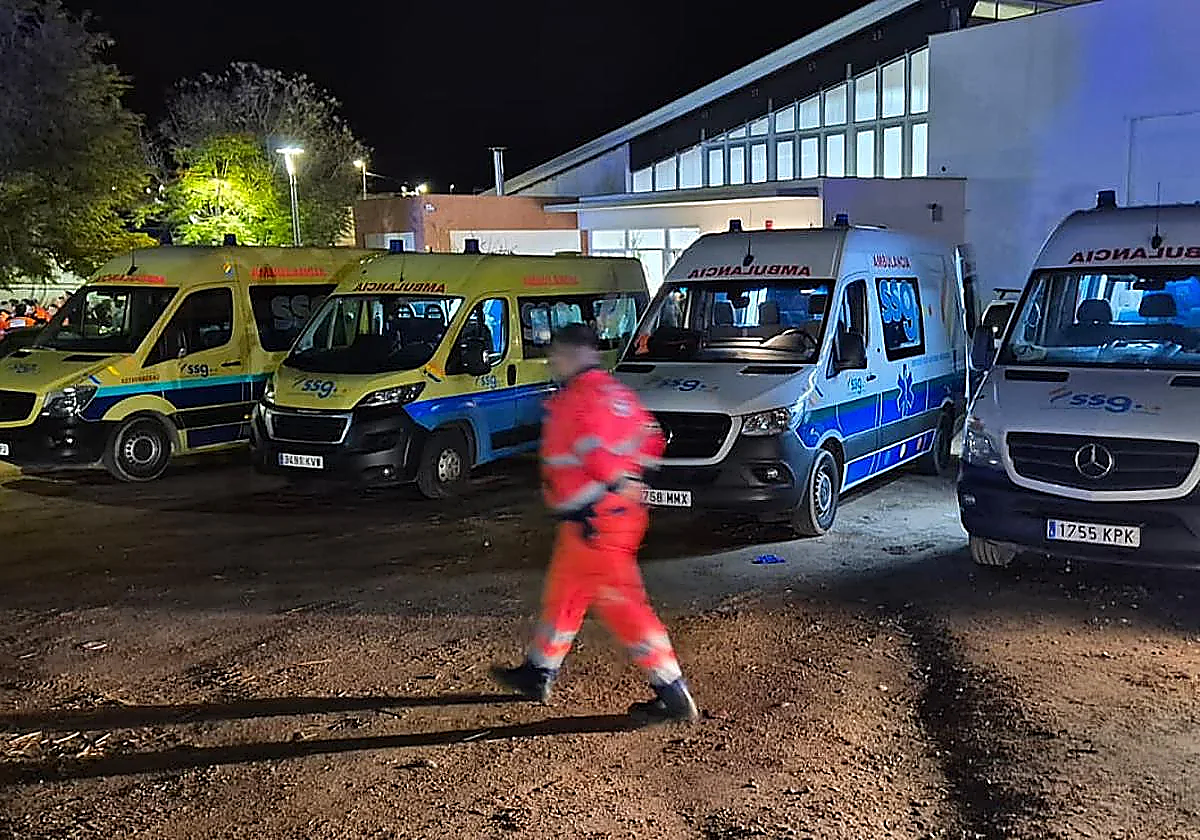
On the night of the accident, emergency services were spread across three locations in the village. The Adamuz choir headquarters was where the uninjured passengers and those with very minor injuries gathered to wait for the buses chartered by state railway operator Renfe to take them to their respective destinations.
A field hospital was set up in the municipal building to refer passengers with more serious injuries to different health centres. This location has become a scene of mixed emotions. There are happy reunions, like what Lola experienced when she was picked up, safe and healthy, by her brother and sister-in-law. Returning from civil service exams in Madrid, Lola had a seat in fatal carriage three of the Alvia train going to Malaga, but she made a last-minute change to carriage five to travel with a friend. "Maybe that saved my life," she said.
One of the darkest support and information points set up in Adamuz has been Antonio's retirement home, where he keeps serving the relatives of missing passengers coffee and tea, without charging. "It's the least we can do for them," he said. At midnight, there were barely a dozen people left because many had gone to look for their loved ones in hospitals. As the hours went by, the number of people waiting grew.
Juan Carlos, from Isla Cristina (Huelva), has been sitting at one of the tables, his hands covering his eyes to protect him from the sight of what's happening around him. His wife and 28-year-old daughter were on the Alvia train. Like Lola, the young woman was travelling from Madrid after sitting her prison service civil exams and her mother was accompanying her. "We haven't stopped calling them. My hope is that her mobile phone is on, but she's not answering."
SEARCHING FOR FRIENDS AND FAMILY
Next to him are two young men in their 20s who cannot find their parents; a couple looking for a friend; and Fidel, who has located his two children, his nephew and his brother in the hospital, but has no information about his mother. There is also a man from Huelva who has been asking about his wife, Tamara, all night. "This is a lost cause," he said, worn down by the passing hours. "Is there any hope of finding her in a hospital? If it doesn't happen to me, it will happen to one of these young people here."
Juan is from Punta Umbría and has four family members missing: his first cousin, who was travelling with his wife and two children, and another second cousin. Of the five relatives who were on the Alvia train, only his six-year-old niece has managed to get out by herself and is now with her grandfather. The family had gone to Madrid to spend the weekend and watch the match between Madrid and Levante. "What a terrible time and we're not even football fans," Juan said.
Police officers, Red Cross volunteers and psychologists are supporting the waiting family members. Belén, who was the first healthcare worker to arrive at the scene, is also still there. The scene is overwhelming. The bathroom bin is full of wrappers from the swabs used for DNA testing, used by the Guardia Civil to cross-reference with the remains found in the carriages. At that moment, the man from Huelva who has been searching for his wife approaches an officer, visibly desperate, and asks: "In my case, how would that be done?"