Tourism
The supreme court overturns the single register of tourist accomodationsThe ruling found that the central government lacked the authority to create this registry, which the European Commission had also warned Spain involved administrative duplication
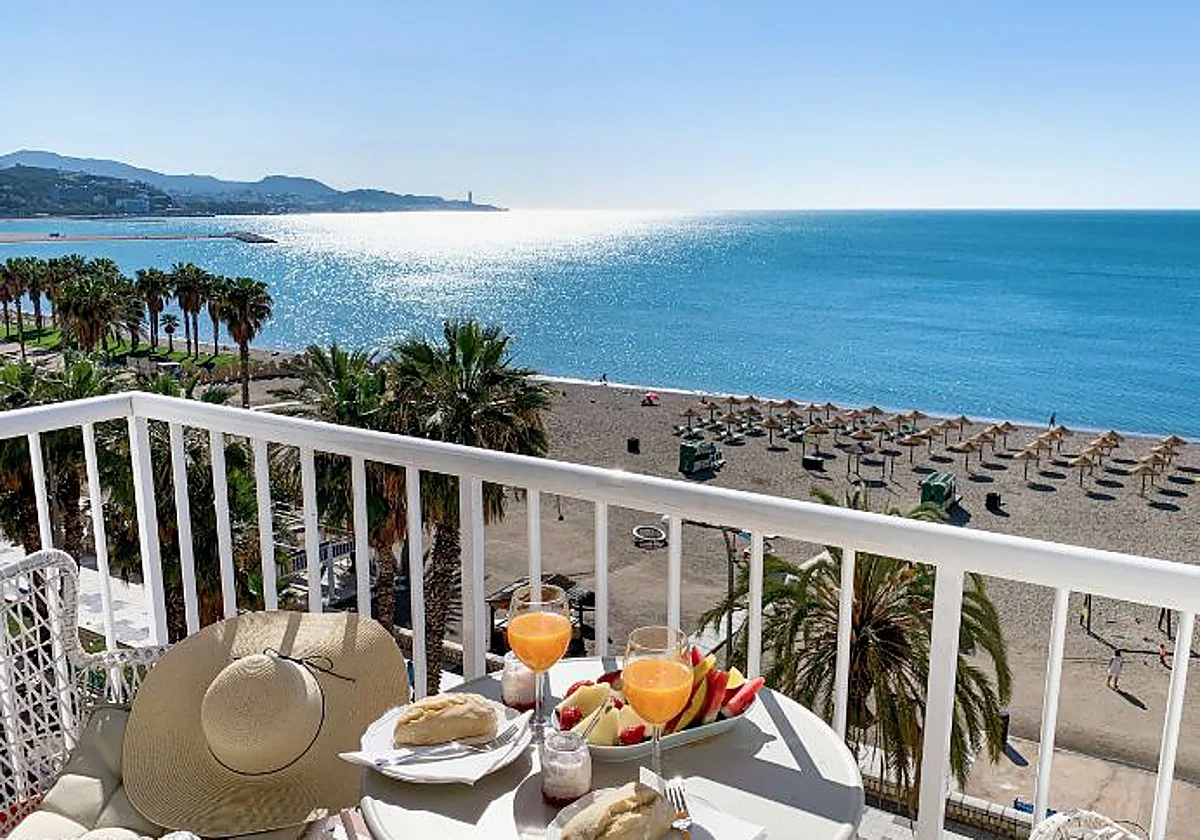
Añádenos en Google Terrace of a holiday home on the Costa del Sol. (SUR)Málaga
24/05/2026 a las 17:18h.The supreme court has overturned the single register for short-term rentals, which required tourist accommodation properties to be registered both on this register and ... on the corresponding regional register in order to operate on the major holiday rental platforms.
Five autonomous communities, including Andalucía, challenged this measure, and the ruling by the supreme court stated that the central government does not have the authority to create such a register, siding with the regions that do hold these powers.
The court addressed in its judgment No. 620/2026 the nullity of the single registration procedure for short-term rentals intended to be advertised through digital platforms, regulated under royal decree 1312/2024 of 23 December.
This was done on the grounds that the government “lacks the constitutional authority to establish a comprehensive regulation for a national register, which overlaps with the existing regional registers, concerning the registration of properties intended for tourist lettings”. Around 75,000 holiday rental properties in the province of Malaga are affected by this system.
Related story
Tourism
deadline given to Spain last February by the European Commission body that oversees the preventive scrutiny of Member States’ technical legislation to protect the single market, TRIS, to put an end to the administrative duplication imposed on tourist accommodation in Andalucía. These properties have been required since 2016 to register in the regional tourism register, under the competent regional authority, and since last year also in the single register promoted by the national government for these properties across the country. However, the government has continued to push ahead with this system, which has now been overturned by the supreme court.
The acting tourism minsiter of the Junta de Andalucía, Arturo Bernal, said that the supreme court “has ruled in favour of Andalucía by annulling the single registry for short-term rentals for infringing regional powers, exactly what the regional government had been warning for more than a year". "This is not a technicality: it is yet another piece of evidence that the government of Pedro Sánchez legislates from ideology and turns its back on the legal system and respect for devolved competences,” he claimed.
He added that Andalucía challenged this regulation in May 2025, arguing an encroachment on devolved powers and a lack of institutional dialogue. “Today the supreme court has ruled in our favour. The court itself clarifies that the European regulation did not require a nationwide registry nor did it alter the internal distribution of powers. The duplication was a political decision, not a requirement from Brussels,” he said, before strongly criticising what he called “the blatant irresponsibility of the central government". “It imposed a mandatory single registry from 1 July 2025 without the necessary constitutional or legal basis, ignoring warnings about legal uncertainty that the regions had been raising for months. Legislating through imposition and improvisation has consequences: rules that are dead on arrival, that generate administrative chaos, and that end up being struck down in the courts. Brussels had already warned of this.”
Bernal concluded by saying, “This decision also confirms the negligible weight that tourism has in the council of ministers, despite being one of Spain’s main economic engines and, especially, of Andalucía. Legislation is being made about the sector without involving the sector and without involving those who hold the responsibility. That is not how you govern: that is improvisation.” He has now asked the government: “Who is going to cover the costs caused by this botched job?”