Art
Thyssen Malaga rescues a 'supremely gifted' Baroque masterThe Carmen Thyssen Museum explores the parallel lives and tragic ends of the Valencian masters who pioneered the naturalist Baroque
Añádenos en Google Curator Pablo González and director Lourdes Moreno. (Ñito Salas)Paco Griñán
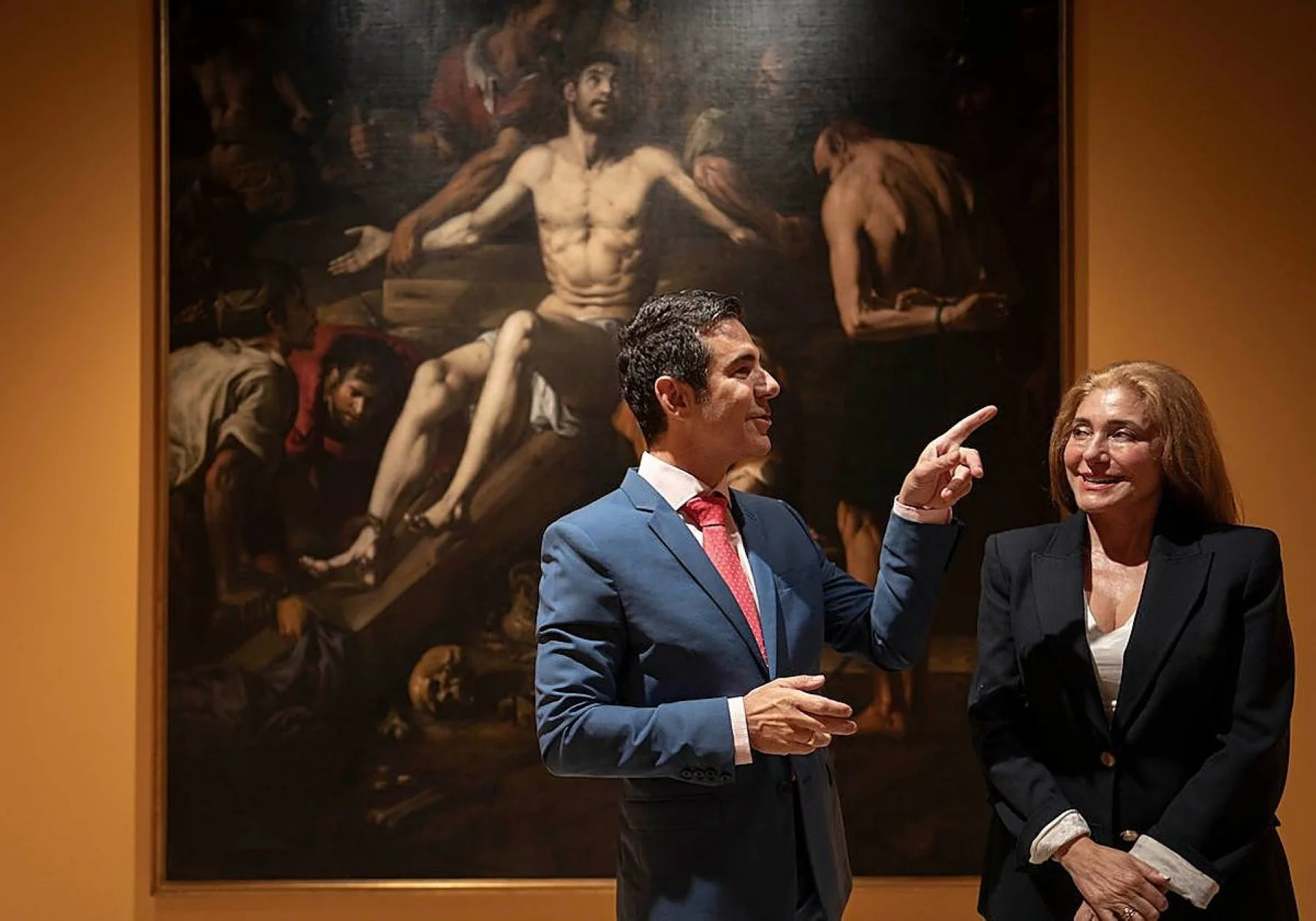
12/06/2026 a las 02:00h.It is the smallest and most elegant room in the Carmen Thyssen Museum. That is why Preparativos para la Crucifixión 1615 (Preparations for the Crucifixion) is so striking upon entering the Sala Noble. This monumental canvas, measuring three by two and a half metres, was painted by an 18-year-old Juan Ribalta, who challenged his father and master, Francisco, by replicating a religious scene the elder Ribalta had painted years before. Charged with drama, its skull, dice and shadows signal the arrival of Tenebrism.
This work, by a gifted young artist, leads the Los Ribalta y el Barroco Naturalista exhibition (the Ribaltas and naturalist Baroque), which brings ten monumental pieces by these Valencian masters to Malaga for the seasonal exhibition. Their parallel destinies were bound by both painting and death; despite a 30-year age gap, both died of typhus in 1628.
“They were the germ of the first Valencian school, but the son would have been the great painter of the Valencian Baroque had he not passed away,” explained curator Pablo González Tornell. Juan was not only a prodigy who rivalled his father but also an intellectual.
Visitors can compare five works from each artist, showcasing a Baroque that connects with Malaga's own heritage, such as sculptor Pedro de Mena. The collection comes from the museum of fine arts of Valencia. Francisco introduced naturalism to religious painting, fulfilling Counter-Reformation ideals to stir devotion through emotion. Outstanding pieces by the patriarch include Saint Bruno and Magdalena after Communion.
Meanwhile, Juan grew up in the workshop, initially copying his father before establishing his own style with dramatic compositions and Italian-influenced light. Tragically, he died just nine months after his father from the same illness, as if he were a character in his own tragedy, forever marked by his father's shadow.
The exhibition continues until 4 October.