History
‘To Ohio’, or an American-style gold rush in AndalucíaFifteen years after the 1849 California Gold Rush, Spain experienced its own. Meanwhile, seventy years ago, Andalucía acquired a gold processing plant named after an American equipment supplier
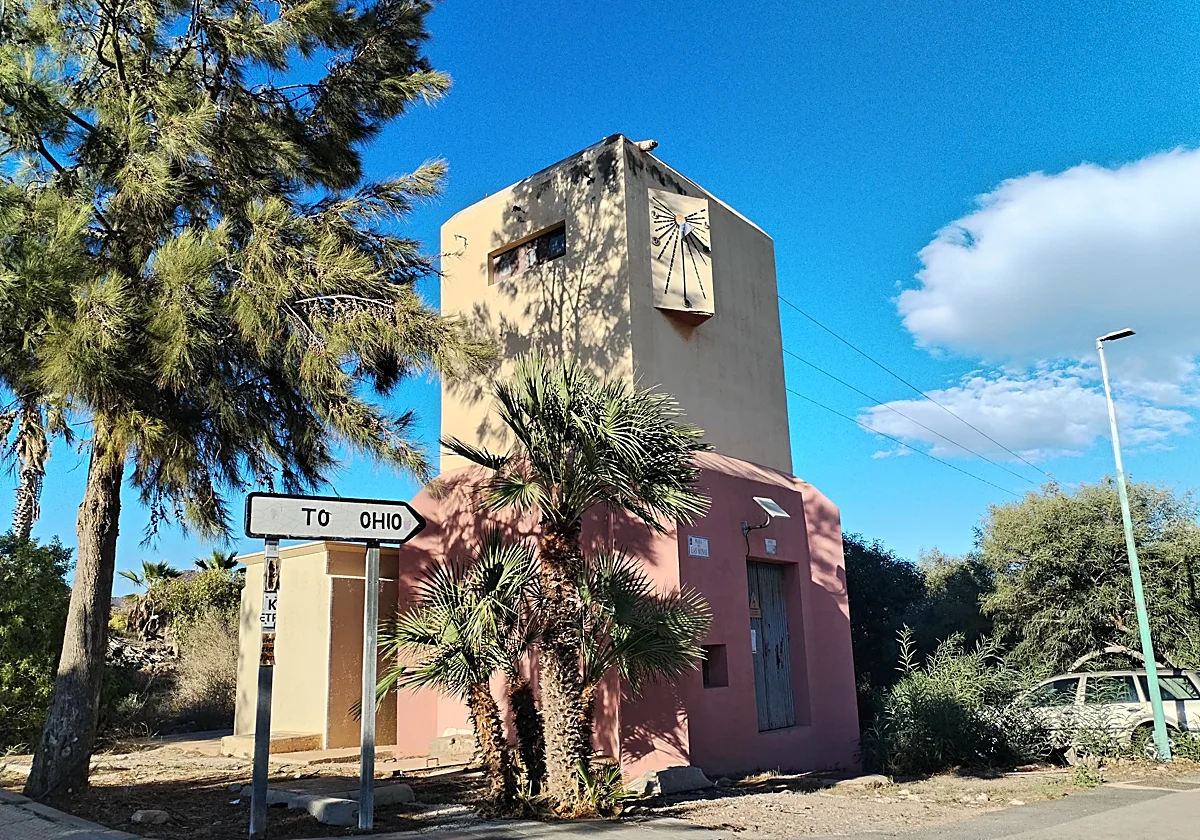
Añádenos en Google 'To Ohio' sign in Rodalquilar. (A.N.Saanders)Alekk M. Saanders
Almeria
06/07/2026 a las 09:57h.Over the course of its 250-year history, the United States has come to be associated, in particular, with fast food, Thanksgiving, American pie and the American Dream. The ‘Gold Rush’, known as the ‘Gold Fever’ as well, is also closely associated with mid-19th-century America, during which hundreds of thousands of gold prospectors flocked to the Wild West.
The American West has been successfully recreated in the Las Tabernas desert in Almeria, home to ‘Mini-Hollywood’. However, few people know that there is a place in Almeria province which is also historically linked to America, and where you can see a road sign reading ‘To Ohio’ and where one of today's most popular attractions is Planta Denver - a processing plant named after an American equipment supplier.
A chance discovery
The Andalusian gold rush began in the very heart of the Cabo de Gata Natural Park following the chance discovery of gold in 1864. (It is believed that the gold in the area around the village of Rodalquilar was formed around 11 million years ago.) However, it was not until the early 20th century that a period of intensive small-scale mining began.
In 1928 Minas de Rodalquilar SA was founded in Madrid which was effectively controlled by the British
The first two companies to attempt gold mining were private enterprises owned by local miners. In 1928 Minas de Rodalquilar SA was founded in Madrid and headed by the Marquis of Arriluce de Ybarra (although the company was effectively controlled by the British).
Three years later it succeeded in establishing the extraction of Rodalquilar gold directly from the mine using cyanidation. To this end, a complex known as the Dorr plant was built, comprising agitation tanks, a counter-current leaching system and the PAF building. The company operated successfully until 1936, when the mines were seized by trade unionists who attempted to operate them during the Spanish Civil War.
From 1956 onwards, the state-owned company Adaro was responsible for the largest-scale gold mining in the region. It built a large power station and a smelting plant.
The American company Denver was responsible for supplying and manufacturing all the equipment and technology required for gold processing. The Denver plant was the largest cyanide processing complex in Europe. The plant utilised technologies that were state-of-the-art for the time, enabling the efficient extraction of the precious metal. The mined ores, primarily gold, were processed and purified using flotation and cyanidation methods. It is reported that at the height of its operations, the plant produced up to 280 kilos of gold per month.
Incidentally, a sign reading ‘To Ohio’ still stands on one of the village’s streets, which can be easily taken as a reference to the US state. However, 'Ohio' is indeed 'Adaro' which was adapted and misread by some residents and workers due to the spelling conventions of the time.
A testament to the 'golden age'
The plant, operated by Adaro, remained in operation until 1966. By that time, the veins had been exhausted, and the plant closed, leaving behind a ghost settlement. It is worth noting that in 1989, the gold mines were briefly reopened by St Joe Transaction Inc. y Cia., Sociedad Regular Colectiva - a Spanish company with British capital. However, in 1990, the mines were closed down for good, despite the fact that the concession period totalled four years.
The reason for the definitive closure of the entire mining complex was the extremely low profitability of the extraction. Although quantities of gold still remain, its concentration in the rock is so low that it made working there unprofitable.
However, one local resident shared his views with SUR in English, stating that the reserves of the precious metal are estimated at approximately three tonnes. He believes that gold mining in Rodalquilar could once again become profitable today, but the area’s designation as a nature reserve makes the resumption of mining operations impossible.
Volcanic mountains and the village centre.. (A.M.Saanders)The Denver plant stands today as a testament to the ‘golden age’ of the mining industry in Andalucía. It is now regarded as one of the region’s main tourist attractions, set amid the semi-desert landscape of Cortijo del Fraile. Furthermore, the site is included in tourist itineraries, offering visitors a fascinating insight into the region’s mining history and the opportunity to explore the ruins and the natural landscape of the Cabo de Gata-Níjar Natural Park. To learn the full history of the Denver plant, it is well worth visiting the Casa de los Volcanes museum.