Zoom
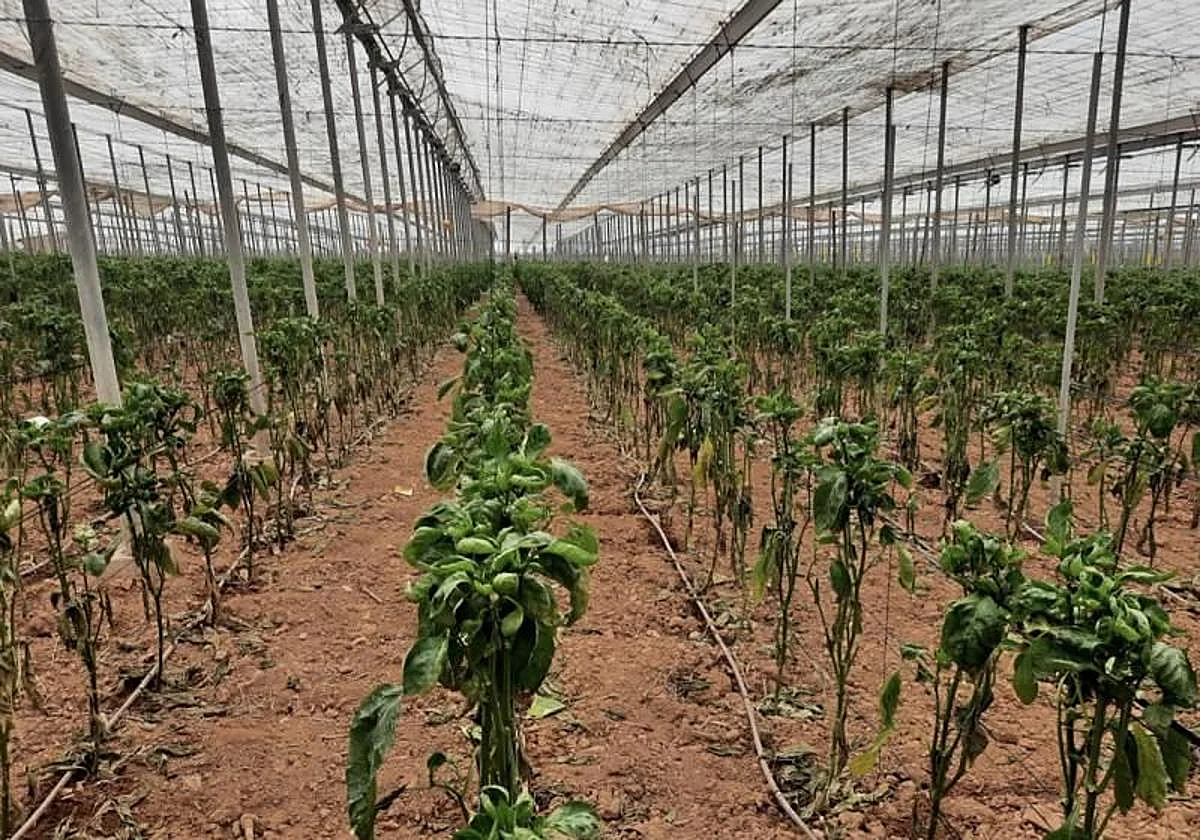
Archive image of a pepper plantation Agriculture Tobacco pest from Asia affects cucumber and pepper production in AndalucíaAlso known as the pepper thrips, it has caused growers to uproot entire crops, so the Junta has issued a resolution with mandatory and recommended measures to prevent further spread of this plague
E. PRESS
Monday, 20 April 2026, 13:09
The Andalusian Ministry of Agriculture has officially declared a plague of Thrips parvispinus - commonly known as tobacco or pepper thrips - across the provinces of Almería and Granada.
Originating from Asia, this invasive insect is causing significant concern for Spain’s "orchard of Europe," prompting the regional government to issue a mandatory resolution for its prevention and control.
Among the measures implemented to prevent "high levels of pest presence", owners of greenhouse farms growing peppers, cucumbers, aubergines, courgettes, melons and watermelons will have to follow a protocol for uprooting these crops, as they are "safe harbours" for Thrips parvispinus. The resolution, published on Friday in the Junta's official gazette (BOJA), came into force the very next day (last Saturday).
Before pulling up the plants, farmers will have to apply a phytosanitary treatment. "Additionally, in cases where a high presence of the pest is detected in the biodiversity present in the greenhouse, a phytosanitary treatment must also be applied to that space." To this end, it is mandatory to "notify nearby neighbours well in advance so they can take any measures they deem appropriate. Evidence of this must be kept to prove this matter to the authorities if required."
Likewise, before transplanting or sowing the next crop, the greenhouse structure must be disinfected and thoroughly cleaned in areas that could harbour the pest. Regarding pests, the Junta recently asked its own regional minister for agriculture, Luis Planas, to set up an extraordinary technical working group on plant health to analyse the various measures that should be implemented, such as authorising the necessary phytosanitary tools to achieve profitability in the food production sector, especially after the recent storms that left a trail of damage.
Losses in the sector
Europe has the most demanding regulatory framework for the authorisation of plant protection products, which provides security for both farmers and consumers alike. However, it is also necessary to provide producers with greater certainty to avoid the regulatory fluctuations that sometimes leave gaps that are difficult to fill in order to protect crops.
"The biggest challenge we are currently facing in agriculture is plant diseases. This is no small issue and it is jeopardising the Andalusian countryside, one of the leading powers in agricultural production in Europe and the fruit-and-veg foodbasket for millions of Europeans", stated the regional government.
The Junta in Andalucía has allocated 22.5 million euros to compensate for extraordinary expenses and mitigate losses in the sector resulting from, among other things, the impact of pepper thrips, also known as downy mildew. The Junta also referred to the integrated biological control strategy deployed to tackle pests and guarantee the sustainability of the Andalusian agricultural model through innovation and research, but also with knowledge transfer through the institute for agricultural and fisheries research and training (Ifapa).