Zoom
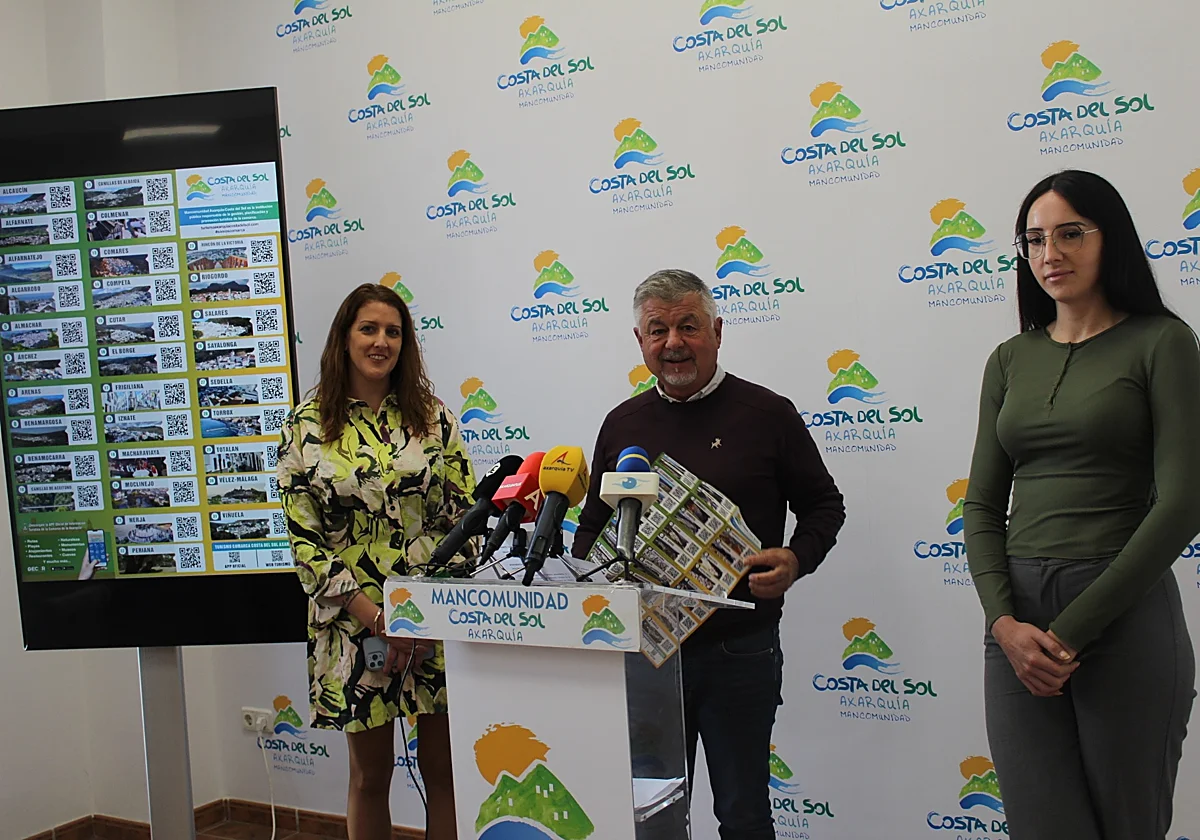
Presentation of the initiative in the Mancomunidad Oriental. SUR Tourism Tourism in east of Malaga province takes a digital leap forward with a new mapThe association of town halls in the Axarquía has produced a guide that incorporates QR codes with information on events, routes, services and tools for a more complete experience
Monday, 5 January 2026, 16:15
The Axarquía area to the east of Malaga province has produced a new updated promotional guide and map with QR codes to provide further details on events, visit schedules, videos, blogs, downloadable maps and recommendations that are updated almost instantly.
The new map brings together information about the 31 towns and villages that make up the Axarquía, from the whitewashed villages perched on the mountains of the Tejeda and Almijara ranges to the seaside towns that line the coastal strip between Nerja and Rincón de la Victoria.
The protagonists are the five Axarquia tourist routes, all of which have the 'Q' for Quality certificate. "They are an example of what we can achieve when we work together," said the president of the Mancomunidad association of town halls in the Axarquía, Jorge Martín, at the presentation. He added that historically the Axarquía has suffered from fragmented promotion.
The 42x30 centimetre physical map folds up to fit in a pocket and it also contains QR codes that open the door to extra information. "We are asked less and less for paper and more and more for digital downloads. The printed format is now almost a symbolic gesture," admited Martín, who adds that the future lies in a hybrid model between the physical and the digital.
The trend is clearly visible at trade fairs including Fitur, where this new map will be launched for the first time in 2026. "We find visitors who seek inspiration before arriving, who share content during their stay and who give their opinion when they return. We have to accompany them on this emotional and technological journey," said the president in a statement, convinced that paper is no longer enough.
Contributions
The new map has been made possible thanks to the involvement of the 31 town halls, which have contributed images, links and updated data. This is an unusual coordination in an area which, until recently, presented its tourism offer as a puzzle of scattered identities. Now, the area is recognised in shared projects such as the Axarquía Film Office, the SICTED certification, the Axarquía Andalusí initiative, the GECOR application and the official tourism
In recent years, the Axarquía has tried to construct its own discourse: the land of muscatel grapes, of the Maro-Cerro Gordo cliffs, of verdial olive oil, of Mudejar villages, of winter surfing, of hiking routes linking ravines and natural viewpoints. This story is still in full gestation and materials such as this map, increasingly lighter on paper and more loaded with digital content, are part of that search.
"It's about connecting with the visitor before, during and after their visit," explained Martín. An aspiration that, seen in perspective, reflects the ambitions of an area that wants to stop being a discreet alternative and become a destination with its own personality. In this Axarquia that looks to the future, the map is no longer a simple plan; it is a mirror in which the area begins to recognise itself.