Environment
Two Malaga beaches remain closed due to faecal bacteriaThe tests at the Guadalmar in Malaga and the Los Álamos in Torremolinos rule out any impact on other beaches
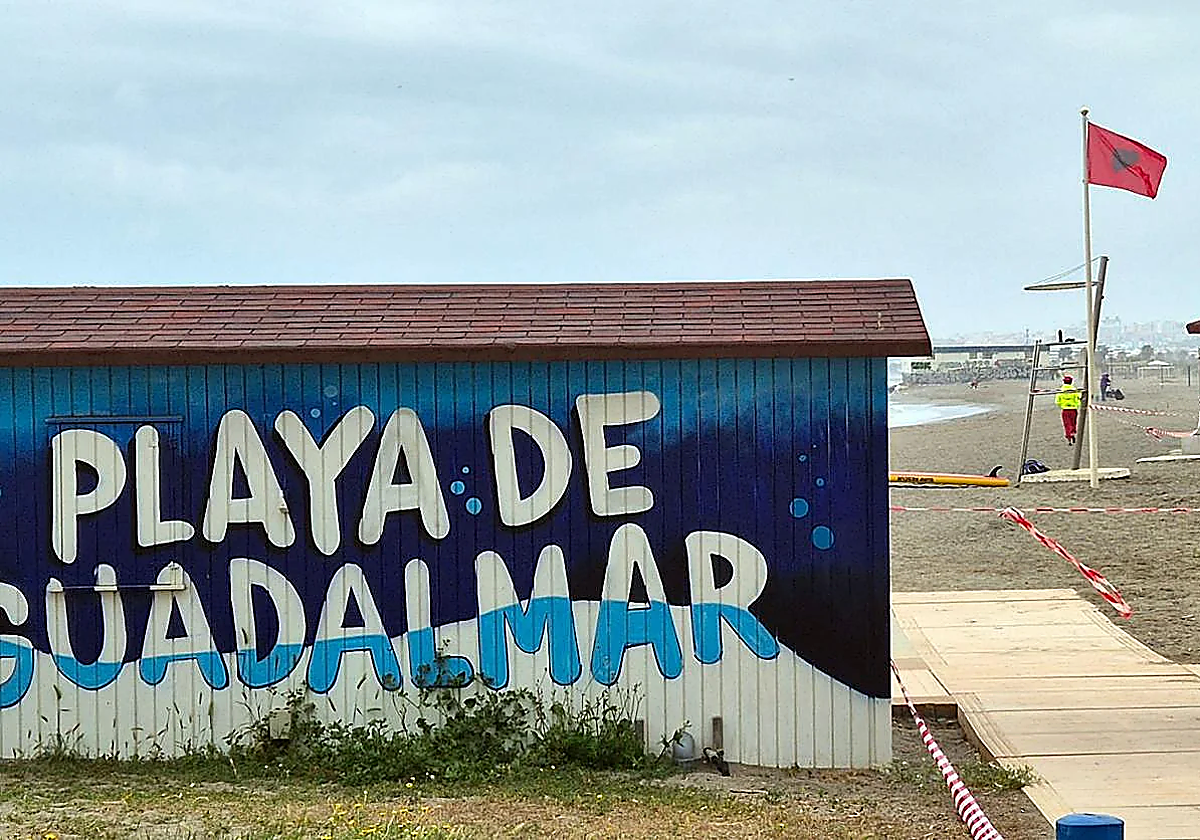
The Guadalmar beach in Malaga, with the red flag banning bathing. (Salvador Salas)Chus Heredia
06/05/2026 a las 12:58h.The bathing season doesn't officially begin until the first day of June. The regional ministry of health, however, conducts regular analyses at beaches even before that date. Recently, the department detected the presence of faecal bacteria at a couple of beaches in the Costa del Sol, which makes swimming unsafe in the area.
The two beaches are the Arraijanal in the Guadalmar area in Malaga (next to the golf course) and the Los Álamos in Torremolinos. The town halls have been collaborating with environmental experts to carry out follow-up analyses, which rule out, at least for now, contamination spreading to other beaches.
The source of the problem is well known: the rupture of a large sewer line that crossed over the Guadalhorce river during the red alert for heavy rains at the end of last year.
Temporary and long-term works
The solution depends on public water company Emasa's work. It first has to implement a temporary measure, scheduled to finish next week. From then on, the concentration of Escherichia coli should gradually disappear.
The second, long-term measure should be ready in August. In the meantime, the red flags, signs and barriers remain on the beach, where lifeguards are also on alert to prevent anyone from swimming.
Authorities have banned bathing at the Malaga beach since the end of December and in Torremolinos since the last week of April.
The incident
"Wastewater from the Churriana, Finca Monsálvez and Guadalmar districts in Malaga, as well as the wastewater from the municipality of Torremolinos, flows to the Guadalhorce wastewater treatment plant (WWTP) via two 1,000-millimetre-diameter pressure pipes. These pipes cross the Guadalhorce river supported by a 68-metre-long reinforced concrete structure. The heavy rains of 27 and 28 December 2025, caused a significant rise in the Guadalhorce river, reaching record levels. As a result of this flooding, one of the piers of the structure was damaged and gave way, causing the two pipes to collapse," the tender specifications that served as the basis for the bidding process state.
Currently, wastewater flows into the sea through the drainage pipes of the Guadalmar pumping stations. "Emasa is making every effort to restore sanitation services temporarily by using a 500-millimetre-diameter pipeline for reclaimed water from the wastewater treatment plant to the entire western area, which is currently installed," the statement highlights.
Related story
Infrastructure
Chus Heredia
The sanitation system in this area is a victim of the aforementioned 'perfect storm'. In addition to the obsolete facilities, there are environmental constraints. The Guadalmar pumping station also required protection with breakwaters years ago due to rising sea levels.