Zoom
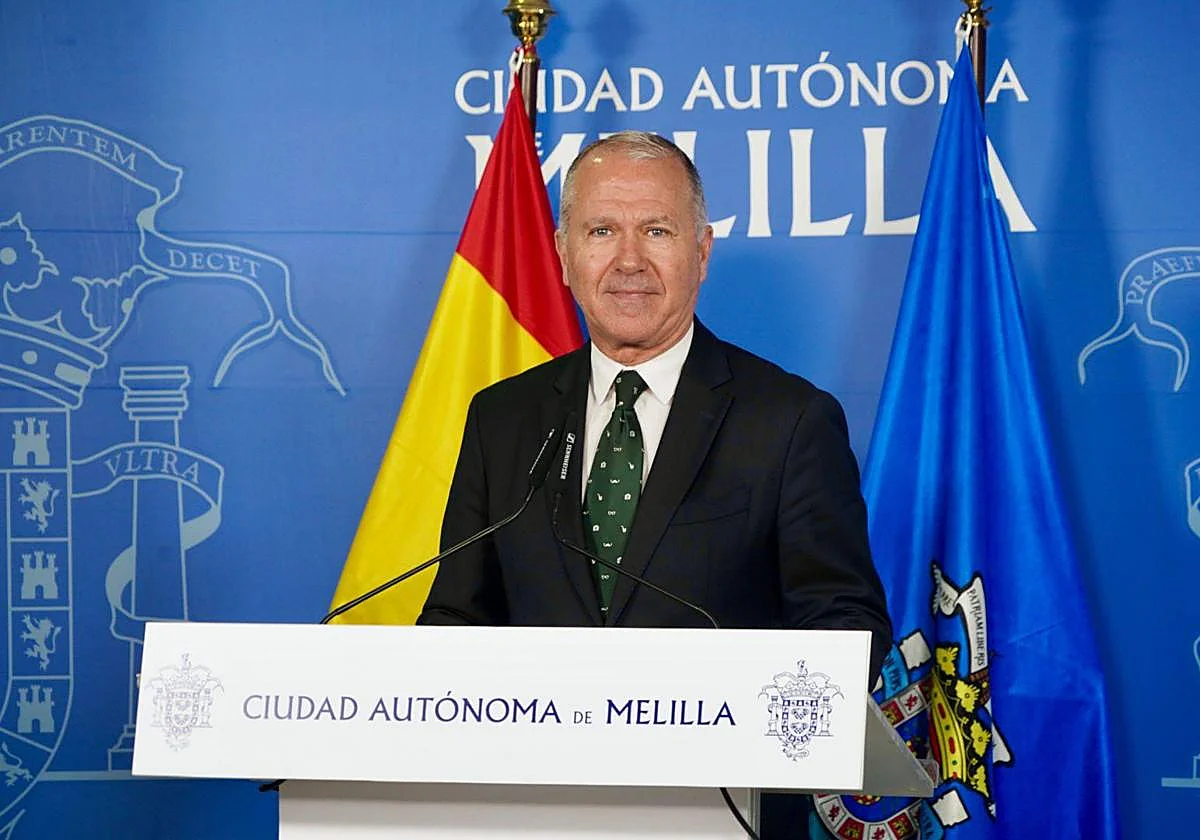
Miguel Marín, First Vice-President of the Government of Melilla and Minister for Economy, Trade, Technological Innovation, Tourism and Development. Extra Ciudad Autonóma de Melilla “Visitors can immerse themselves in Holy Week celebrations every day in Melilla”Miguel Marín, vice-president of the Government of Melilla and Minister for Tourism, highlights the tourist appeal of the Easter celebrations in the autonomous city
SUR in English
Melilla
Friday, 27 March 2026, 15:32
Among the many and varied attractions that Melilla offers visitors, its Holy Week stands out as one of its great hidden treasures. With a centuries-old tradition, striking visual beauty and the added advantage of avoiding large crowds, along with excellent air connections to mainland Spain, taking advantage of the upcoming holidays to travel and experience Melilla’s Passion first-hand is an outstanding option for a family break.
Zoom
What’s more, thanks to its Bonos Turísticos, or tourist vouchers (bonosmelilla.es), Melilla is now more accessible than ever. This initiative is designed to help more people discover the city’s highlights, offering significant discounts of up to 75 per cent on transport and accommodation.
In this interview, Miguel Marín, First Vice-President of the Government of Melilla and Minister for Economy, Trade, Technological Innovation, Tourism and Development, shares some of the key elements that make Holy Week in the city such a unique tradition.
On the eve of the tourist season, what does Holy Week in Melilla offer? What potential does it have as a draw for visitors?
Holy Week in Melilla has several dimensions. One is the traditional aspect, with professional processions that rival those of any Spanish city. We’re talking about a tradition that dates back more than 500 years. As early as 1497, with the arrival of Pedro de Estopiñán, the city’s founder, the Cristo de la Veracruz was already being carried in procession by his soldiers.
Zoom
Holy Week is also deeply rooted in Melilla. It’s experienced with the same intensity as in Malaga or Seville. In the city, processions take place every single day of Holy Week. It’s a living Passion: from Palm Sunday to Easter Sunday, there are processions every day. This is thanks to the five brotherhoods in the city: Nazareno, Flagelación, Cautivo, La Soledad, and Cristo de la Paz y La Castrense.
There are many details and memorable moments that make Holy Week in Melilla special. I’d like to take this opportunity to invite people from across Andalucía, as well as those visiting the region at this time, to come and experience it. We’re just 35 minutes by plane from Malaga and Almeria, one hour from Seville and 40 minutes from Granada, with direct flights from all three cities.
Anyone who prefers to travel by sea can reach Melilla from Malaga in six hours. It’s a very pleasant journey on an excellent ferry. This option is also available from Almeria and Motril.
What advantages does experiencing Holy Week in Melilla offer compared to other cities that celebrate this tradition?
It has a clear advantage over cities such as Malaga: there aren’t the same large crowds, so the processions can be enjoyed properly from different parts of the city.
There are also several convenient ways to get here, depending on what works best for you, as I mentioned earlier. You can fly for a quick journey or travel by ferry for a more relaxed, enjoyable trip. On top of that, discounts of up to 75 per cent are available through the tourist voucher scheme on bonosmelilla.es, making the experience even more accessible.
Zoom
What makes Holy Week in Melilla a unique tradition, unlike any other in Spain?
Each brotherhood has its own distinctive features, and a few stand out in particular. The Nazareno procession, for example, begins at the city’s bullring, which makes for a striking setting and a memorable experience.
There is also a particularly interesting sculpture from Malaga, the Cristo de la Paz. The float it is carried on is the former float of the Resucitado in Malaga. It was brought over from the Malaga area after it was donated to Melilla. This is a good example of the strong historical ties between the two places.
Zoom
Another defining feature is the active involvement of the military, especially the Spanish Legion. One of the most moving moments is the procession of the Virgen de la Esperanza, accompanied by legionnaires as they sing ‘El Novio de la Muerte’.
What are the key highlights of the Passion in Melilla, the moments visitors shouldn’t miss?
It’s hard to single out just a few moments, as the whole week is worth experiencing. From Palm Sunday to Easter Sunday, processions take place throughout the city every day.
That said, there are four especially important moments. Palm Sunday is spectacular, particularly as it passes through Parque Hernández. Maundy Thursday and Good Friday are also key days, when the whole city seems to take to the streets. On Maundy Thursday, the Brotherhood of Nuestro Padre Jesús Cautivo de Medinaceli continues the tradition of releasing a prisoner, an emotional event that takes place on the main avenue.
The highlight of the week, with a powerful and uplifting atmosphere, is Easter Sunday. This is when Nuestro Padre Jesús Resucitado meets the Virgen del Rocío, a truly beautiful moment.
Visitors can experience intense brotherhood activity every day of Holy Week in Melilla, which means they can choose the dates that suit them best.
Zoom
Beyond Holy Week, what other attractions does the autonomous city offer visitors?
Melilla also offers plenty in terms of cultural tourism. The city is home to truly outstanding historical sites, including four impressive fortified enclosures dating from the 17th, 18th and 19th centuries, all in excellent condition. They are remarkable landmarks and often come as a pleasant surprise to first-time visitors.
It’s also worth noting that Melilla has the second-highest number of modernist buildings in Spain and the third-highest in Europe. One major advantage over cities such as Barcelona is that these protected buildings are all concentrated in the city centre, making them easy to explore.
At this time of year, as the weather starts to warm up, visitors can also enjoy the city’s white sandy beaches. It’s perfectly possible to combine mornings of sun, sea and local cuisine with afternoons spent watching the processions.
Melilla also has a significant military history. Visitors can explore the Military Museum, the Legion Museum and the Regulares Museum. These are a source of pride for local people and offer a fascinating insight into an important part of Spain’s history that unfolded in the city.