Zoom
Living and health What if you stop trying to sleep in one go and do it in two?This was the way it was done until the Industrial Revolution
Friday, 12 December 2025, 19:16
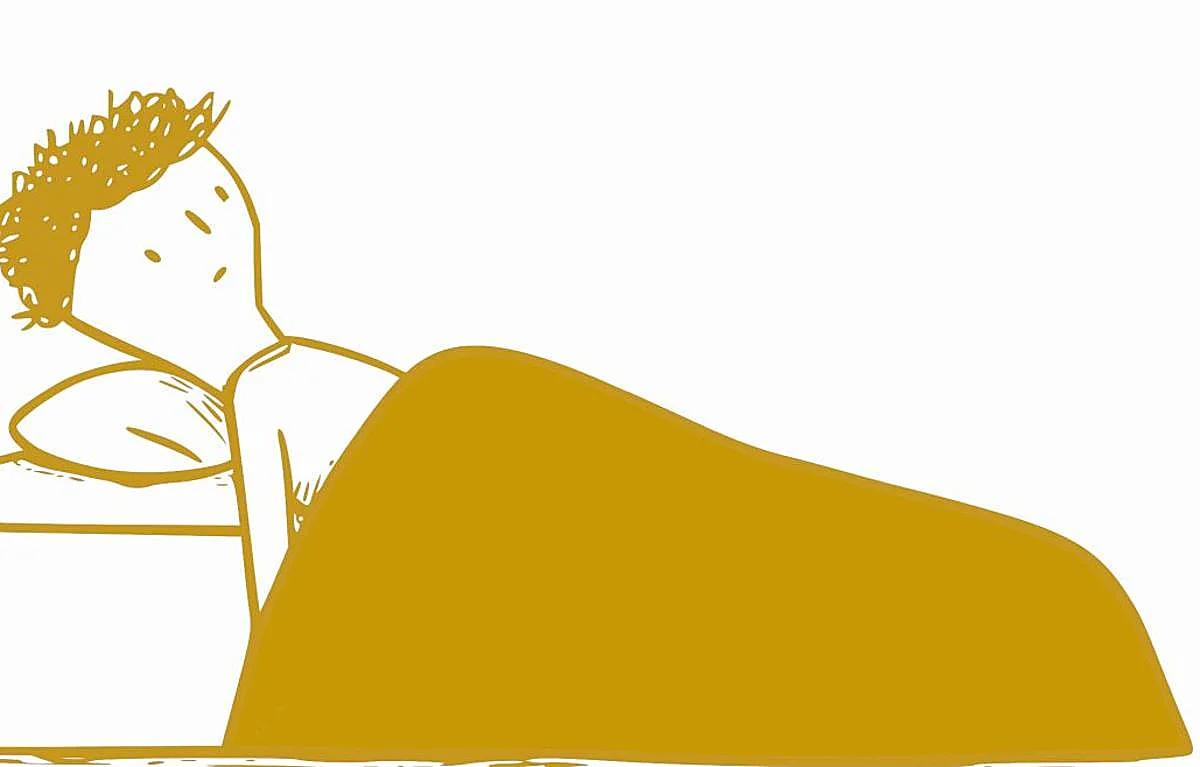
When, in the morning, we announce to the world with a certain pride and a rested face that we have slept in one go, we do so as if we had won a small lottery. In our opinion, the six or seven 'regulation' hours of sleep (eight, if we are lucky) should be all in a row. That's normal, isn't it? Well, maybe in this day and age it is, but it hasn't always been: there is evidence that, until the Industrial Revolution, people slept in two stints. "Historically, this pattern was very common: before electric light, people went to sleep shortly after dusk, about four or five hours, woke up for an hour or two - to read, pray or talk - and then went back to sleep until dawn. This is called biphasic sleep, which is divided into two main periods of rest instead of a single continuous night block," explains María José Martínez Madrid, coordinator of the Chronobiology working group of the Spanish Sleep Society (SES).
As the expert explains, with the advent of artificial lighting, working hours became longer, schedules became standardised and monophasic sleep - sleeping all at once at night - "became the social norm". "Even so, our brains retain a natural predisposition to two peaks of sleepiness: one during the night and one in the early afternoon, which explains why napping is still so beneficial and physiological," he sums up.
Past... and present
In the mists of time:
It was sleep historian Robert Eldrich who discovered that in the Middle Ages people slept from 11pm to 1am and, after a break of about two hours to shake off their tiredness - used to stoke the fire, do some work, chat and have sex - they slept until dawn. It was later demonstrated that this custom was much older.
Switch to biphasic sleep?
We need to establish a consistent schedule and wait. American scientist Thomas Wehr concluded that within four weeks one can switch to biphasic mode by controlling light exposure and creating ten-hour ‘nights’ instead of eight.
And what can we do with that predisposition? Can we take advantage of it in some cases? Can we go back centuries and sleep two long stretches? "In some cases it can be a good alternative, because the most important thing is not to sleep all the hours in a row, but to accumulate a sufficient and quality total sleep time over 24 hours," he stresses.
Cases in which it is useful
Thus, opting for the biphasic option can be particularly useful for older people - whose sleep tends to be naturally fragmented - or for those who, due to work or their pace of life, are unable to maintain a continuous sleep. The key, says the expert, is for the pattern to be regular and not imposed by insomnia. "If sleep is divided because there are prolonged awakenings or difficulty in falling asleep, then it may indicate a sleep disorder, and in that case it is advisable to look for the cause and treat it," advises the SES expert.
In addition to the elderly, he says, there are other people who may find this mode of sleeping "a useful strategy": those in demanding work environments or with irregular schedules.
However, according to the sleep expert, "sleeping in two stints can have advantages, but also limitations", depending on how and why it is done. "If biphasic sleep is natural and regular - for example, sleeping a few hours in the evening, followed by a short nap or a second, shorter block - it can be perfectly healthy. It helps maintain daytime alertness, improves cognitive performance and can compensate for less restful nights," he says.
But it must be done well so as not to end in disaster. If the two blocks are too long - for example, three or four hours each - there is a high risk of interfering with the natural architecture of sleep, especially REM sleep, which is more concentrated in the second half of the night. "That's why, if you opt for a two-phase pattern, it's usually best to keep the second block to no more than 90 minutes," he stresses.
In reality, many people are already biphasic, because they have managed to embed a nap after lunch in their daily routine (so they already have the night and day block), although there are those who have opted for other breaks: for example, some people are more fans of the so-called 'bishop's nap', which takes place before lunch, after elevensies, when - especially in people who get up very early - there is also a peak of drowsiness. Of course, you have to be able to do it: day-to-day obligations don't always give you the flexibility you need to squeeze in a snooze of some importance.