Jellyfish
Will there will be lots of jellyfish on Granada's Costa Tropical this summer? An expert explains how to tellThe Andalusian regional government and universities in the region have developed an AI system that can predict the probability not only of jellyfish, but also of scum and seaweed
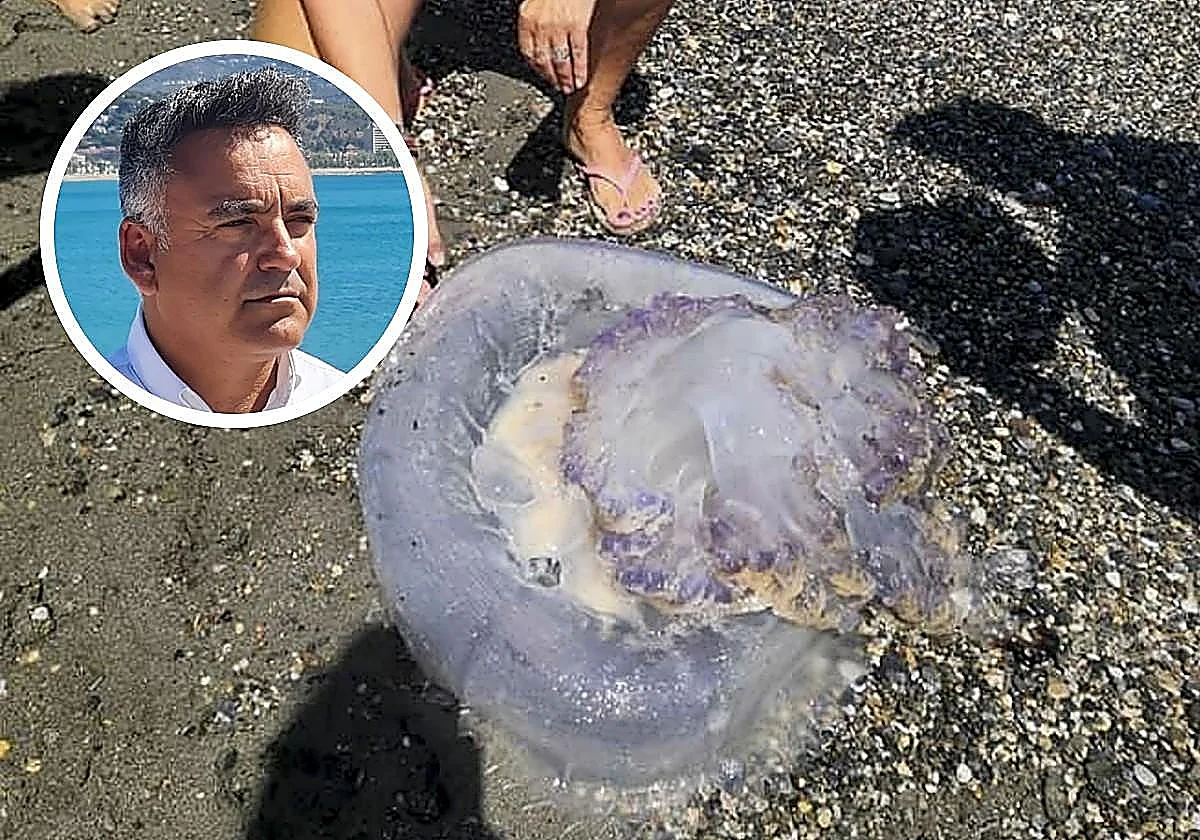
Añádenos en Google Giant jellyfish found in Salobreña, in a file photo. (Javier Martín)Cristina Hernández
06/07/2026 a las 17:13h.There is a low probability of large groups, or swarms, of jellyfish along Granada province's Costa Tropical according to the Oceanaria tool, created by ... the Andalusian regional government in collaboration with universities. It is an artificial intelligence-based platform that helps members of the public to find out, several days in advance, the mathematical probability of where jellyfish swarms are likely to be. It also provides relevant information about the coastline, sea conditions, and the presence of seaweed and scum.
Francisco Ignacio Franco, head of the Chair of coastal sciences at the University of Malaga, explained that the arrival of jellyfish depends on the movements of the Andalusian coast. The current entering through the Strait of Gibraltar does not flow in a straight line but makes two turns: one off the coast of Motril and another off the Costa del Sol. If these areas are closed off, as is currently the case, the jellyfish remain in the open sea and it is more difficult to spot them off the Costa Tropical.
Related story
Environment
Chus Heredia
The species that has the greatest impact in Granada is generally Pelagia noctiluca, which moves vertically and during the day, is found at a depth of 200 metres. Other dangerous species include Olindias phosporica, Rhizostoma pulmo and Carybdea marsupialis. However, there is no need to be alarmed as, unlike last year, the likelihood of jellyfish appearing during this part of the summer is very low because "they feed and reproduce on the high seas," explains Franco.
As for the scum, the UMA expert states that “they are an aggregate of particles that absorbs everything in its path, such as marine microalgae”. Their existence depends entirely on the type of swell. In Granada, the swell runs from the south-east towards the east. When there is a swell, the water penetrates the sand and creates what locals call ‘natas’ (scum). Consequently, the likelihood of finding it on the Costa Tropical is higher – around 60 per cent – on beaches such as Almuñécar or Torrenueva.
They tend to appear more frequently on coastlines that have been moved by human activity, as this sand has a much higher clay content than sand on less popular beaches. They are formed naturally only by easterly waves, as these have greater energy. With westerly waves, the water does not have as much force and therefore fails to wet the sand sufficiently for these floating scum to form.