Zoom
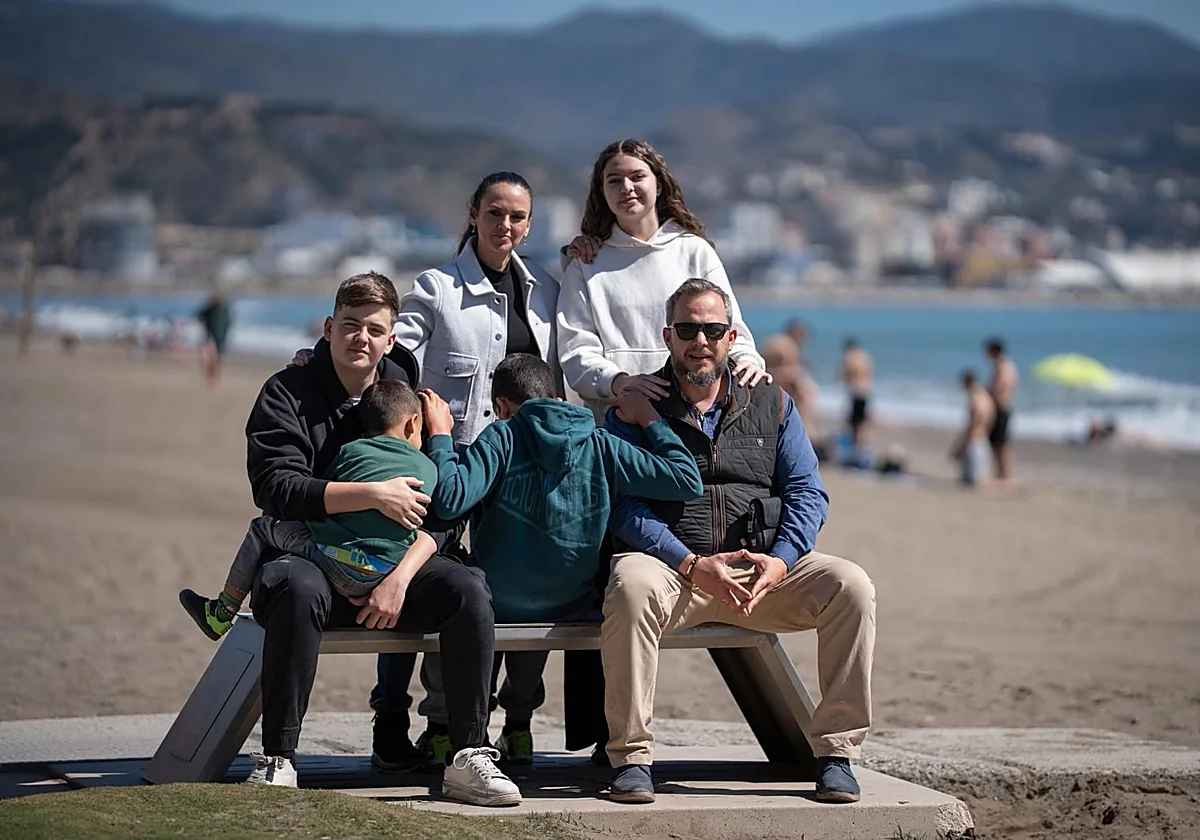
The Enamorado-Mena family, with their two older biological children and two foster children. Ñito Salas "With our foster children we have received more than we have given"Sonia Mena and Juan Antonio Enamorado, parents of two biological children, have created a welcoming foster home for children in need ·
Monday, 6 April 2026, 15:26
The family first opened their home to foster a two-year-old girl back in 2017, after the police found her abandoned in a bar. Within hours, she had gone from having nowhere to sleep to being protected by a family who provided affection and safety without judgement.
They cared for the girl for 14 months before the Andalusian regional government helped reunite her with her biological father. Following that experience, Sonia Mena and Juan Antonio Enamorado have been emergency foster parents ever since.
Today they have a 12-year-old boy who they took in during Covid, and another four-year-old boy, who was “completely malnourished, he was wearing size 9-12 month” when they first took him in last year.
The couple have been building a life together “since they were 17” and said their decision to foster came serendipitously, due to a string of coincidences they considered “destiny”.
“One day, having coffee, I saw a notice in the press about the Hogar Abierto association that made me consider the possibility of fostering a child, and when I got home, my wife said to me: “ I have to speak to you, I saw on TV that they are looking for foster families…”” They didn’t hesitate and joined the organisation that has been a pioneer in foster care for three decades in Malaga.
At this point, they were already parents to two biological children and had no plans to extend their family. However, Juan Antonio recalled that his childhood home was often an improvised shelter for other children. It was not fostering as such, but spontaneous solidarity: neighbours’ children, relatives in need while mothers were hospitalised or unwell, anyone who needed a hand. It was “an informal agreement between parents”.
Their background helps explain how naturally they slipped into the relentless process of courses, interviews, psychological assessments and home visits to check their suitability.
"They were not so much looking for an economic profile, but for the warmth of a family". In fact, at that time, her husband admitted, "we didn't even earn 2,000 euros for four people and it was hard to make ends meet". He earned his living as a painter and she was an employee in a food wholesale distribution company, but this didn’t deter them.
First child taken into care
Four to five months after the formalities began, the first child arrived. A little girl whose mother had left her in a bar, she came with little prior information, which is typical of emergency cases. But the first few days provided a sense of her story : "The food she liked most was omelette, sausages, kebabs and olives with anchovies. We guessed that she had spent many hours in bars". There were other signs: "she had a desperate need to be hugged. She would go off with anyone, seeking contact and affection. When she left, she was a different girl," Antonio said.
That transformation became the driving force for this family ever since.
Before taking the plunge, there was a conversation with their two children, a nine-year-old boy and a five-year-old girl at the time. "They understood that the girl had needs and took her in as one of their own", the parents explained. “Now they spoil their siblings the most, with everything.” said the mother.
Far from being dramatic, the farewell was part of a carefully organised process because “family reintegration is the ultimate goal of foster care” they explained”. Sonia explained that for months the girl had arranged meetings with her biological father "in the presence of a social worker from the Junta de Andalucía who acted as a mediator".
At the final meeting, the girl hugged her father and did not look back, “we understood that she had already accepted the cycle and was going where she had to go", said Antonio.
Following the first experience, they continued to foster and in 2020 they welcomed a six-year-old boy. First in temporary care after having been taken in urgently by another family.
"When it became apparent that there was no possibility of returning to his biological family, they proposed permanent foster care and we said yes. And we don't rule out legal adoption if he wants it when he turns 18".
From one day to the next
The youngest of the family, aged four, arrived as an emergency case on the eve of a trip planned for the summer holidays. However, instead of cancelling their plans, they integrated him into them and it “helped him settle in”.
Although the beginning was tough, "we think he slept rough, because in the middle of summer, if we didn't throw him a blanket, he wouldn't fall asleep. They recall how foul-mouthed he was and are proud of the child he is today: "He is the joy of the house, our little darling", said Sonia.
He’s completely settled in, “an outsider wouldn’t be able to tell which are our biological children and which aren’t” they said. In fact, he jokes that the boy has been told on more than one occasion that he is the ‘spitting image’ of him.
For their two biological children, this experience has been a real life lesson: “through their foster siblings, they have come to realise the value of things and how privileged they are to have had them since birth.”
Neither Sonia nor Juan Antonio romanticise the experience. They know it isn’t easy. They have faced complex situations, children from difficult backgrounds. But they never considered backing out.
They feel a deep sense of satisfaction seeing these children’s amazement at everyday things: that there is always food in the fridge, that the tap has water, or that the electricity isn’t cut off for non-payment.
“I don’t see it as ‘how good I am’, but as a sense of saving a life. They give you so much more than they receive,” says Juan Antonio. They know that, without their intervention and that of the regional government, these children might have faced a future marked by exclusion or marginalisation.