Health
25-year-old Malaga woman granted right to assisted dyingAlida Azabal from Rincón de la Victoria has two incurable neurodegenerative diseases which leave her in constant pain
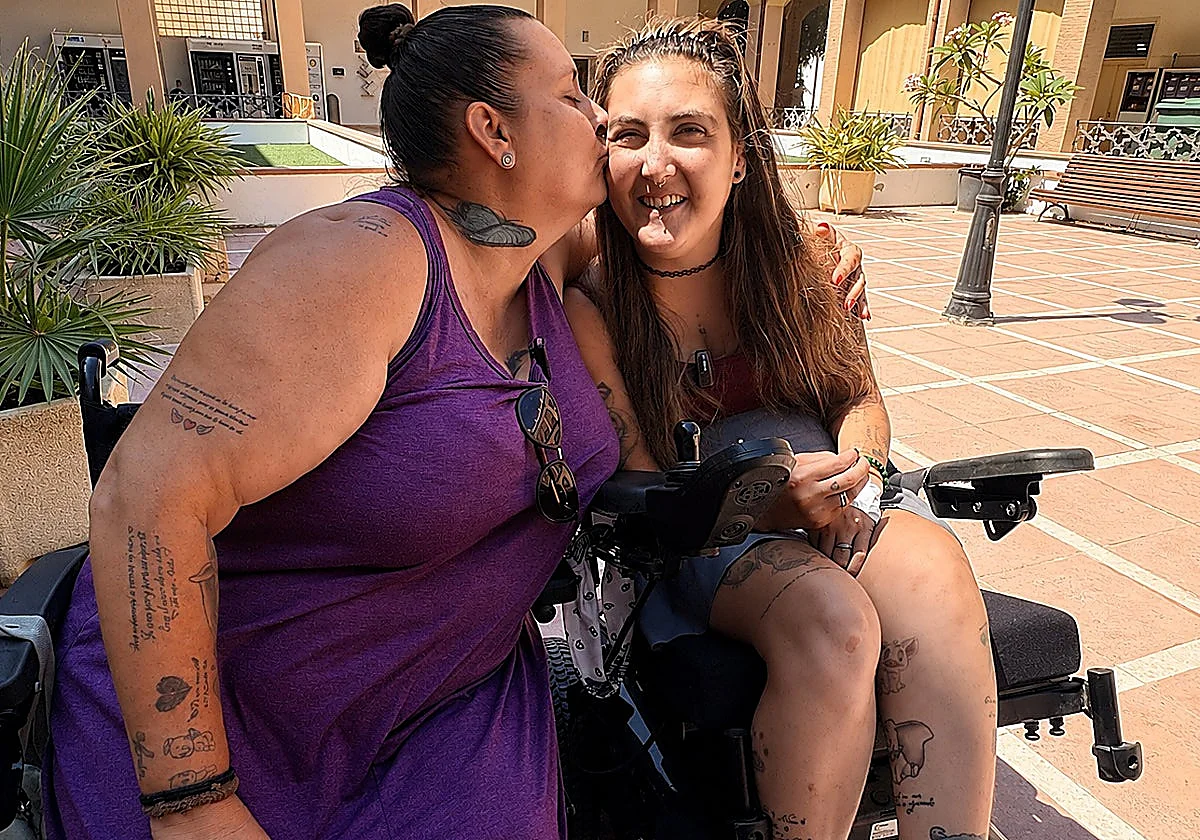
Añádenos en Google Virginia Martín and Alida Azabal on Monday. (E. Cabezas)Eugenio Cabezas
08/07/2026 a las 11:24h.A 25-year-old woman from Rincón de la Victoria on the eastern Costa del Sol has been granted the right to assisted dying. Alida Azabal has two incurable neurodegenerative diseases, which leave her in constant pain.
Euthanasia was granted in November 2025, but Alida has not yet set a date because she first wants to fulfil two of the more than 50 wishes her mother, Virgina Martín, has been making a list of since Alida was a child: swimming with sea lions at the Río Safari park in Elche, Alicante and visiting the Oceanogràfic in Valencia.
“Alida is 25 years old; she has been granted euthanasia, it has been approved, but she has currently postponed it because she wants to fulfil some dreams,” explains Virginia, who has become her daughter’s voice because Alida finds it extremely difficult to speak and gets very nervous.
On Tuesday 7 July, mother and daughter set off for Alicante to try to make the first of those dreams come true. Over the last few days, they have launched a fundraising appeal on social media to cover accommodation, expenses and petrol and although they have already raised around 400 euros, they still need another 700 to finalise the trip and be able to go ahead with the plan.
Donations are trickling in via Bizum, PayPal and bank transfers, but the family is still seeking support to reach their fundraising target. The cheapest accommodation they have found is a bungalow on a campsite in the area.
Years of illness
In summer 2025 Alida, exhausted by the pain, said, "I can’t take it any more." Following one of the routine visits by doctors and nurses to her home to ease the pain, the possibility arose of applying for euthanasia in accordance with current Spanish legislation. Since then, the family has been living in a state of limbo, suspended between relief and uncertainty.
But Alida’s story is not just an administrative decision or a clinical diagnosis. Her mother explains, “She’s a fighter, but she’s grown tired of fighting.” Behind this young woman lie years of illness, constant care and an almost superhuman effort to stay alive. Both mother and daughter use their own motorised, adapted wheelchairs, which they operate with one hand.
Alida suffers from a neurodegenerative mitochondrial disease and Aicardi-Goutières syndrome, both of which are genetic in origin and for which there is no cure. The medical reports accompanying her case refer to respiratory problems, tetraparesis, malnutrition, chronic pain and total dependence, as well as palliative care, which has been in place since October 2024. “Two years ago they wanted to sedate her, because she couldn’t eat and her weight had dropped to 20 kilos, but I wasn’t ready to have her sedated and just then she started eating a little and recovered,” Virginia says.
As part of the routine, on Monday 6 July, Alida went to Malaga city's Hospital Civil for treatment. There, she once again received support from doctors and healthcare staff, as well as musical accompaniment from Diego Lara of the Fundación Cultura en Vena.
Baby
After her hospital appointment, the day ended with an everyday gesture that, in her case, holds enormous significance: she went to Carrefour to buy a ham and some bread, which she loves. It is details like these – simple and almost domestic – that most clearly illustrate the daily struggle of a young woman trying to make the most of every moment she has left to live until she chooses the date for the euthanasia.
Virginia worked as a cleaner in Rincón de la Victoria until about five years ago, when she had to give it up after becoming disabled herself and she is now awaiting further tests to find out whether she has the same condition as her eldest daughter. At home, too, is Ylenia, aged 22, who has recently given birth to Thalia, making Virginia a grandmother and Alida an aunt.
In 2015 SUR reported on Virginia's struggle to secure a specially adapted car for Alida and at that time the doctors told them that the young woman was unlikely to reach the age of 20. She has defied that prognosis and today, aged 25, she continues to dream of fulfilling at least a handful of wishes before she dies.
The list Virginia has been compiling since Alida was a little girl includes meeting artists such as Mario Casas and visiting places such as Río Safari in Alicante, where she wants to swim with the sea lions, and, later on, Valencia.
Virginia sums it up with a mixture of resignation and tenderness: she wants her daughter to be able to fulfil her greatest dream before making any final decision. “She was bedridden for a year and after all her ulcers – which were very serious and painful – had been treated, she was even able to take a few small steps,” her mother explains.
Dreams
Alida has turned her wish list into a way of holding on. Every plan written down by her mother is also a way for her to continue feeling alive: travelling, discovering new places and spending a different kind of day with her family have become goals that seem simple on the surface, but are incredibly powerful for someone who lives in a constant battle against pain, confined to a wheelchair for as long as she can remember.
Virginia acknowledges that this situation, with her daughter’s request for euthanasia having been granted, "has completely changed" her life. "It’s the worst thing that can happen to you – losing a child. Even if you say you’re prepared, you’ll never really be ready," she says. "It’s the greatest pain I’ll ever suffer, but at the same time the greatest act of love for her," she adds. Virginia says that all she wants is to be there for her daughter “in every way I can and to help her live out these final days with as much dignity and peace of mind as possible”.
However, Virginia admits, "I break down a lot; I close my eyes and picture her funeral and that’s very hard. I can’t face the day it happens, but it’s going to happen – she can’t live with the pain she’s in, but I’ll never come to terms with it." Alida's mother adds, “I hope that when she fulfils those dreams, she’ll want to keep fulfilling more and keep postponing euthanasia and stay a little longer. I haven’t lost that hope."
The trip to Elche feels like both a ritual and a farewell. Alida wants to feel that she can still make her own choices, even if it is within a countdown marked by her illness. Meanwhile, her family continues to seek support so that Alida's dream does not go unfulfilled, and so her journey can still hold small hopes within reach.