2 min read
About Air Traffic Management and Safety ProjectMegan Ritter
Langley Research Center
Mar 05, 2026 ArticleContents
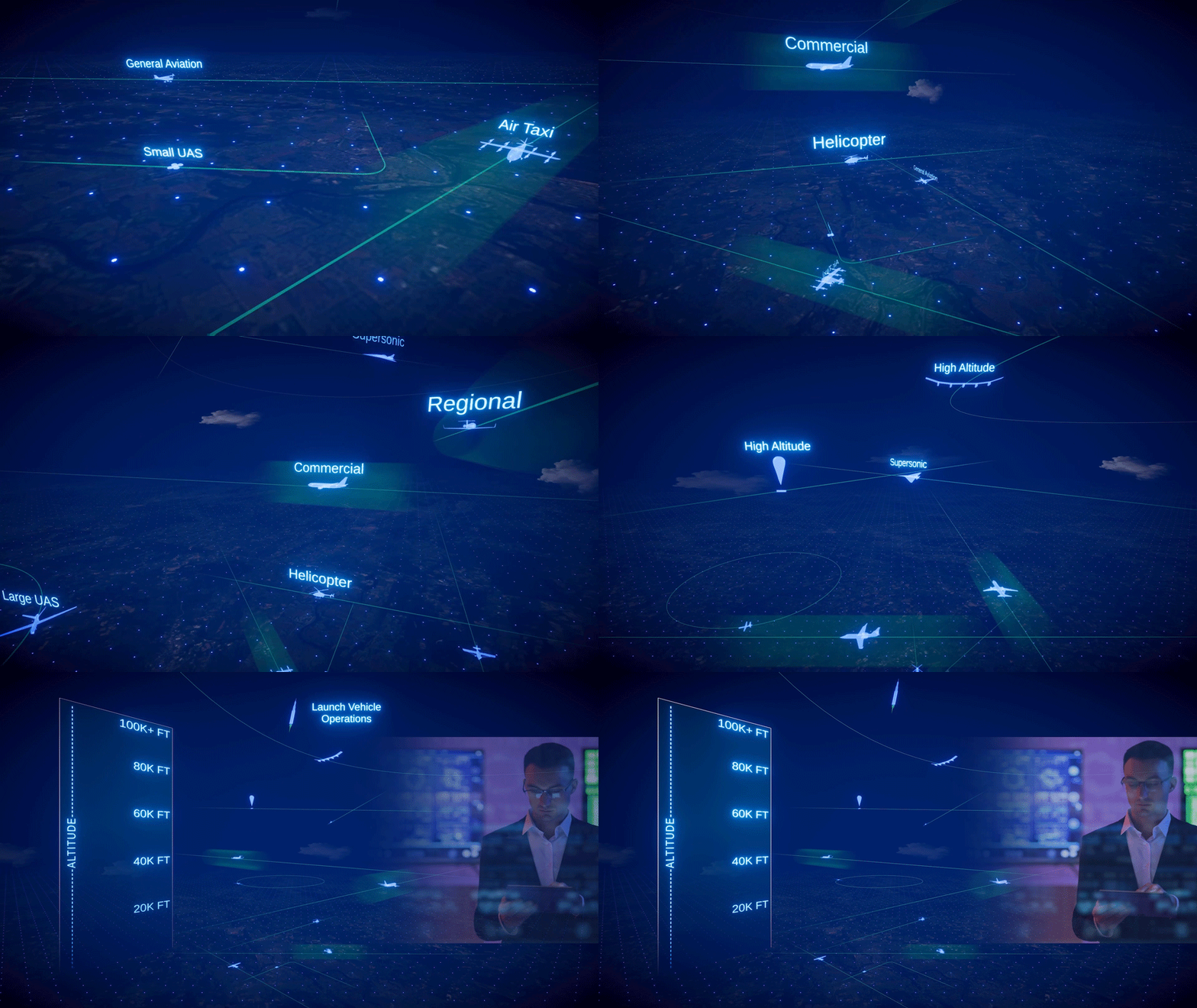
- Computer simulation showing how aircraft and other vehicles of all types can safely navigate through the National Air Space. NASA / Kyle Jenkins
The Air Traffic Management and Safety (ATMS) project defines, validates, and transfers advanced requirements and technologies to shift air traffic management from tactical to strategic.
This change enables efficient, productive, and resilient operations while reducing safety assurance and compliance costs for highly automated systems.
ATMS researches and develops technologies that safely integrate new air vehicles with traditional aviation operations to meet growing demand. Through close collaboration with the FAA, ATMS delivers actionable automation solutions, advanced operational concepts, and proactive safety management frameworks that accelerate airspace modernization.
ATMS strengthens system resilience and expands human capacity by reducing cognitive workload, minimizing airline delays, and lowering operating costs while enhancing terminal safety and optimizing operational performance.
ATMS tackles barriers in the increasingly complex and diverse airspace by focusing its research on three areas:
Strategic Harmonization for Integrated Flows and Trajectories
The National Airspace System (NAS) is evolving toward greater complexity and demand. Current tactical approaches limit scalability, efficiency, and predictability. ATMS research represents a paradigm change—from reactive, tactical decision-making to proactive, strategic management of traffic flows and trajectories.
Safely Enable Routine Autonomous Operations
Advancements in automation can reduce human workload, mitigate hazards, and enable new entrants across advanced air mobility. Critical gaps—in hazard perception and avoidance, seamless ATC integration, and flight procedures—still pose safety and operational risks. Without ATMS’ targeted research, autonomous taxi, approach, and landing will remain fragmented and heavily human-dependent, limiting efficiency and innovation.
Assurance Methods for Aircraft Automation
The aviation community is converging on assurance approaches that balance trust, evidence, and scalability. To ensure innovation and adoption of key automation capabilities, ATMS helps to define explicit safety objectives and meaningful notions of traceability across development and operations. Scaled adoption requires assurance processes that integrate design and operational assurance, so that requirements flow down to models, scenarios, analysis, test cases and metrics—and that these generate traceable, reusable evidence and operational outcomes.
ATMS delivers practical solutions that benefit every stakeholder in the aviation ecosystem—from air traffic controllers and pilots to passengers and operators—ensuring America ‘s skies remain the safest and most efficient in the world.
Facebook logo @NASA@NASAaero@NASAes@NASA@NASAaero@NASA_es Instagram logo @NASA@NASAaero@NASA_es Linkedin logo @NASAExplore More
2 min readDIP RFI Outbrief Session
Article 9 months ago 3 min readDIP Workshop Series 1: DIP Architecture and Date Integration Services
Article 9 months ago 2 min readDIP Workshop Series 2: DIP for Service Providers
Article 9 months ago Keep ExploringDiscover More Topics From NASA
Missions
Humans In Space
Aeronautics STEM
Explore NASA’s History
Share
Details
Last Updated Mar 05, 2026 EditorJim BankeContactMegan RitterRelated Terms