Zoom
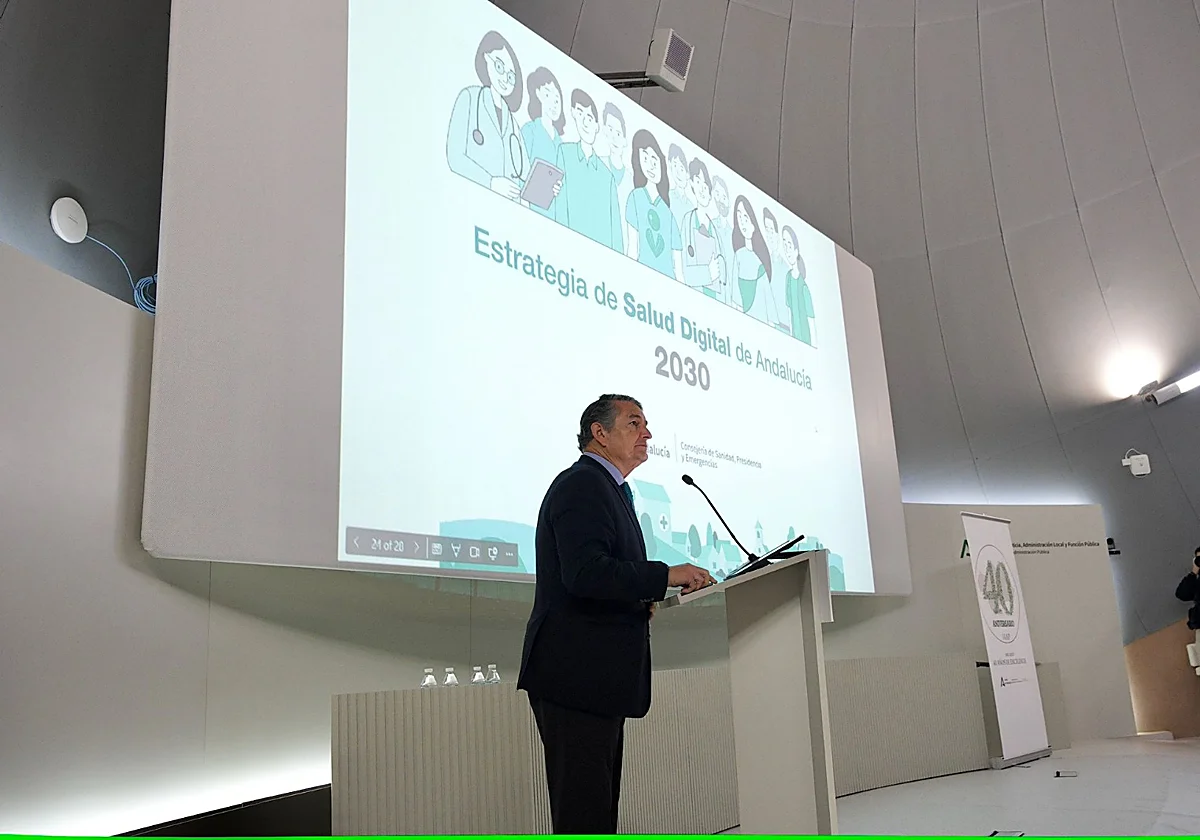
Regional health minister presenting Andalucía's digital health strategy on Monday. SUR Health Andalucía to launch virtual health card by end of March - what you need to knowThe regional government is merging all healthcare apps into a single 'Salud Responde+' platform to streamline appointments and medical records via mobile
Tuesday, 10 February 2026, 15:53
ShareAndalucía is preparing for a digital revolution in its public healthcare system.
On Monday, Antonio Sanz, the regional minister for health, presented the Andalucía Digital Health Strategy (ESDA), a €316.5 million plan designed to make the system more accessible and>
A central pillar of the strategy is the creation of Salud Responde+. Currently, patients often navigate between various apps such as Salud Responde, ClicSalud+, and Salud Andalucía. The regional government intends to merge these into a single, unified platform to simplify the user experience.
The ESDA has brought together more than 1,000 experts in what Sanz calls a "clear commitment to a more accessible, smarter-than- redirect="false">
AI in all breast units
The strategy isn't just about admin; it’s about saving lives. Sanz announced the rollout of Artificial Intelligence (AI) for early detection, specifically in breast cancer screening.
Having already started at the Reina Sofía Hospital in Cordoba, the AI technology will be extended to all 32 breast-screening units across Andalucía.
Additionally, a new AI "consultation assistant" will soon be launched at hospitals in Granada and Cordoba to support doctors in making faster, more accurate diagnoses.
The digital health strategy also includes the option for pharmacies to renew prescriptions for chronically-ill patients without requiring them to attend their health centre. "This system is already being piloted in municipalities in Cordoba and will gradually be rolled out throughout Andalucía," noted Sanz.
The Andalusian public health service (SAS) wants all applications to converge into a single platform: Salud Responde+.
Furthermore, queue management has been incorporated to prevent the impact caused by access surges. For example, this will be implemented in the 'electronic candidate window' (VEC), a portal for job selection processes and job pools.
The new digital tools, planned under the ESDA strategy, will also allow direct contact with professionals via video calls, greater data protection and more secure processes, "strategic elements to improve healthcare, strengthen decision-making and ensure system sustainability".
The strategy's impact on research and innovation will be particularly relevant, as Andalucía will implement the necessary instruments to comply with the regulation on the European Health Data Area over the next two years, making it a pioneering region.
"We are going to transform our data into a source of knowledge, innovation and development aligned with the data science and AI centres that we have been promoting in the context of the new data economy", stressed the regional health minister.
New measures
"All these actions fall within the four specific objectives of the strategy: improving digital health systems, facilitating decision-making by leveraging the value and quality of available data and knowledge.
Also, promoting the organisation's digital transformation by strengthening cybersecurity, interoperability, technological sustainability and attracting ICT talent to the healthcare system. Lastly, incorporating new innovation tools for application within the healthcare system", stated Sanz.
To ensure that older residents or those in rural areas aren't left behind, the government will use its 'Puntos Vuela' (digital skills centres) to provide training.
Over the next two months, specific workshops will begin across Andalucía to teach citizens how to manage appointments, check test results, and access medical records on their smartphones.
According to Sanz, this "profound transformation" aims to build a more personalised and sustainable healthcare system for the nearly 8.5 million people living in the region.