1 min read
Building on America’s 65-Year Legacy of Human SpaceflightMichele Ostovar
NASA History Communications Lead
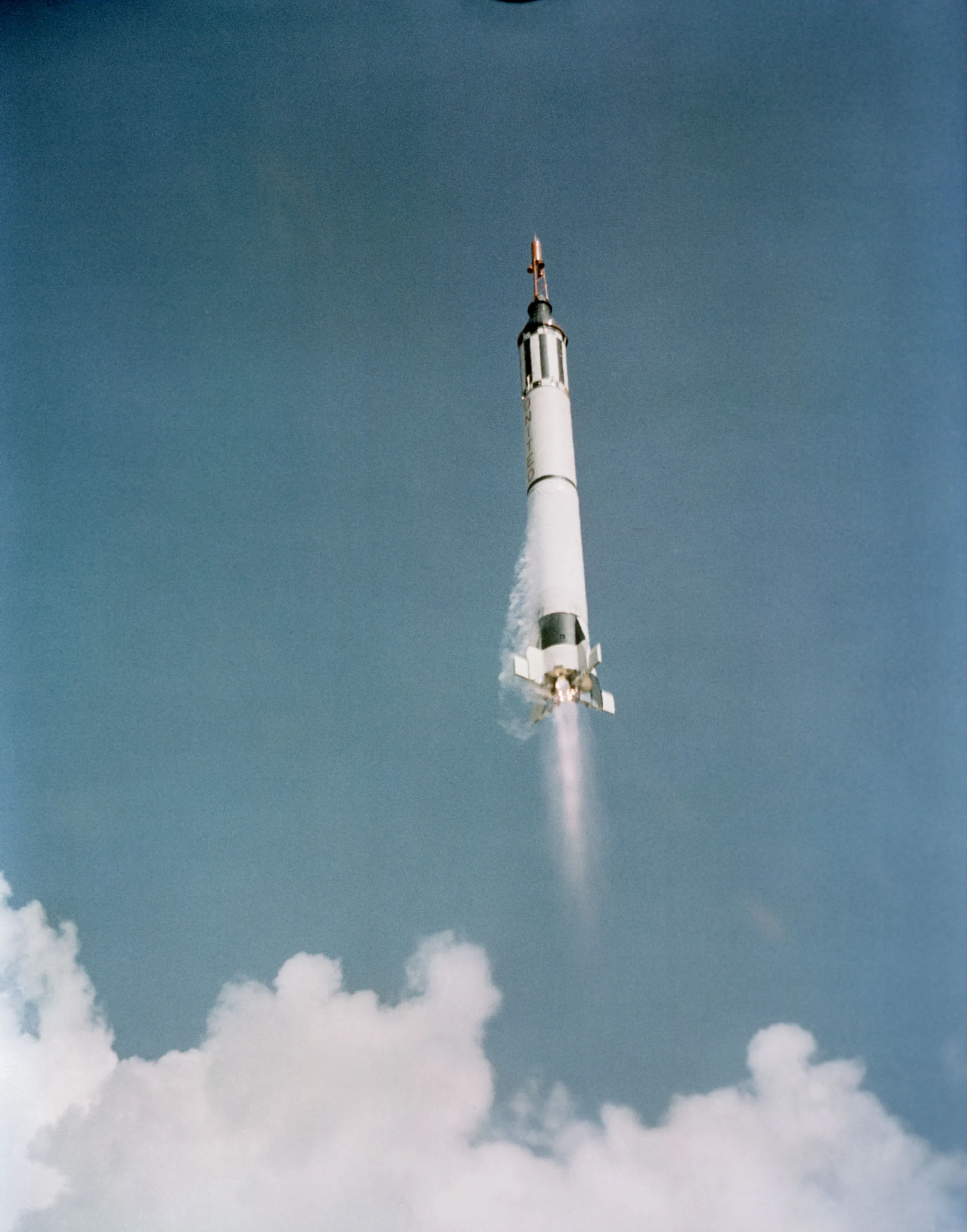
May 05, 2026 Image ArticleOn the morning of May 5, 1961, the Mercury-Redstone 3 launch vehicle lifted into the sky from Cape Canaveral, Florida, carrying astronaut Alan B. Shepard Jr. Over the next 15 minutes, Shepard ascended to an altitude of 116 miles (187 kilometers) in his Freedom 7 spacecraft, becoming the first American to fly into space before splashing down in the Atlantic Ocean. This short flight marked the United States’ entry into human spaceflight and was a defining first step that would carry the nation to the Moon just eight years later.
Sixty-five years later, as NASA accelerates the pace for the Artemis missions that will return astronauts to the surface of the Moon and lay the foundations for a Moon base, the anniversary of Shepard’s flight offers an opportunity to reflect on the pioneering spirit of NASA’s Project Mercury and Project Gemini missions.
Image credit: NASA