Nature
Five hiking routes across Malaga's natural parksFrom the greeen heart of Los Alcornocales to the highest peak in Sierras de Tejeda, Almijara and Alhama, these routes show some of the most spectacular landscapes in Malaga province
Añádenos en GoogleJavier Almellones
Malaga
21/05/2026 a las 12:01h.The European Day of Parks, celebrated every 24 May, once again highlights some of the continent's most valuable protected areas. Malaga stands out as one of the Andalusian provinces with the largest number of natural parks.
Five of them stretch across its mountains and forests: Montes de Málaga, Sierra de las Nieves, Sierra de Grazalema, Los Alcornocales and Sierras de Tejeda, Almijara y Alhama. The Sierra de las Nieves park has Spain's highest level of environmental protection.
Related story
Andalusian escape
Sierra de Grazalema
2. The Llanos de Líbar trail
Few hiking routes in Andalucía create the same sense of isolation and open space as the Llanos de Líbar trail. This long route links Montejaque with Cortes de la Frontera across a spectacular plateau surrounded by limestone mountains in the heart of the Sierra de Grazalema natural park.
Although the route stretches for more than 18 kilometres and requires good fitness, much of the walk follows relatively comfortable terrain through meadows, karst landscapes and ancient Portuguese oak trees.
One of the area's defining features is the Líbar polje, a huge geological depression that makes this one of the most striking landscapes in the Serranía de Ronda. Hikers also enjoy sweeping views over the Guadiaro Valley and frequent sightings of griffon vultures soaring overhead.
Sierra de las Nieves
3. The Cascadas (waterfalls) trail
Water, rock and mountains dominate one of the most spectacular routes in the Sierra de las Nieves. The Cascadas (waterfalls) trail in Tolox leads hikers to some of the largest waterfalls in Malaga province along a circular route through the rugged valley of the Caballos river.
The route covers more than ten kilometres and includes demanding sections, but the effort quickly pays off with remarkable scenery and landmarks such as the Horcajuelos waterfall, the Rejía waterfall (the tallest in Malaga at more than 50 metres) and the Poza de la Virgen pool. The area's unusual peridotite rock gives many of the mountains reddish tones, creating a landscape unlike any other protected area in Andalucía.
Los Alcornocales
4. The Sauceda trail to the Aljibe peak
Mist, moss, humid woodland and near-jungle trails make this one of the most distinctive walking routes in southern Spain. The route linking La Sauceda with Aljibe peak passes through some of the most spectacular corners of Los Alcornocales natural park, which many consider Europe's last great Mediterranean rainforest.
The climb starts in the historic settlement of La Sauceda, surrounded by cork oaks, Portuguese oaks and streams lined with ferns and rhododendrons. As the path gains height, the scenery changes into more open, rocky terrain until it reaches the 1,092-metre summit of Aljibe peak, the highest point in the park.
Along the route, hikers encounter places such as the Sauces gorge, small waterfalls, forests wrapped in mist and the Pilita de la Reina spring, linked to old local legends. The summit offers wide views across the mountains of Cadiz and Malaga provinces.
Sierras de Tejeda, Almijara y Alhama
5. The Casa de la Nieve trail
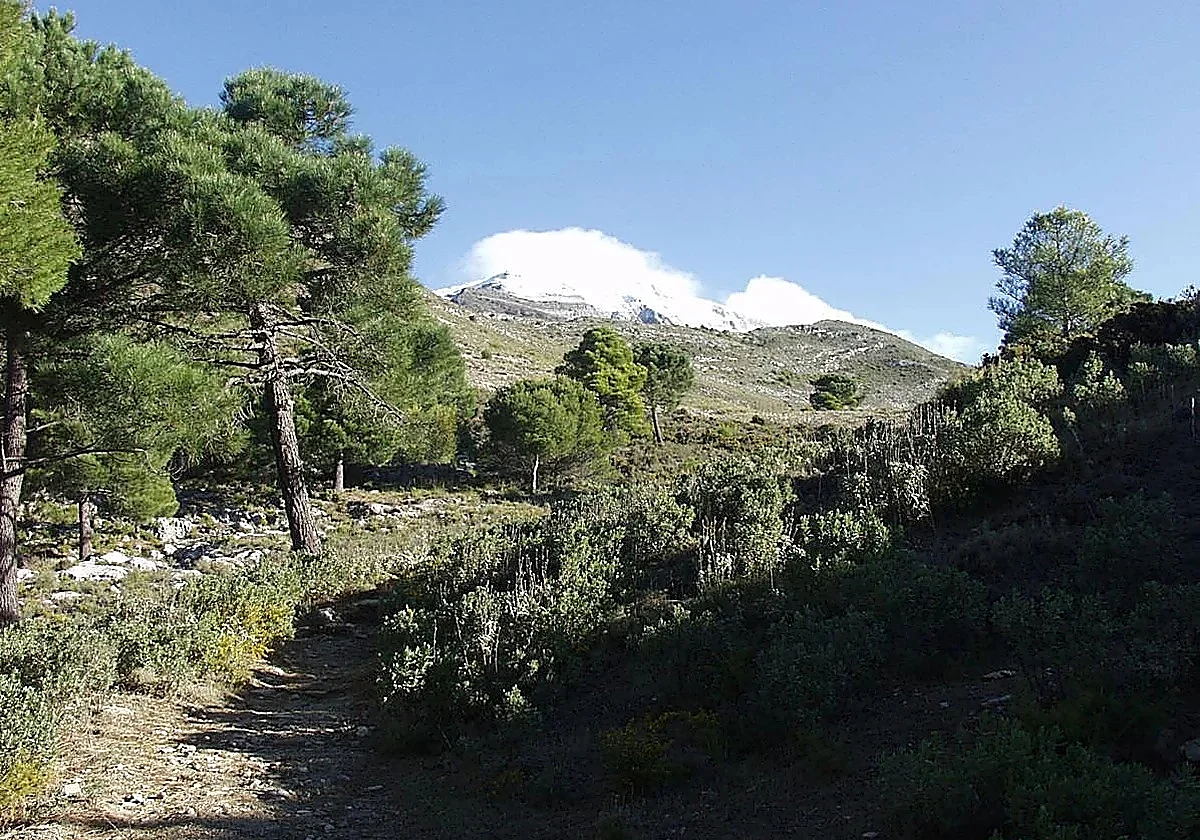
The ascent to La Maroma from Canillas de Aceituno ranks among the most iconic and difficult mountain routes in Malaga province. This historic trail, known as Casa de la Nieve, follows old paths once used to transport snow stored in mountain ice houses down to villages in the Axarquía district.
The route climbs from the village centre to the 2,068-metre summit of Tejeda peak, the highest point in Malaga province. Along the way, hikers pass pine forests, limestone slopes, natural viewpoints and landmarks such as La Rábita and Proa del Barco. Besides the panoramic views over the Axarquía and the Mediterranean, the route also reveals much of Sierra Tejeda's biodiversity, where Iberian ibex often appear among the rocky crags.