Zoom
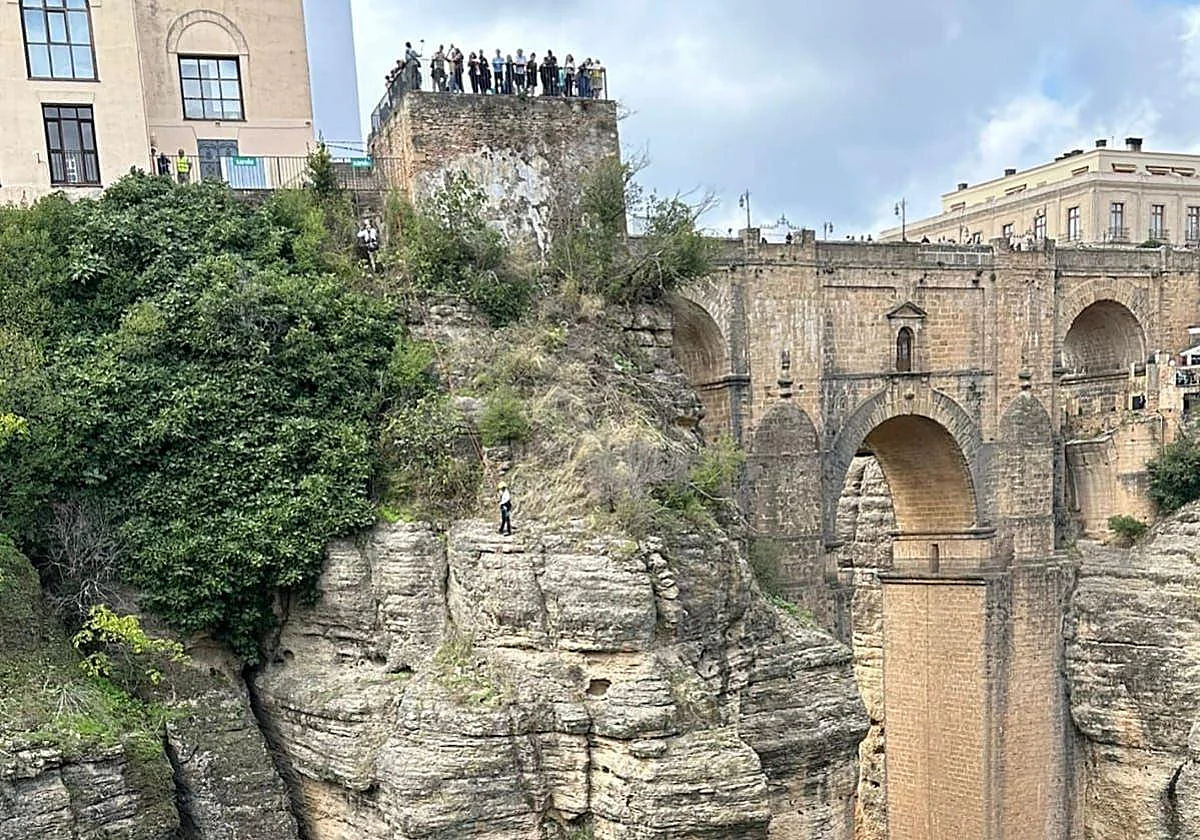
The iconic bridge as seen from the Jardines de Cuenca. V. Melgar Heritage How old is Ronda's iconic 'New Bridge' which spans the town's famous gorge?To protect it, the town hall is planning to limit the number of vehicles allowed to drive over the historic Puente Nuevo, a popular tourist attraction for daytrippers on the Costa del Sol and further afield
Ronda
Tuesday, 5 November 2024 | Updated 10/04/2026 11:15h.
Ronda town hall has made a move in the last week to conserve its heritage and improve mobility around the historic town. The local council hall has announced that, from 2025 onwards, only vehicles registered in the town for road tax purposes and owned by registered residents ('empadronados') will be allowed to drive over the iconic Puente Nuevo bridge.
This historic structure, according to data provided by the town hall, currently withstands around 5,000 cars passing over it daily, with peaks of 7,000. For several years now there have been two needs for change on the table concerning this bridge. Firstly, to protect this great feat of engineering, which has also suffered from water damage. Secondly, to regulate the complicated situation caused by the large number of Ronda residents and visitors, on foot and behind the wheel, who frequent the bridge area on a daily basis. At peak times, such as midday, it is difficult to pass over the bridge one way or the other, creating a safety hazard for motorists and pedestrians alike.
The proposed traffic regulation will affect not only vehicles driving over the monument, but also the meeting point between the Cuesta de las Imágenes, the short hill that climbs up from the old district of San Francisco, and Calle Virgen de la Paz street that in turn links to the main access to Alameda del Tajo park with stunning views of the surrounding mountains. This measure is included in Ronda's recently approved and revised urban plan.
Related story
the province of Malaga and Andalucía as the town is one of the most visited in the region. This year it is expected to reach two million in visitor numbers for the first time.
Origins
When it was built the bridge created a natural expansion of the town, enabling it to grow through the Dehesa del Mercadillo area and then towards the current Plaza de España where the Parador de Ronda hotel is located.
Building the bridge was difficult. The idea of building such a structure dates back to 1542, although construction did not begin until 1735. The result was a single-arch bridge some 35 metres across sitting around 100 metres above the base of the gorge. The poor construction of the bridge, the arch enclosure and the lack of supports caused the infrastructure to collapse six years after it was erected, which led to the creation of another of Ronda's monumental jewels: the Arch of Felipe V, whose construction allowed traffic to circulate, which had been interrupted following the bridge collapse. To build the arch an opening was made in the old town's walls and a ramp and the arch were built in an attempt to improve access to Ronda in this area, but the steep slope was not a convincing solution, especially because of the difficulty for horse-drawn carriages to pass through.
Work to create another bridge, the Puente Nuevo, resumed in 1759. Obtaining the financing for the work was also complicated. Several municipalities made contributions, as did the Real Maestranza de Caballería de Ronda (the equestrian academy associated with the bullring), donating money. In addition, funds were used from the livestock deals made in May at Feria Real, a major event and festival in Ronda.
It was finally José Martín de Aldehuela who drew up the plans and directed the construction of the main arch to the Puente Nuevo and the upper road access. It was opened to traffic on 4 November 1787.
"It will be possible to drive around with fewer cars, as in other towns and cities."
The measure to close to non-domiciled vehicles in Ronda at the link between Cuesta de las Imágenes and Calle Virgen de la Paz, which includes the bridge, has aroused opposing opinions among locals who put the protection of the bridge and the necessary traffic regulation first, and those who think it may be "illegal". "I think it's a very good idea, you'll be able to walk around with fewer cars, as is done in other towns and cities where the central and most important streets are pedestrianised", said one resident, while another said: "It's good for everyone." Another added: "Very well thought out, it reduces traffic and makes it more pleasant to pass through this area."
On the other hand, one resident pointed out: "This is a totally illegal measure. It is one thing for a road to be open only to residents of the area and another for those registered on the census. It violates the fundamental right of transitional equality, a government cannot prohibit the free movement of some people and not others."
Others point to the "road tax collection" angle included by the town hall, considering that having a vehicle registered in Ronda is more expensive than in other municipalities in the region (each municipal authority sets the road tax it charges), and doubts arise about the cases of vehicles of visitors who, for example, spend the night in hotels in the area or of workers who use company vehicles that are not registered in the locality. There are also those who blame mayor María de la Paz Fernández for the fact that the alternative road to the bridge, which the town hall is working on, has not yet been built.
The mayor stated that these opinions will be considered and solutions will be incorporated. She added that the measure has been announced in advance so that residents who wish to do so can register their vehicles in Ronda.