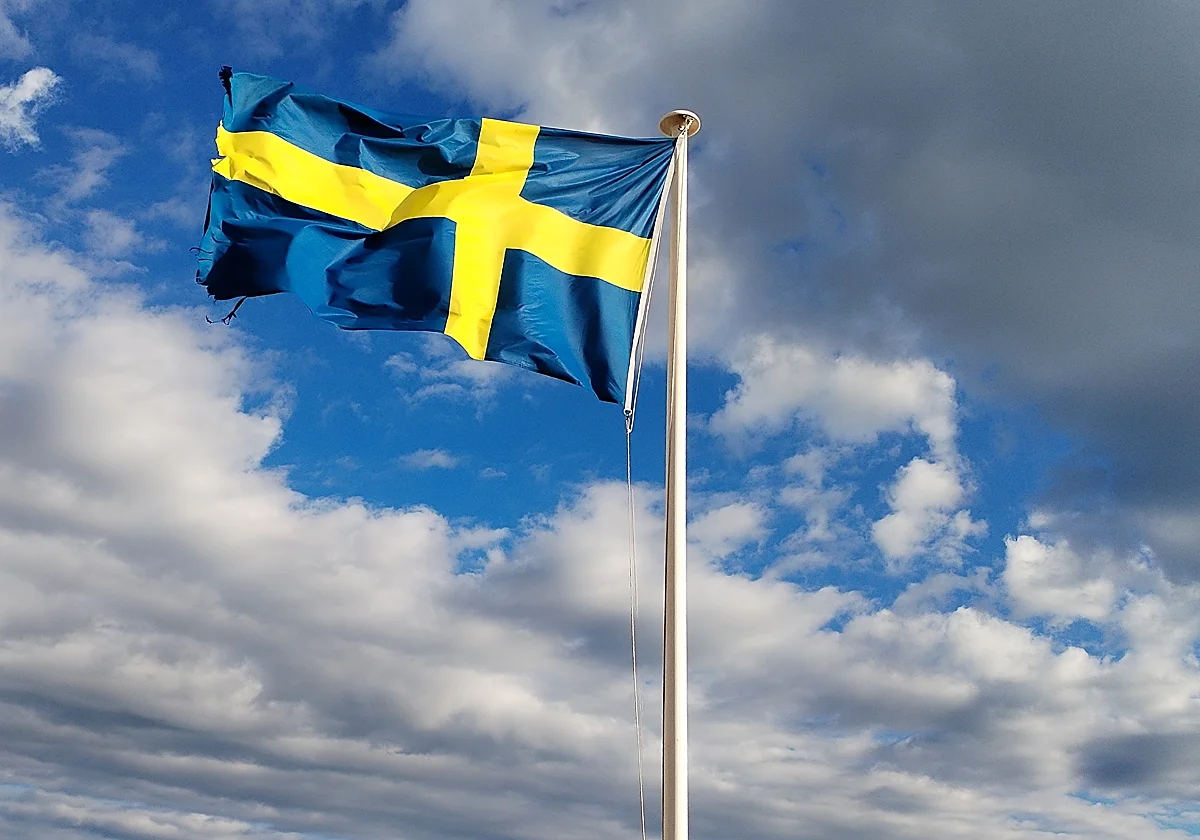
6 June, The National Day of Sweden
'Little Sweden' where the sun shines brightlyAndalucia is a massive draw for Swedish retirees and remote workers. Swedes account for an estimated 30,000 residents on the Costa del Sol. The arrival started in the 1950s
Añádenos en Google The Swedish flag in the permanently blue sky. (A.M.Saanders)Alekk M. Saanders
Marbella
06/06/2026 a las 08:21h.In the 1950s the Costa del Sol became a magnet for the first Swedish settlers and visitors. Over the past 60 years, the Swedish diaspora here has grown from a small group of pensioners into a thriving, permanent community of expatriates.
Torremolinos
Apparently, the Swedish community in Torremolinos began with the construction of the first apartments, just a stone’s throw from the beach and the famous Calle San Miguel. In1953, this pioneering complex under the name ‘Casa Suecia’, was built on the slopes of Cuesta del Tajo and still retains its traditional charm.
A year later, the Swedish Summer School (Colegio Sueco de Vacaciones) was opened in the Pan Triste area so that its students could enjoy the Mediterranean climate. The intense influx in the 1950s and 60s contributed to a kind of moral revolution. It is often stressed that those Swedish young people and their liberal customs caused quite a stir on the Costa del Sol and created a cultural and cinematic myth (especially a female image) in Spain at that time.
The famous Swedish crime writer Stieg Trenter visited Torremolinos in the late 1950s, leaving behind iconic photographs of the town that are now preserved in the local historical archive. During the same period, the famous Swedish writer and jazz musician Sture Dahlström moved to Torremolinos with his wife, the artist Anna-Stina Ehrenfeldt. They lived there for several years, immersing themselves deeply in the bohemian scene of the time.
Benalmadena
The neighbouring town of Benalmádena takes pride in the fact that Carl Bernadotte, a former royal prince of Sweden, once lived there. At one time, Carl was forced to renounce his rights to the throne and succession precisely because of his first marriage. In 1937, he fell in love with the divorced Countess Elsa von Rosen, daughter of the Master of Ceremonies of the Swedish court. As compensation, King Leopold III of Belgium, his brother-in-law, granted him a new princely title, and from then on he was known as Prince Carl Bernadotte, but he never again used the title of His Royal Highness.
On the Costa del Sol Prince Carl Bernadotte was known as Don Carlos
On the Costa del Sol, everyone knew him as Don Carlos. He spent decades in Malaga province, becoming a magnet for members of European royalty. In 1978, Carl Bernadotte married for the third time, to Kristine Rivelsrud, who had worked by the time of meeting as a domestic servant for his niece. The couple settled in the 'Capricornio' villa in Benalmádena where they lived until the end of their days: the prince passed away on 27 June 2003, and Princess Kristine Bernadotte died on 4 November, 2014.
Marbella
Originally the elite resort of Marbella attracted couples who were passionate about golf. Nueva Andalucía, known for its concentration of golf clubs, is densely populated by Swedes. It is no surprise that this part of Marbella has been nicknamed 'Little Stockholm'.
Nueva Andalucía, known for its concentration of golf clubs, is densely populated by Swedes and has been nicknamed 'Little Stockholm'
In the 1970s, more and more Swedes discovered Marbella as a sunny refuge from the gloomy Scandinavian winters and a haven for frequent social gatherings and parties. That era of glamorous Marbella was associated with the legendary Margit Ohlson.
The Swedish model was the only woman who managed to lead the famous Spanish aristocrat and Marbella socialite Don Jaime de Mora y Aragón to the altar. Incidentally, in this century, Princess Madeleine, the second daughter of the Swedish king, has been spotted at local beach clubs and restaurants.
Incidentally, Swedish actor Dolph Lundgren lived in Marbella for over ten years, drawn by the climate, the seclusion, and the ideal conditions for raising children. His love for the resort was mutual. The Marbella City Council named a street after the actor in recognition of his close ties to the town. Moreover, in 2009, he was officially appointed 'Ambassador of Marbella'.
One of the most seen flags on the Costa del Sol. (AMS)Fuengirola
The mass tourism boom in the 1960s transformed Fuengirola into a hub where the ‘dolce vita’ was within reach for any Swede. Fuengirola’s compact, flat coastline and pristine beaches made the town a major draw for thousands of Swedes seeking refuge from the cold winters. The demand for housing prompted the town to build high-rise buildings with small apartments affordable to the average Swede. Many at that time purchased their traditional ‘sommarstuga’ (summer cottage) not in the picturesque countryside of Sweden, but in Fuengirola. Today, the town is fully equipped to meet the needs of Scandinavian expats: it has a Swedish church, a Swedish school, Swedish press, clinics, and shops with restaurants.
Nerja
Compared to the resorts of the western Costa del Sol, Nerja, located at its easternmost tip, is very popular among Swedes seeking a more authentic, natural, and laid-back Spanish lifestyle. The town has preserved its traditional Andalusian aesthetic with low-rise buildings and a Spanish soul.
One of the cocktail bars in Nerja has created a cocktail in the colours of the national flag for Sweden’s National Day
Swedes, known for their love of nature, have taken a liking to the hiking trails. In pairs and groups, they can often be seen wandering from the sea to the mountains, from tropical gardens to deep grottoes and caves. Bicycle routes, as well as opportunities for water sports, add to the town’s appeal for Swedes and fuel their desire to settle down here. Incidentally, in 2011, rumours circulated in the media that Crown Princess Victoria was looking for a townhouse in this area.
One of the most popular with Swedes bar in Nerja. (AMS)Several Swedish companies and businesses operate in Nerja, serving the large Scandinavian diaspora and the tourist community. The most prominent sectors include real estate, vacation rentals, construction, and healthcare.
The small town is full of signs and menus in the Swedish language. Some restaurants here are owned by Swedish expats, but there are also lots of local restaurateurs who go out of their way to make Swedes feel at home. For example, one of the Swedes’ favorite spots is the rooftop cocktail bar Volk’s Bar, which has on more than one occasion created a special cocktail in the colours of the national flag for Sweden’s National Day.