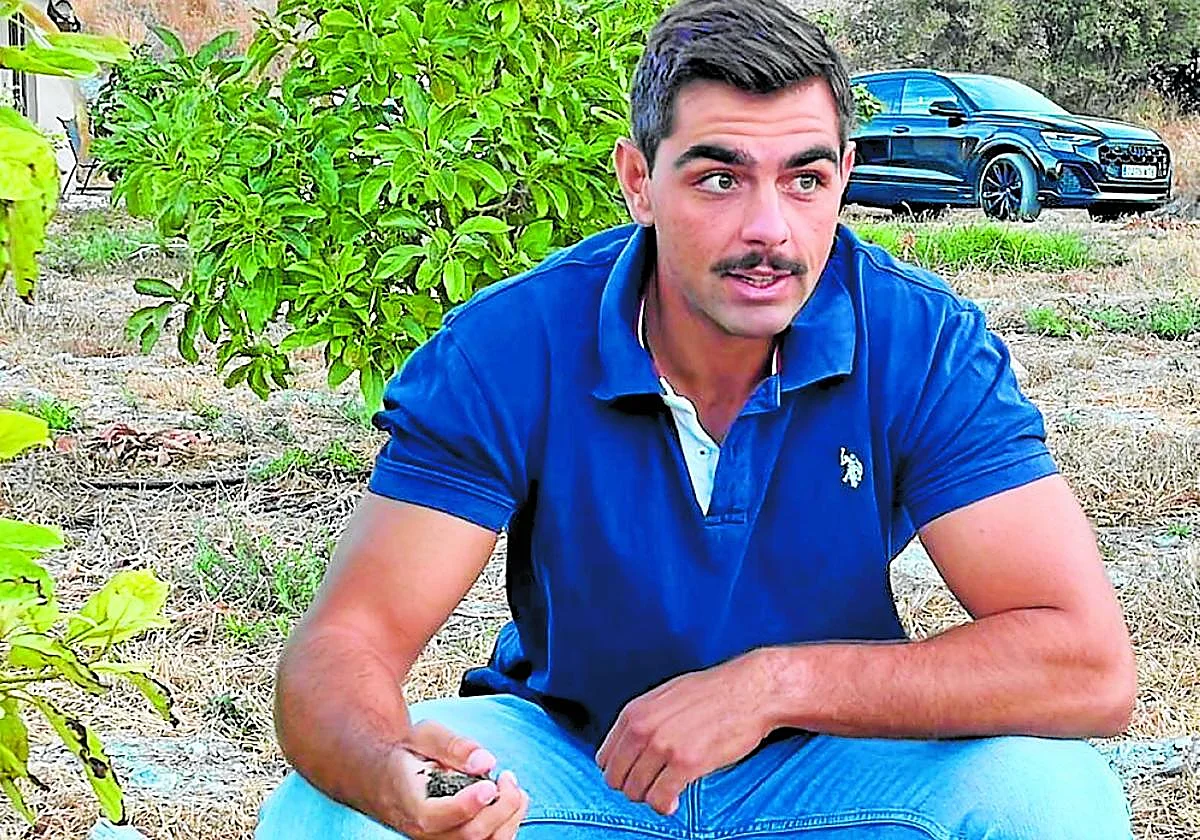
Zoom
José María Cuadrado is an agricultural engineer specialising in subtropical crops. SUR Agriculture Malaga's tropical fruit growers: 'The person who earns is the one who manages water the best'José María Cuadrado, director of Iberian Avocados, defends the professionalisation of the crop after the harsh years of drought
Friday, 9 January 2026, 17:21
An agricultural engineer specialising in subtropical crops and director of the Andalusian company Iberian Avocados, José María Cuadrado analyses the current situation of the avocado in the province of Malaga after the harsh years of drought. From his experience in Spain, Portugal and Morocco, he defends the professionalisation of the sector, efficient water management and knowledge of the soil as the keys to guaranteeing the profitability and sustainability of the crop in the medium and long term.
- First of all, a few brief biographical and professional references: Who is José María Cuadrado and how did Iberian Avocados come about?
-I am an agricultural engineer, specialised in subtropical crops and strategic management of the agricultural business. I have completed an Executive MBA that has allowed me to understand the avocado not only as a crop, but as a business that must be profitable, efficient and sustainable. I analyse each farm as if it were a company: cost structure, production processes, efficiency in water use and the real return on each technical decision. Throughout my career I have managed agricultural projects abroad, especially in Portugal and Morocco and I am currently advising avocado farms in different areas of Spain, both on the coast and inland. This experience in very different environments has given me a practical vision of the crop based on real field results. Iberian Avocados was born precisely with this philosophy: to professionalise the avocado, to help growers produce more and better with fewer resources and to turn each farm into a solid business project ready for the future.
"The biggest mistake is to think that avocados grow by themselves. They are planted without a soil study and without analysis."
- Avocados have become a strategic crop in the province of Malaga. How would you describe the current situation of the sector after the hard years of drought?
-Avocados are no longer an alternative crop, They are a strategic and very demanding crop. After the years of drought, the sector has entered a new phase: well-designed and well-managed farms produce; those that don't, have a hard time. Today, it is not the one who irrigates the most who earns, but the one who understands and manages their soil, their tree and their water the best. The avocado is still profitable, even at lower prices, but only if it is technified and if there is real professionalism in water management.
-When setting up an avocado farm, what are the most common mistakes you detect?
-The biggest mistake is to think that avocados grow themselves. They are planted without a soil study, without water analysis, without drainage, without hydraulic design and without a clear root management strategy. An avocado farm does not start on the day of planting, it starts long before, with a serious technical project. Those who do not invest in design, end up paying for it later with low yields, weak trees and skyrocketing costs.
-Water is the main limiting factor of the crop. What measures today make it possible to improve water efficiency without losing production?
-The problem is not only the quantity of water, but how it is managed. Irrigating without knowing the soil is ridiculous. Adjusting irrigation to the soil type, improving the wet bulb and avoiding saturation make the difference in production. Recycled water is part of the future, but it requires a high level of technical management. If salinity, sodium and soil oxygenation are not controlled, problems quickly appear in the roots and in production.
-What weight does knowledge of the ground have on medium and long-term profitability?
-There is a key idea that is often forgotten: the best fertiliser for avocados is oxygen. Well-aerated, well-structured and well-drained soil is worth more than any expensive product. If the roots breathe, the tree responds. Without oxygen there is no uptake, no growth and no sustainable production. That is why soil management is the basis of all future profitability.
- The avocado generates debate on sustainability. Is it compatible with the water situation in Malaga?
-Sustainability is not about using fewer inputs without judgement, but about using the right inputs and applying them well. An avocado with healthy roots, oxygenated soil and efficient irrigation needs less water, less fertiliser and is much more stable. The problem is not the crop, it is poor management. Well managed, the avocado is perfectly compatible with sustainability and profitability in the province of Malaga.
-What recommendations would you give to farmers in Malaga for the future of the sector?
-The message is clear: we have to move forward. Whoever continues to manage avocados as they did ten years ago is going to find it increasingly difficult. Training, specialised technical advice and control of soil, water and costs. The future lies in thinking as an agricultural company, not just as a producer.
-Technology applied to the field is gaining weight. What tools are really making a difference?
-Useful technology helps to make better decisions: soil sensors, irrigation control, agronomic interpretation of data and continuous technical monitoring. But technology alone is not enough. The important thing is to know how to read the data and turn it into a strategy. That is where production is improved, costs are reduced and money is made.