3 min read
NASA’s PACE Mission Studies Smoke, FiresErica McNamee
Science Writer
Jun 26, 2026 ArticleWith the North American fire season underway, and a record number of acres already burned nationwide, NASA’s Plankton, Aerosol, Cloud, and ocean Ecosystem (PACE) satellite’s three instruments are observing vegetation precursors to fires, along with plumes of smoke and their movement. This data will help scientists piece together clues that deepen their understanding of wildfires.
“The challenge that we have is to take those clues and use them in a meaningful way, so our models of Earth properly represent what’s happening,” said Kirk Knobelspiesse, a remote sensing scientist working on the PACE mission at NASA’s Goddard Space Flight Center in Greenbelt, Maryland.
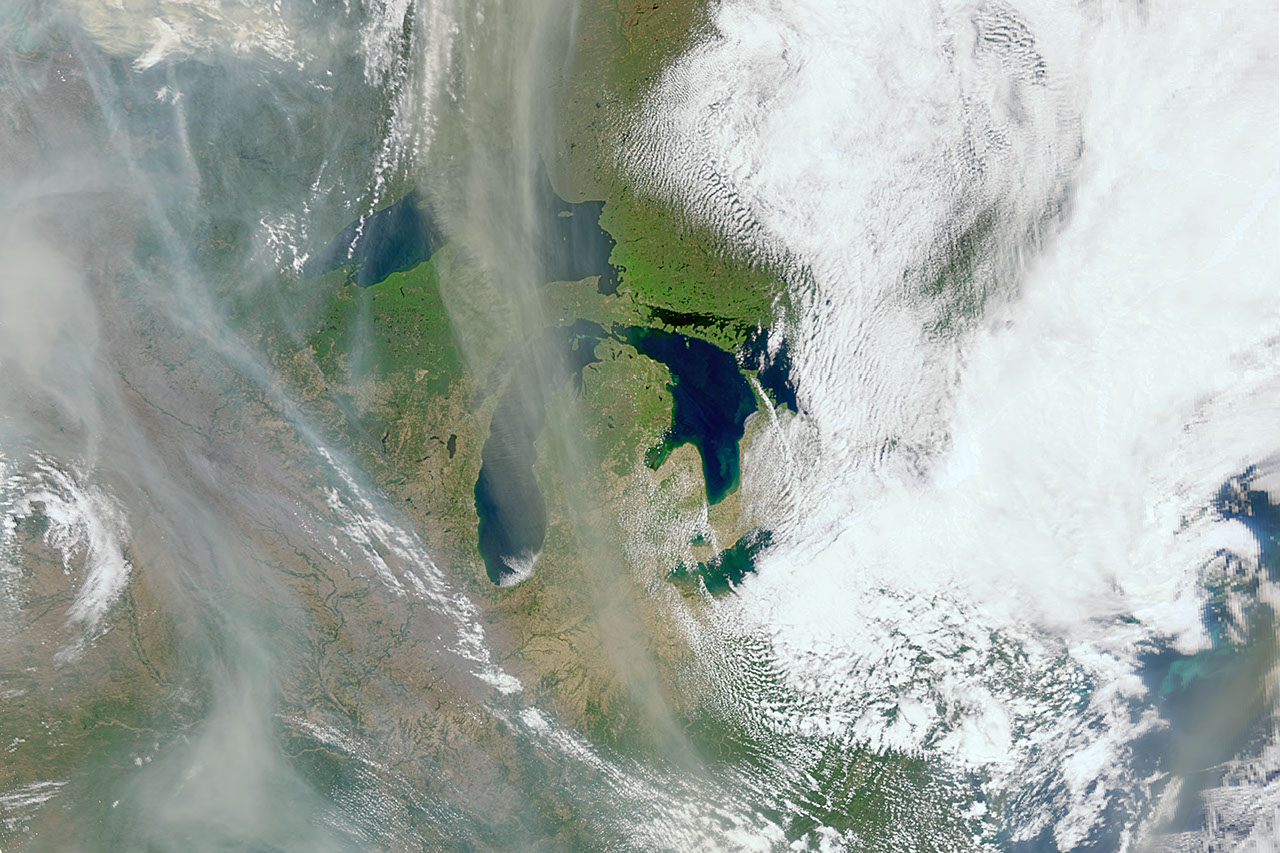
Wisps of smoke coming from fires in multiple provinces and territories in Canada travel over the Great Lakes. This image was taken by the Ocean Color Instrument aboard NASA’s PACE satellite on May 31, 2025.NASAWhile the satellite, which launched in February 2024, was designed to study Earth’s ocean and atmosphere, it has an unexpected capability: 5 min read Some of the same properties of light and optics that make the sky blue and… Over the last decade, wildfires have worsened ground-level ozone pollution across much of the contiguous…New NASA Satellite To Unravel Mysteries About Clouds, Aerosols
NASA-Funded Study Shows Wildfire Smoke’s Hidden Ozone Toll