Health
One in three Malaga adults has high blood pressureCardiologist Dr Daniel Gaitán recommends checking blood pressure levels once a year from the age of 40 onwards
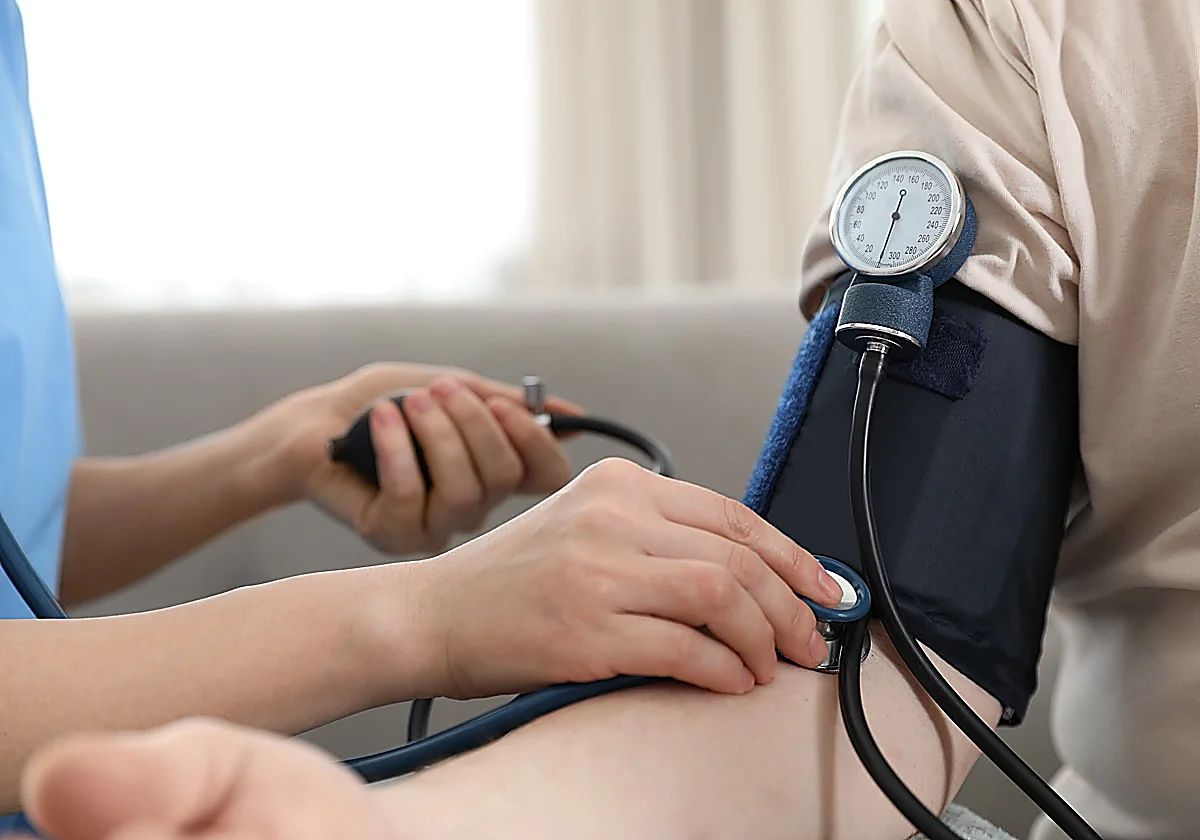
Añádenos en Google A nurse measuring a patient's blood pressure. (SUR)José Antonio Sau
21/05/2026 a las 10:10h.Hypertension is "having consistently high blood pressure", Hospital Regional cardiologist Dr Daniel Gaitán Román says.
"It is one of the main cardiovascular risk factors," he says. For this reason, it is essential to monitor it and act accordingly if a person shows signs of hypertension.
Treatment, however, "is not just about taking a pill". One in three adults in Malaga has high blood pressure, according to the doctor's estimates. The Spanish society of cardiology (SEC) states that this condition affects 33 per cent of Spaniards between the ages of 30 and 79.
This would mean around 330,000 people in Malaga, enough to fill the Rosaleda stadium eleven times over with just those suffering from hypertension. "We're talking about hypertension when systolic or top blood pressure is above 140 mmHg and/or diastolic or bottom blood pressure exceeds 90 mmHg," Dr Gaitán says.
"It's a very common problem and often goes unnoticed because it doesn't usually cause symptoms. That's precisely where the danger lies: a person can feel fine and yet have high blood pressure that is slowly damaging their heart, brain, kidneys and arteries," he says.
Risks
"It increases the risk of having a heart attack, stroke, heart failure, kidney problems or arrhythmias. In our practice, we frequently see patients who discover they have hypertension after experiencing a complication. That's why we insist on prevention and blood pressure control so much," Dr Gaitán says.
As with many other conditions, prevention starts with a person's lifestyle. "Reduce salt intake, maintain a healthy weight, exercise regularly, sleep well, avoid tobacco and moderate alcohol consumption," the cardiologist says.
Some patients also require medication. "Today, we have very effective and safe medication: the important thing is to individualise the case and, above all, maintain good adherence to the treatment."
In any case, the best approach is prevention by taking care of your lifestyle from a young age. "Check your blood pressure even if you feel fine. European guidelines recommend checking it regularly, at least every three years for people under 40 and once a year thereafter. Furthermore, if a person already has high readings, even if they don't yet need medication, it's advisable to continue monitoring them annually and assess their cardiovascular risk," Dr Gaitán says.
According to the cardiologist, many people are unaware they have high blood pressure. "The SEC survey reflects this: there are people who hardly ever check their blood pressure and, moreover, don't know what the truly alarming readings are," he says.
According to the aforementioned survey, 44 per cent of Spaniards believe that hypertension begins with blood pressure readings above 160/90 mmHg, well above the actual figure (140/90 mmHg). Furthermore, 39 per cent of the population never have their blood pressure checked.
For a person to be considered as having hypertension, they must have a confirmed diagnosis, "with several readings taken correctly and at different times". If a person "takes their blood pressure on two or three separate occasions and obtains readings equal to or greater than 140 systolic and 90 diastolic, they should go to a health centre for proper evaluation," Dr Gaitán recommends.
A common question among the public is: how should blood pressure be taken? "Ideally, it should be done sitting down, after about five minutes of rest and without having smoked, drunk coffee or exercised immediately beforehand," Dr Gaitán says. In addition, the arm has to be "at heart level".
"The most recommended devices are validated automatic upper arm blood pressure monitors. Wrist monitors can be less accurate and should only be used when an upper arm monitor is not possible."
If someone suspects they have very high blood pressure, the first thing to do is "not to panic and to repeat the measurement correctly". "If the readings remain high repeatedly, they should consult their primary care doctor and if symptoms such as chest pain, difficulty breathing, severe headache, visual disturbances or neurological symptoms appear, then they should go to the emergency room, because it could be a hypertension crisis," he states.
"It is a very significant public health problem in Malaga as well, where factors such as the aging population, being overweight and a sedentary lifestyle clearly play a role," Dr Gaitán says.
In a recent interview with Diario Sur, Dr Miguel Ángel Sánchez Chaparro from the El Clínico hospital explained how hypertension develops: "If one parent has hypertension, around 15 per cent of their children will also develop it, which roughly doubles the risk. If both parents have hypertension, the figure rises to about 25 per cent. That is, it doubles the risk. Basically, having a family history of hypertension, combined with factors such as salt intake, obesity, lack of exercise and a sedentary lifestyle, favour its development."