Zoom
Andalucia's representatives. SUR Lifestyle Rhythm of the south: the Andalusian dance hits that conquered the world28 February Andalucia Day ·
From the Macarena to The Ketchup Song, how local rhythms from Seville, Córdoba and Malaga became global floor-fillersAlekk M. Saanders
Friday, 27 February 2026, 14:45
Many people travel to Andalucia to enjoy typical flamenco and copla songs. Meanwhile, several songs have managed to go beyond Andalucia and become some of the most successful export hits of Spanish music, which can still be heard in discos and parties today.
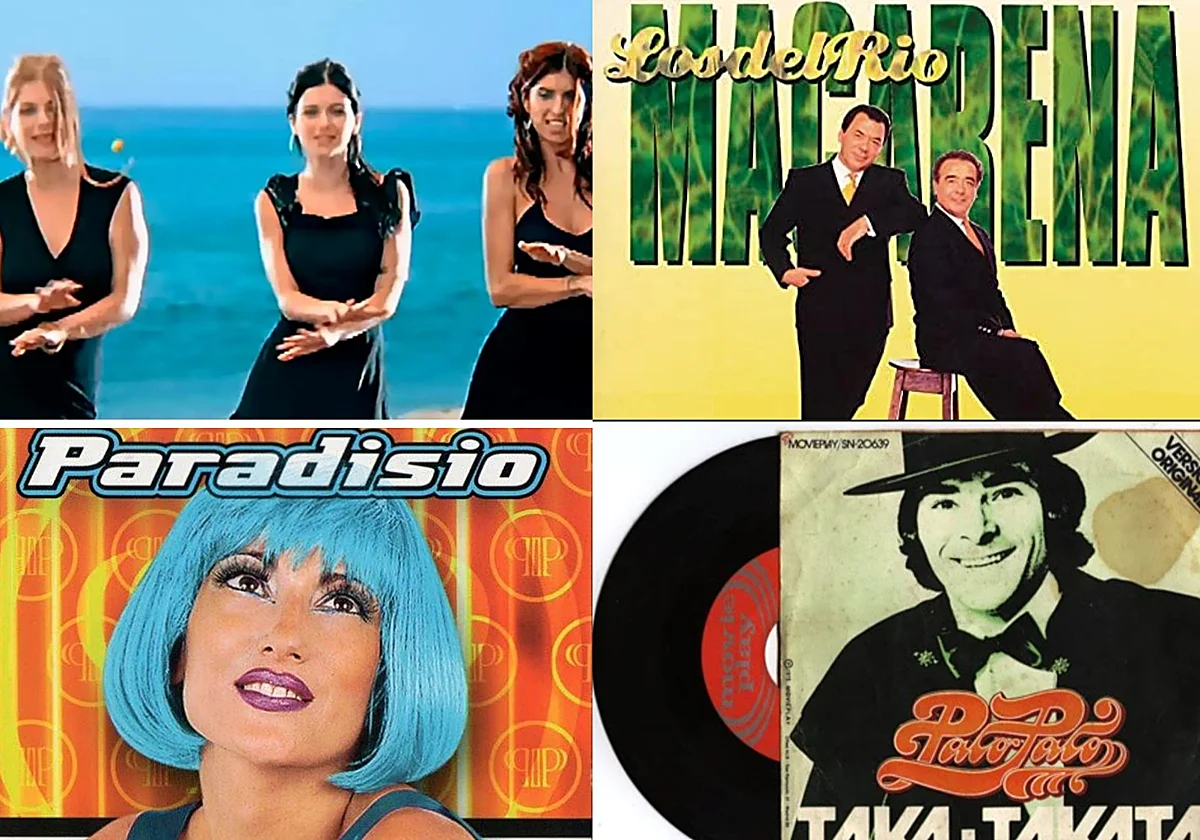
Macarena from Seville
In 1996 the whole world was swept up in Macarena fever. The original flamenco hit was written by a duo from Seville. In 1993, Los del Río, consisting of Antonio Romero and Rafael Ruiz, created the song Macarena, inspired by a flamenco dancer from Venezuela.
Thanks to a dance remix by the Bayside Boys, which added female vocals in English, Macarena spread around the world, getting people dancing to Andalusian rhythms
The song and its iconic choreography took off in the Spanish charts in 1993. Thanks to a dance remix by the Bayside Boys, which added female vocals in English, the song spread around the world, getting people dancing to Andalusian rhythms. The song's stunning success made it a global pop-flamenco phenomenon. In 1996, Antonio Romero and Rafael Ruiz reached the top of the US charts with a remix of their song and stayed there for 14 weeks.
The Ketchup Song from Cordoba
The second global hit from Andalucia originated in neighbouring Cordoba. In this Andalusian city, sisters Pilar, Lola, and Lucía Muñoz (daughters of flamenco guitarist Juan Muñoz ‘El Tomate’) formed the pop group Las Ketchup. Their 2002 global hit “Aserejé” (The Ketchup Song) was created in a small studio in Cordoba with producer Manuel Ruiz. The song is about a young man who enters a nightclub singing and dancing. In addition to the original Spanish version, there is also a version with lyrics in Spanglish. However, the nonsensical chorus is the same in both versions. Incidentally, the trio recorded a video in Montilla, the wine capital of Cordoba, to promote the province. It is worth mentioning that coastal scenes were filmed on the Costa del Sol with the aim of capturing the summery atmosphere with sun, beach and dancing as well as a sense of nostalgia.
The coastal scenes were filmed on the Costa del Sol with the aim of capturing the summery atmosphere
The flamenco-Europop dance hit reached number one in more than 20 European countries and became the most successful hit of 2002 in eight of them. It also topped the music charts in Australia, Canada, and New Zealand, but peaked at number 54 in the US. In Central and South America, the song became a number one radio hit.
Taka Takata from Malaga
Thirty years before Las Ketchup's song, Europe danced to lyrics that were no more comprehensible than “aserejé”... taka takata... (incidentally, this combination of words could be interpreted as a humorous imitation of an incomprehensible language or simply tapping out a flamenco rhythm). It is worth noting that this hit from Malaga is less well known because it was not in English. In the early 1970s, “Taka Takata” was associated primarily with European, French, and Latin styles, rather than with English-language hits.
“Taka Takata” was originally recorded by Paco Paco. This was the stage name of Francisco Ropero Gomez, a singer from Malaga. The song was the result of his collaboration with his father-in-law, Belgian songwriter Al Verlane. The song was released as a single in 1972 and became a hit in Europe. However, in the same year, the song was adapted into French under the title “Taka takata (La femme du Toréro)” by Claude Lemesle and Richelle Dassin and recorded by Joe Dassin. The American singer, who was very popular at the time, released it in 1972 on his album “Joe.” His “Taka takata” reached No. 1 in Finland and also entered the top 10 in Greece, France, Switzerland, and other countries, and was very popular in Eastern Europe.
Bailando with Marisa
In the context of Belgium and Malaga, it is worth mentioning the dance hit of the 90s, “Bailando,” which conquered discos around the world. Belgians Patrick Samoy and Luc Rigo organized the group Paradisio, in which the singer was ‘malagueña’ Marisa. She is still remembered by many for her pink wig, blue top, and pink hat, singing a simple chorus in Spanish: “Tú y yo a la fiesta Tú y yo-oh-oh, toda la noche Bailando, bailando Amigos adiós, adiós, el silencio loco...”
Marisa was born María Isabel García Asensio in Malaga on 29 May 1970, but soon moved to Belgium. From an early age, Marisa loved to sing, and at first she did so in both French and Spanish. In 1995, Marisa joined Paradisio and rose to fame with Bailando.