Zoom
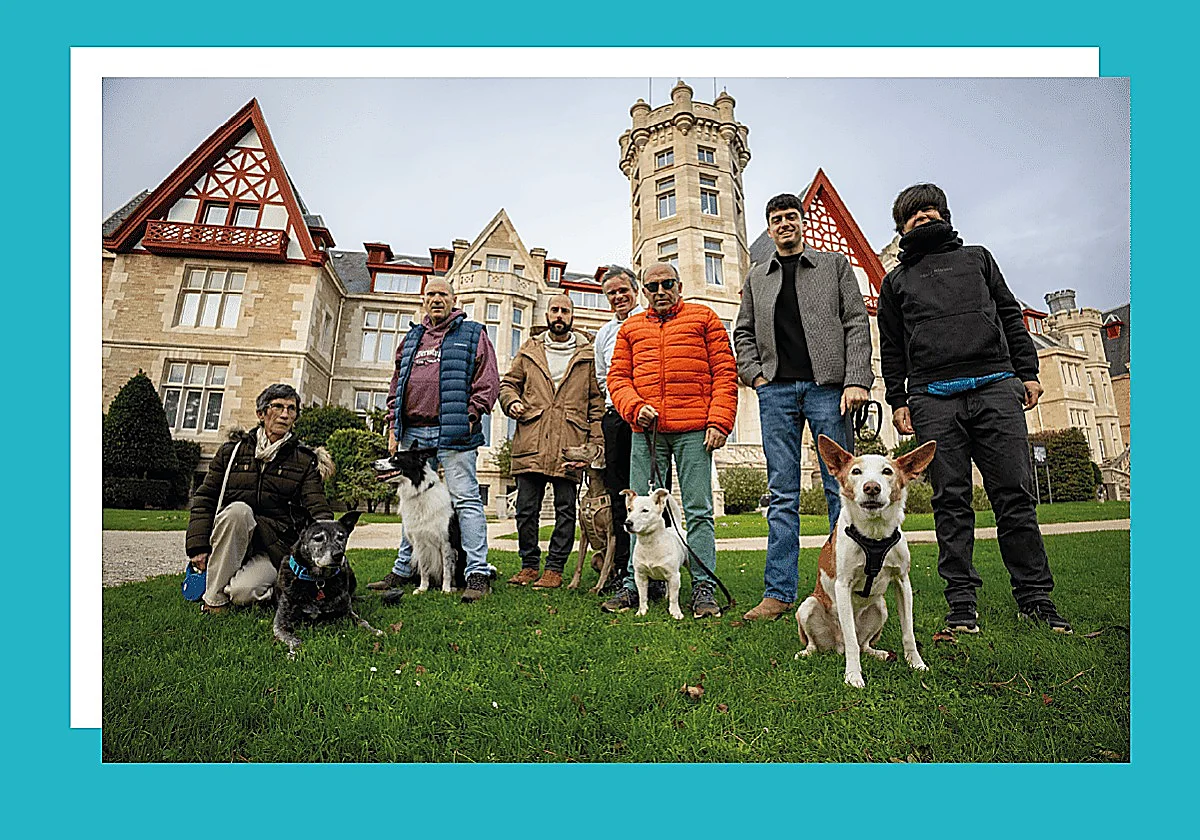
From left, Cora Vielva, with Laia; Jesús Antonio Martínez, with Fredi; Fernando Negueruela, with Dobby; José Luis García; Carlos Salas, with Iñaki; Víctor Sumillera, with Chester, and Nuria González. Daniel Pedriza Health The 'dogtors' in Spain that can detect lung cancer with maximum accuracyThe project started by police dog handlers Nuria González and José Luis García with Valdecilla in 2016 concludes that the "animals' sense of smell can save many lives"
Ana Rosa García
Cantabria
Wednesday, 31 December 2025, 13:13
Laia, Dobby, Chester, Iñaki and Fredi have demonstrated that they are capable of detecting lung cancer with "maximum precision" in patient breath samples. The ambitious project that the Biodogtor team launched nine years ago in Spain's Cantabria region, together with the Valdecilla Research Institute (Idival) and the hospital's oncology department, has had convincing results that certify that canine training, through play, can turn family dogs into infallible detectors, taking advantage of their extraordinary ability to smell.
After analysing more than 5,800 samples, this double-blind scientific study (the researchers also did not know which were positive), which can boast of being "the most complete in the world", confirms that man's best friend can be a great ally of medicine to save lives.
It was in 2016 when Nuria González and José Luis García, two dog handlers with the National Police - she is also a veterinarian -, gave shape to the idea and presented it to the director of Idival, Galo Peralta, who put them in contact with the head of oncology, Fernando Rivera. Both agreed that the project had a future.
From there, there was a lot of work to be done, with the basic problem that always slows down research work: funding. Then other obstacles were added along the way, including the covid pandemic, which was a sudden setback that wasted time but did not dampen the enthusiasm of its promoters: "We knew how far dogs could go, because we work with them every day in drug detection, searching for people...", says González.
He remembers the day that one of his 'agents' from the canine unit stopped, time and again, in front of a rubbish bin in the middle of a search for explosives. "Until we discovered that a glove used by a colleague many days before in another similar training had been deposited there," González explains.
That anecdote aroused his curiosity about the extent of this powerful olfactory capacity. "Since 1989, there have been many and varied studies on the possibility that dogs can smell human cancer through air samples in which they mark certain organic biomarkers. As there were many doubts on this subject, what better way than the scientific method to address and resolve it," explains the canine expert.
A resounding success
But Biodogtor, the association they created together, was different. The idea was to prove that "any dog in the house, sitting in the living room, watching TV with us", can be trained so that its sense of smell, ten thousand times more powerful than that of a human, can identify whether a patient has lung cancer just by sniffing a filter of exhaled air for a few seconds. Not only can it mark where there is no doubt of disease, but it can also detect with absolute accuracy any of the four types of lung cancer (adenocarcinoma, small cell, large cell and epidemoid).
Today, almost a decade after Nuria and José Luis embarked on this adventure, with the firm intention of convincing medicine of the crucial and selfless support that dogs can offer to reach a diagnosis in time, they can say loud and clear that the trial has been "a resounding success". The results were recently presented at the European Society for Medical Oncology (ESMO) Congress in Berlin.
"The dogs showed a sensitivity and specificity of 99.9 per cent," says José Luis. "This means that it is a standardised and protocolised procedure that gives validity to this test as a diagnostic method and also as a complementary tool to other conventional methods. It is incredible", says Nuria, who has carried the scientific weight of the study, in a meticulous and methodical way, while her partner from Biodogtor focused on the training of the 'dogtors', making sure that "harmony" and "emotional preparation" always prevailed.
Together they have been "the perfect team", complementing each other in a long task "with ups and downs", but always sure of the potential of the dogs, which they have guided with the rigorousness of the protocols, between mathematical formulas and statistical tables, rewards after each diagnosis and "affection and mutual trust" as the solid basis of the project.
"To select the dogs, three and a half years ago we made a competitive call for applications and 150 families applied. We went through tests and we were left with 30, from which we chose the six we considered suitable, of different ages and breeds". With Fredi, Dobby, Iñaki, Laia and Chester there was also Rommel, an eight-year-old mongrel who died before he could take part in the final trial. "It has been a joy to watch them interact and we have learned a lot from them", say their handlers, who are "super proud".
"There have been funny moments, difficult moments and some desperate ones," says Nuria with a laugh. "But they give it all with a heart, a loyalty. They love it and they have a great time. They are like children playing. They are not aware that they are doing a job, they feel that they are collaborating with you and they like that".
In figures
1,169 samples submitted to the sniffing of each dog, 174 from cancer patients and 995 from healthy people, and in all five cases "the result was coincident"
In parallel to the preparation of the animals, the project had to be rolled out in Valdecilla, where the oncology nursing team was in charge of collecting breath samples from cancer patients (174), collected in containers with air filters, which were kept cold. For six months the dogs were trained "to perform a specific behavioural response to the smell of lung cancer" (stopping in front of the filter) and using food as positive reinforcement.
The fetching game revolved around a carousel of eight arms on which patient samples - one, two or none - were randomly placed among those of healthy people (995 volunteers). Thus, each 'dogtor' analysed 1,169 samples. More than 5,800 between the five of them, "and the result was the same in all of them", say the researchers, who documented the whole laborious process in hours and hours of videos, which have now become "a milestone that will save lives".
"A big family" and "a dream fulfilled"
Now that they have scientific backing and canine olfaction is confirmed as a cancer detection tool, the 'parents' of the "big family" Biodogtor are grateful to all those who have contributed to making "our dream come true, which will mark a milestone in Spanish medicine": "To all the families who believed in us and let us work with their dogs, adapting to our crazy schedules", and to all the people and organisations that pushed us with their contributions. From the Seve Ballesteros Foundation to the Rotary Santander-Sardinero, including Clínica Bahía, the town councils of Santander and Marina de Cudeyo, Julio Gutiérrez Liébana, Elanco, Suministros Suan, Asis, Seguros Sasot, La Machina Teatro, Líderes Impulsa Cantabria, Luchamos por la Vida and Bayer, among others.