Zoom
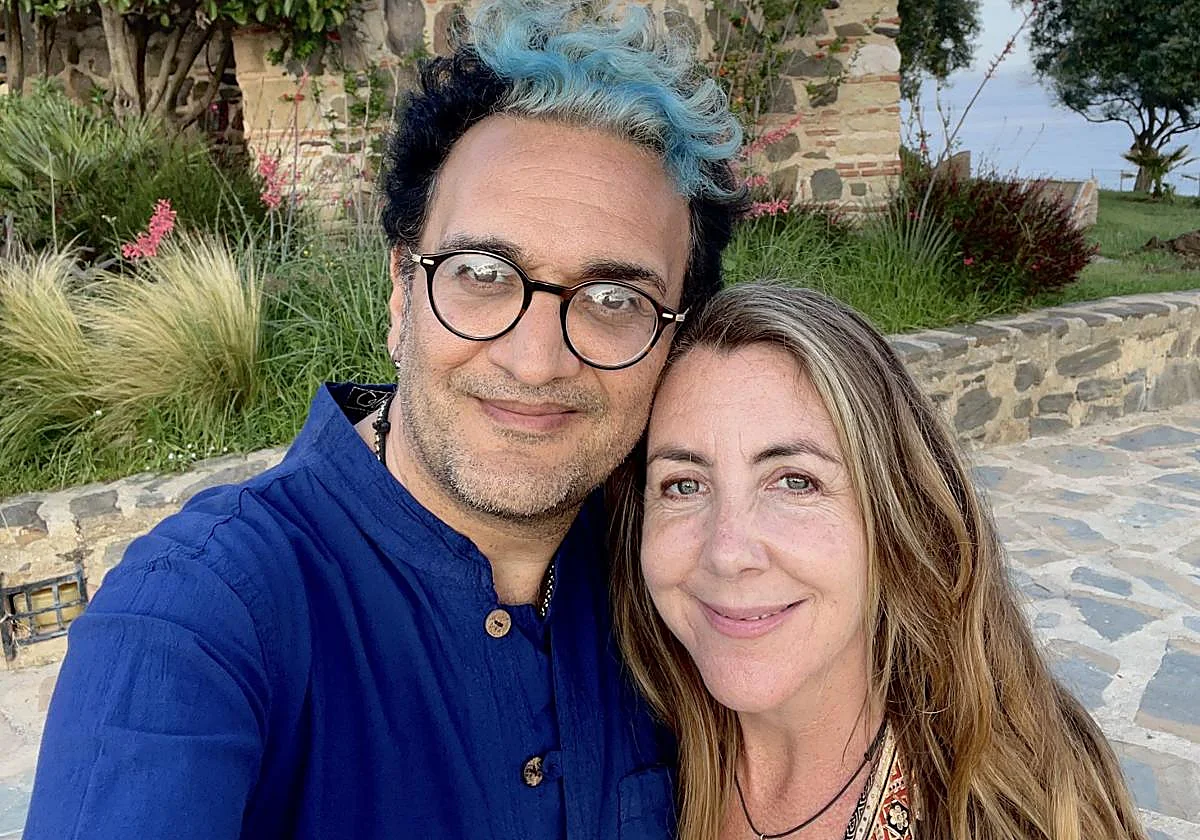
Tim Arnold and Kate Alderton in Fuengirola last year. Nell Kyle Mental health The social media debate: 'It shouldn't stop with children - it's about us adults'A British production heads to Spain to highlight the impact of social media on under-16s and the measures needed to protect them
Tony Bryant
MALAGA.
Friday, 20 February 2026, 11:14
Smartphones and social media have made keeping children safe online one of the defining questions of our time - one that politicians are increasingly seeking to resolve. The UK government's action to improve children's relationship with social media resulted in the launch of a campaign on use in schools to protect young people's wellbeing and ensure safer online experiences. Restrictions on addictive features, a ban on social media access for children and better age checks are among measures to be considered.
Following Spain's current debate around restricting social media access for under-16s, two British artists have decided to bring their nationally acclaimed multimedia production Super Connected to Spain.
Musician and film director Tim Arnold and actress Kate Alderton made the decision to bring the work to Spain after President Pedro Sánchez's recent announcement regarding the impact of social media on children.
Specialists believe that simply to say social media causes many of young people's mental health problems is an oversimplification. But Arnold and Alderton, who is the daughter of actress Pauline Collins and actor John Alderton, both feel that "labelling the younger generation as central to the problem just isn't fair or effective".
"Super Connected was never solely about children and adolescents - it's about us adults. We have all used smartphones and had moments when we question the way we use them. The older we are, the harder it is to change, so it's hard for us to admit our own dependency. In that vacuum, children learn by watching the adults around them, while tech companies step up customer breeding at the youngest level," Arnold told SUR in English.
Inspired by the true story of a teenager battling screen addiction, Super Connected started as Arnold's 25th album and has since evolved into a film, theatre show and ongoing initiative to raise awareness about the impact of screens and social media on mental health and human relationships.
"Super Connected was inspired by two things: tech companies persuading us to give away our lives for free, only to monetise that data - and the true story of a teenage girl struggling with social media addiction. Those themes led to the album, the film, the podcast, the theatre show, a UK Government petition and now - our first event in Spain," the musician added.
An extraordinary supporter
Narrated by Stephen Fry, whom Arnold said has been "an extraordinary supporter of both my creative work and my activism", the project launched at the Roundhouse in London and has toured the UK for three years.
"Stephen came on board through my Save Soho campaign, which I launched alone from my tiny flat, but it gathered national momentum. I asked Stephen to chair the campaign and he generously said yes," he explained.
Arnold's partner in the project said that the production reflects where professionals and creative arts can collide in a way that inspires, educates and empowers parents and children.
"The story is about the challenges we're all facing living in an increasingly digital world. After the show, we invite the audience to talk with us (and each other), to share what that's like for them. Everyone has their story, and using the Super Connected story as a starting point to spark and share ideas about what people find helpful, as well challenging, is what theatre is all about," she said.
The production, described by The Times as "a unique piece about the loneliness of the digital landscape", will first visit Teatro Soho in Madrid this Friday, 20 February, and in March they will bring the project to schools along the Costa del Sol.
Arnold, who grew up in the province of Malaga and went to school in Coín, is the son of singer Polly Perkins, well known on the coast's club-scene in the 1980s and '90s, before starring in the BBC's Eldorado. The 55-year-old - who has studied screen addiction and the impact of social media on mental health - and Alderton have recently spearheaded a successful UK Government petition calling for limits on technology use in schools.
"The world is in a very complex state at the moment. Social media amplifies it for all of us. When problems are not simple, neither are the answers. I think bringing together the wisdom of health professionals, teachers, parents and young people can help address complexity," she said.
Arnold, who says he does not "instinctively support bans", although he believes they are "an understandable step toward a long-term solution when governments and parents feel cornered", is keen to emphasise that governments are actively trying to address the issue.
"It may not seem so, but many politicians have long tried to push tech companies toward effective protections for children and teenagers. Meanwhile, Silicon Valley continues to behave as if it is above the law," he stated.
Alderton believes that, while circumstances differ, parents can reasonably manage how much time young people spend on social media. "I think it will be so different for each family. In our family what has helped is having open, ongoing conversations with my kids. Being willing to listen, as well as talk, and being honest about what I find difficult when it comes to my own screen time," Alderton explained.
"Whatever happens next, addressing the root of the problem as well as the effect is essential. Holding global tech companies accountable for creating addictive features has got to be part of any plan," she concludes.