Zoom
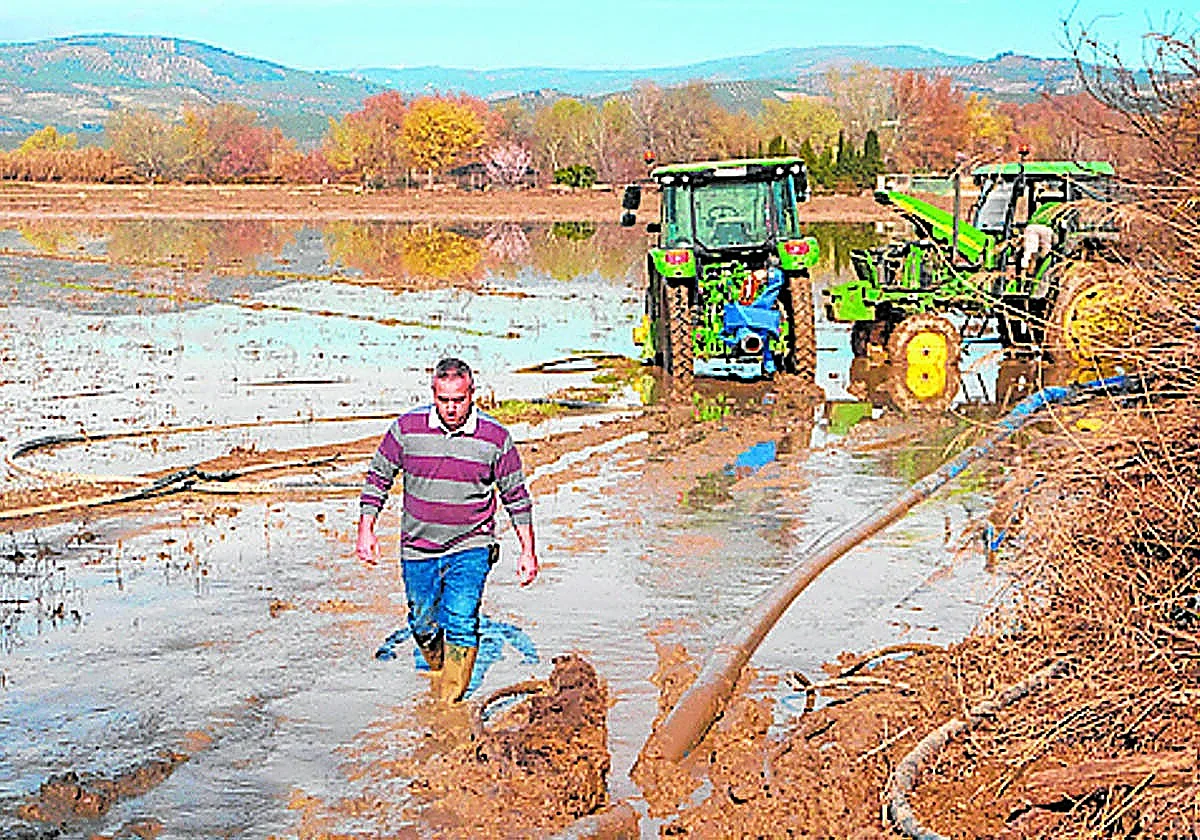
Flooded. Tractors and water pumps to drain farms. Javier Martín Agriculture Granada's asparagus season starts with 350 hectares of flooded landProducers deploy drones and industrial pumps to save crops as Storm Pedro damage threatens Europe’s largest asparagus cooperative
Mercedes Navarrete
Granada
Friday, 20 February 2026, 13:42
As the sun returns to the province following weeks of devastating storms, the 2026 asparagus season has begun under a cloud of uncertainty.
While some farmers celebrate a water-rich harvest, others in the heart of the industry face a "sad and uncertain" outlook.
The overflow of the River Genil and the Milanos stream has left approximately 20% of the 1,526 hectares of asparagus in the Huétor Tájar region buried under mud, stones, and debris.
The impact: loss and hope in Huétor Tájar
The Centro Sur cooperative, Europe’s largest asparagus producer, is currently managing a crisis plan for more than 100 of its 730 members.
•The Damage: Over 350 hectares are currently inaccessible or submerged.
•Estimated Losses: Experts predict a global crop reduction of 5% to 10% compared to last year.
•The "Compensation Effect": Paradoxically, farms on higher ground that avoided flooding are expected to see higher yields due to the abundant rainfall, which may partially offset the losses from the flooded valley floors.
High-tech recovery: drones and biostimulants
To combat "root asphyxia" caused by water-saturated soil, the cooperative has launched an emergency technical response:
•Evacuation: Deploying private tractors and heavy-duty pumps to drain stagnant water where the river has receded.
•Aerial Treatment: Using drones to spread biostimulant treatments across affected plots to strengthen root systems.
•Infrastructure Repair: Working to restore rural roads that were destroyed by the force of the water, currently preventing machinery from reaching the fields.
The asparagus campaign, which runs until June, is a vital economic engine for Granada. Unlike other industrial crops, asparagus is primarily grown on small family farms and provides the backbone of employment for women in over twenty villages across the Poniente and Vega regions.
Despite the difficult start, Centro Sur president Antonio Zamora remains optimistic about market value: "We are confident that prices will remain stable, in line with the last three years, which have been good for the sector."
"Many houses depend on women's wages".
Carmen OrtegaUncertainty about the impact of the damage on the season is also affecting the workers in the cooperatives, the majority of whom are women from Huétor Tájar and who come from other villages within 30 kilometres to handle the asparagus. The day's wages from the campaign allow them to collect unemployment benefits afterwards and bring life to the villages. "Of course there is concern about whether we will be able to put in enough hours and earn what we need during the season. The livelihoods of many households depend on the asparagus women's wages, but at the moment we can't think only of ourselves when so many of our neighbours are struggling. This is a blow to the economy of the whole village, this is a wheel", sums up Carmen Ortega, a worker from Centro Sur.